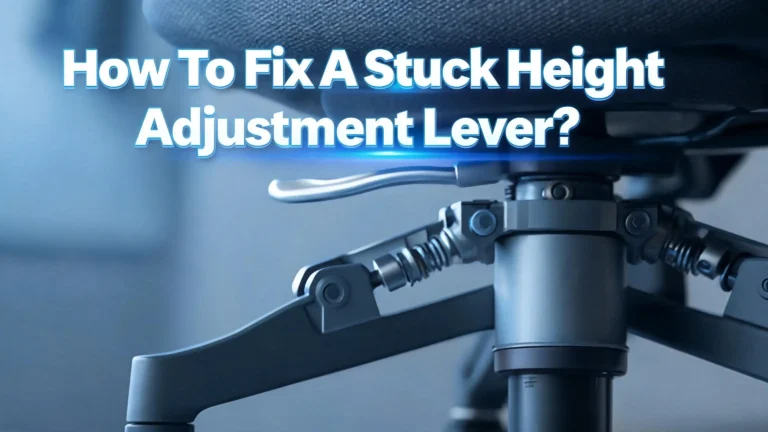

How to Reset a Jammed Recline Lever on a Mesh Ergonomic Chair?
Does your mesh chair suddenly refuse to recline? Or maybe it’s stuck tilted back, and nothing you do seems to fix it?
A jammed recline lever can turn a comfy chair into a frustrating problem. The good news is that you don’t need a repair technician to fix it.
Most recline issues come from three simple causes. Debris gets stuck in the mechanism. The tension knob falls out of balance. Or mechanical parts wear down over time.
In this guide, we will show you exactly how to reset your jammed lever. You will learn how to find the tension knob under your seat. We will explain how to release the lock lever properly. You will also discover simple ways to clean and lubricate the mechanism.
In a Nutshell
- Find the tension knob first. It sits underneath the seat, near the front. This small knob controls how easily your chair reclines.
- Lean back with force while releasing the lock lever at the same time. This simple combo often frees a stuck mechanism instantly.
- Turn the tension knob clockwise for a firmer recline. Turn it counter-clockwise if you want a looser, easier tilt.
- Clean out any debris stuck in the lever mechanism. Dust and grime often cause the jam in the first place.
- Add lubricant to parts that feel stiff or stuck. This helps the lever move freely again.
- Test your chair after every small adjustment. This helps you avoid over-tightening or missing the real problem.
Understanding Your Chair’s Recline Mechanism
Your mesh ergonomic chair has two key parts that work together to make reclining possible. The first is the recline lever, which you pull or push to tilt the chair backward. The second is the tension knob, located underneath your seat toward the front area.
These components communicate through a mechanical system. When you pull the lever, it releases a locking mechanism. At the same time, the tension knob controls how much resistance the chair provides as you lean back.
Understanding this relationship is crucial for fixing jams. Many people focus only on the lever itself and miss the real problem. The tension knob often causes the issue because it controls the overall tightness of the recline system.
When your recline lever jams, one of three things usually happened. First, debris like dust or crumbs got stuck inside the mechanism. Second, the tension knob became too tight, preventing the lever from moving freely. Third, the lever itself shifted out of alignment with its track.
The good news is that knowing how these parts work together makes repairs simple. You don’t need special tools or technical skills. Most people can reset a jammed lever in about ten minutes using basic household items.
Pay attention to the tension knob location. It sits directly under your seat, typically in the front middle area. Finding it quickly saves you time during repairs. Once you locate both components, you’ll understand exactly why your chair stopped reclining and what you need to do next.
Common Causes of a Jammed Recline Lever
Debris buildup is one of the most common culprits behind a stuck recline lever. Dust, crumbs, and particles accumulate inside the mechanism over time, especially if your chair sits in a busy workspace. These small obstructions prevent the lever from moving smoothly and can lock it in place completely.
Tension misalignment happens when the adjustment knob beneath your seat gets twisted too far in either direction. If someone over tightened the knob, it creates excessive pressure on the internal components. This pressure forces the lever to jam and resist movement. The knob and lever must work in harmony, so even slight misalignment causes major problems.
Mechanical wear occurs naturally as your chair ages. Springs weaken, metal parts develop rust, and plastic components crack or break. When these internal pieces deteriorate, they no longer fit together properly. The lever catches or binds instead of gliding freely through its full range of motion.
Dried out lubricant also causes jamming over time. Moving parts need proper lubrication to function smoothly. When the original lubricant dries up or gets sticky, friction increases dramatically. The lever becomes stiff and eventually stops responding to your adjustments.
Improper assembly is another possibility, especially with newer chairs. If the recline mechanism wasn’t installed correctly during manufacturing, components may sit at wrong angles. This misalignment creates binding points that jam the lever immediately or after a few uses.
Most jams result from a combination of these causes rather than just one issue. The good news is that identifying which cause affects your chair helps you apply the right fix. Start by examining what you can see and feel, then work through solutions systematically.
Tools You’ll Need Before Starting
Before you start working on your jammed recline lever, gather the right tools. Having everything ready saves time and prevents frustration.
Basic hand tools work best for most recline lever fixes. You’ll want a Phillips head screwdriver and a flathead screwdriver. These help you access tight spaces and adjust components beneath your chair.
Needle nosed pliers are essential if your retaining clip needs removal. This tool lets you grip small metal pieces without damaging them. Regular pliers work too, but needle nosed ones give you better control in cramped areas.
A clean cloth or rag helps remove dust and debris from your mechanism. You might find years of buildup around the lever and tension knob. Wiping away this debris often solves half the problem.
Lubricant spray makes stuck parts move freely again. Look for general purpose lubricant that works on metal and plastic components. A small can lasts through multiple chair repairs.
A flashlight or headlamp helps you see underneath your seat clearly. The area where your tension knob sits is usually dark. Better visibility means you won’t miss important details during your repair.
Newspaper or a drop cloth protects your floor from lubricant drips. Spray lubricant can stain surfaces, so cover your workspace first.
A small container holds any screws or clips you remove. This prevents losing small parts while you work on your chair.
You probably own most of these items already. Check your garage, kitchen drawers, or utility closet before buying anything new. Having everything within arm’s reach makes the repair process smooth and quick.
Step-by-Step Guide to Resetting the Recline Lever
Start by sitting firmly in your chair. Locate the tension adjustment knob underneath the seat in the front area. This knob controls how hard or easy your recline moves.
Turn the tension knob counter clockwise slowly. This loosens the recline mechanism and often frees up a jammed lever. Test the lever after each quarter turn to see if it moves.
If the lever still won’t budge, try the simultaneous release method. Sit back in the chair and lean your body weight backward forcefully. At the exact same moment, pull the recline lever toward you with steady pressure. This combination of force and release often breaks the jam.
Return the lever to its parallel position against the seat. The lever should sit flat and aligned when you’re done.
Once the lever moves again, adjust your tension settings. Clockwise rotation makes the recline firmer and harder to move. Counter clockwise rotation makes it looser and easier to recline. Find the sweet spot that feels comfortable for your needs.
Test your recline slowly through its full range. Move it back and forth several times to ensure smooth operation. The chair should recline and return to upright position without sticking.
If your chair still won’t recline after these steps, the issue may be deeper. Check underneath for any visible damage or broken parts. Look for loose bolts or bent metal components.
Most jammed recline levers respond well to this approach. The key is patience and gradual adjustment rather than forcing the mechanism. Give each step time to work before moving to the next one. Your chair should be fully functional again within minutes.
How to Properly Adjust the Tension Knob
The tension knob sits directly under your seat in the front area. This small dial controls how much force you need to recline. Finding it is your first step to fixing a jammed lever.
Start by getting down on the floor and looking under your chair. You’ll see a round knob with directional arrows or markings. The knob usually has “+” and “−” symbols to show which way to turn it.
Turning the knob clockwise makes your recline feel firmer and harder to move. Turning it counter-clockwise loosens the tension and makes reclining easier. Most jams happen because this knob got twisted too tight in one direction.
Adjust slowly and deliberately. Make small quarter-turn movements at a time. Don’t spin it all the way in either direction on your first try. After each adjustment, sit in the chair and test the recline lever gently.
The key is patience. Give the mechanism time to respond after each small change. If you rush and turn the knob too far, you might create a new problem.
Pay attention to how the lever feels as you adjust. You should notice a difference within two or three turns. The lever should start responding more smoothly as tension decreases.
Once the lever moves freely again, you can fine-tune the tension to your preference. Some people like a tight recline that requires effort. Others prefer an easy, responsive recline that needs just a light touch.
Test your adjustments by reclining fully, then returning to upright. The lever should move without grinding sounds or resistance. If it still feels stuck after several turns, the problem may involve debris or dried lubricant in the mechanism itself.
Mistakes to Avoid During the Reset Process
Making mistakes during the reset process can make your jam worse. Avoid forcing the lever without releasing it simultaneously. Many people push hard on the recline lever alone. This approach fails because the tension knob still locks the mechanism. You must lean back and release the lock lever at the exact same time.
Never skip adjusting the tension knob. Some people think the jam is purely mechanical. They work only on the lever itself and ignore the knob underneath your seat. The tension knob controls whether your chair can recline smoothly. Skipping this step wastes your effort.
Do not over tighten the tension knob. Turning it clockwise too much makes everything rigid. Your recline lever will feel stuck again. Adjust the knob slowly in small turns. Test the lever after each quarter turn.
Avoid applying lubricant spray to the wrong areas. Spray only on the lever pivot points and the tension knob. Spraying everywhere creates a slippery mess and attracts dust.
Never yank the retaining clip without checking first. Some chairs have clips that hold components together. Pulling them carelessly can break the wheelbase or housing. Use needle nosed pliers only if the clip is clearly loose or damaged.
Do not skip the cleaning step. Debris trapped in the mechanism causes most jams. Wipe away dust and particles before adjusting anything.
Finally, avoid testing your full recline immediately. After resetting, test slowly through a small range first. This prevents re jamming and helps you identify any remaining problems. Patience prevents damage and saves you time fixing mistakes.
Troubleshooting Persistent Recline Issues
When your recline lever stays stuck despite your efforts, you need a systematic approach to identify what’s really blocking it. Start by examining whether the jam happens at a specific angle or throughout the entire recline range. This tells you if the problem is mechanical wear or simple tension misalignment.
Check the retaining clip first. This small metal piece sits inside your wheelbase and sometimes shifts out of position. Get down low with a flashlight and look for any clips that appear bent or displaced. If you spot one out of place, you may need needle-nosed pliers to gently reposition it. Work slowly and avoid forcing anything, as clips break easily.
Next, inspect the lever mechanism itself for visible cracks or breaks. Run your fingers along the lever to feel for rough spots or metal burrs. These imperfections catch and bind, preventing smooth movement. If you find rough areas, light sanding can help, though deep cracks mean the lever needs replacement.
Test the simultaneous release method one more time. Lean back forcefully in your chair while pulling the lock lever toward you at the exact same moment. Sometimes persistent pressure combined with lever release breaks through a stubborn jam that gentler attempts missed.
If nothing works after these checks, the internal mechanism may have worn beyond adjustment. Springs inside can break, or the tension system itself may be damaged. At this point, professional repair becomes your best option. Document what you’ve tried and what happens when you attempt each step. This information helps a technician diagnose the issue quickly and accurately.
Maintenance Tips to Prevent Future Jams
Regular maintenance stops most recline lever jams before they start. You can keep your chair working smoothly with just a few simple habits.
Clean your lever mechanism weekly. Dust and debris collect around the lever and tension knob. Use a dry cloth to wipe both areas. Pay special attention to where the lever connects to the seat base. Crumbs and pet hair get trapped here easily.
Lubricate moving parts monthly. Apply a light lubricant spray to the lever joint and around the tension knob. Use only a small amount. Too much lubricant attracts dust and makes things worse. Let the lubricant dry completely before using your chair.
Check your tension knob regularly. Sit in your chair and test how the recline feels. If it feels stiffer than before, the tension knob may have shifted slightly. A quick counter-clockwise adjustment keeps it from getting too tight. This prevents the lever from jamming due to excessive pressure.
Adjust your recline gently. Avoid leaning back suddenly or with force. Smooth, controlled movements reduce wear on the mechanism. Quick jerky motions put stress on the lever and internal components.
Inspect for visible damage monthly. Look under your chair for cracks or loose parts. Catch small problems early before they cause a jam. Replace any visibly damaged components right away.
Use your chair properly. Don’t exceed the weight limit. Avoid rocking back and forth repeatedly. These habits put extra strain on the recline system.
Follow these maintenance tips and your recline lever should stay jam free for years.
Final Thoughts
A jammed recline lever feels frustrating, but most fixes take just a few minutes. You now know the simple steps to get your chair moving again.
Start with the tension knob under your seat. This small adjustment solves many recline problems on its own.
Remember to release the lock lever while you lean back. This simultaneous motion frees the mechanism from its stuck position.
Clean and lubricate your chair often. These two habits prevent most jams from happening again.
If your lever still won’t budge, check the retaining clip. A shifted clip inside the wheelbase often causes stubborn jams.
Sometimes the internal mechanism wears out completely. When this happens, no amount of adjusting will fix the problem.
Your mesh chair supports your work every day. Taking a few minutes to reset the lever keeps it working smoothly for months ahead.
Patience matters during this process. Rushing through steps or forcing parts can create new problems instead of solving old ones.
Test your chair after every change you make. This helps you spot what worked and what still needs attention.
A smooth recline lever makes your workday better. You sit comfortably, adjust easily, and avoid the annoyance of a stuck mechanism.
Keep these steps handy for future reference. Chairs develop new issues over time, and you’ll want this guide again.
With regular care, your chair should serve you well for years. Small maintenance steps now save bigger headaches later.
Your mesh ergonomic chair deserves this attention. A working recline lever means better posture, more comfort, and a workspace that actually supports you.
Frequently Asked Questions
Why won’t my recline lever move at all?
Your tension knob needs adjustment first. This knob sits under your seat in the front area. Turn it counter-clockwise to loosen the recline mechanism. Start slowly and test after each quarter turn. If the lever still won’t budge, debris may be blocking it. Clean around the lever joint with a dry cloth.
How do I fix a lever that’s stuck in the reclined position?
Lean back forcefully in your chair while simultaneously pulling the lock lever toward you. This combination of actions releases the tension holding it. Hold this position for 3 seconds, then slowly return the lever to parallel with your seat.
If this doesn’t work, check your tension knob under the seat. It may be over-tightened. Turn it counter-clockwise a few times to reduce pressure on the mechanism.
Can I use lubricant to unstick my lever?
Yes, light lubricant helps free stuck components. Apply a small amount around the lever joint and tension knob area. Let it sit for 2 minutes, then work the lever gently back and forth. Wipe away excess lubricant with a cloth to prevent dust buildup.
Avoid heavy oils that attract dirt and debris.
What if the lever is cracked or broken?
A cracked lever cannot be adjusted back to working condition. You’ll need to replace the entire lever assembly. Check under your seat for the retaining clip that holds the lever in place. A needle-nosed pliers can remove this clip from the wheelbase if needed.
How long does a basic reset take?
Most tension adjustments and cleanings take 5 to 10 minutes. If you need to remove and replace parts, allow 15 to 20 minutes. Test your chair after each step to track your progress.

Hi, I’m Clara! I started SitSmartGuide to help people find chairs that truly support their comfort and health — without the guesswork. After years of dealing with back pain from bad seating, I became obsessed with testing, researching, and reviewing chairs so you don’t have to learn the hard way.