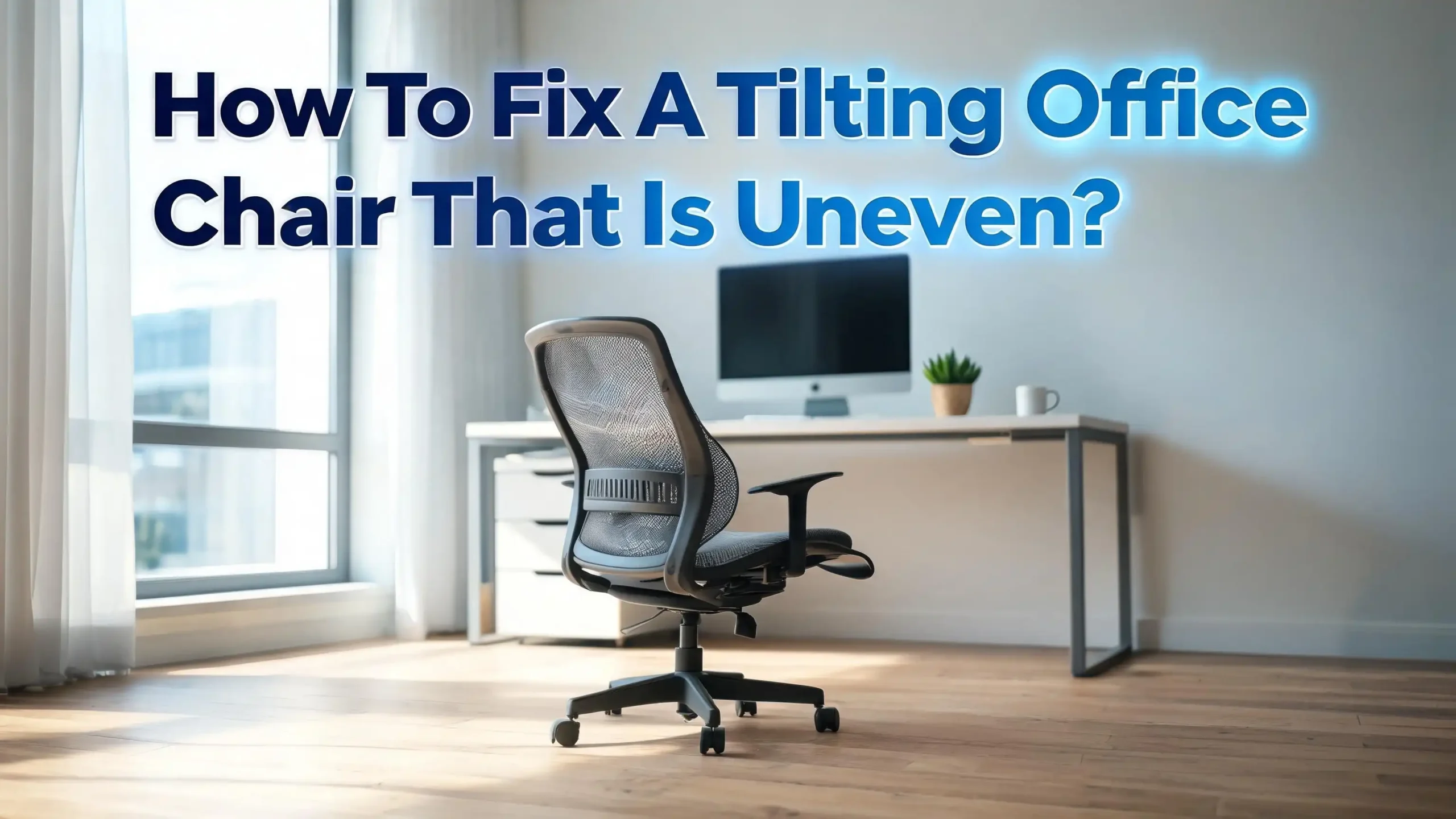
How To Fix A Tilting Office Chair That Is Uneven?
A tilting office chair that leans to one side can ruin your workday. You sit down, expect comfort, and instead get a wobbly seat that throws off your posture. Your back starts to ache, your wrists feel strained, and your focus drifts.
This guide walks you through every common cause and every working solution. You will learn how to inspect your chair, find the faulty part, and repair it step by step.
Keep reading to bring your office chair back to balance without spending money on a brand new one.
Key Takeaways
- Check the casters first: Uneven, bent, or broken wheels are the most common cause of a chair that leans to one side. A quick visual check often reveals the problem in seconds.
- Inspect the gas cylinder: A faulty pneumatic cylinder can make the seat sink or tilt unevenly. Replacement is cheap and simple with a rubber mallet or pipe wrench.
- Tighten the tilt mechanism: Loose bolts under the seat plate often cause side to side wobble. A standard Allen wrench fixes this in minutes.
- Examine the base and frame: Cracks in the star base or bent metal arms can cause permanent leaning. Replacement parts are widely available online.
- Adjust the tension knob: An unbalanced tilt tension setting can mimic chair damage. Turning the knob clockwise or counterclockwise often solves the issue instantly.
- Know when to replace: If the frame is cracked or the seat plate is warped, repair may not be safe. A new chair is the better long term choice.
Why Does An Office Chair Tilt Unevenly?
An office chair tilts unevenly for several mechanical reasons. The chair has many moving parts, and any one of them can wear out over time. Daily use puts stress on the wheels, the gas lift, the seat plate, and the base.
The most frequent culprit is uneven casters. When one wheel breaks or sticks, the chair drops slightly on that corner. This creates a tilt that feels worse the longer you sit. Dust, hair, and debris also build up around caster stems and stop them from rolling smoothly.
The gas cylinder is the second common cause. This part holds the seat at the right height and supports your full body weight. When the seal inside the cylinder weakens, gas leaks out. The chair then sinks or tilts based on how you shift your weight.
Other causes include a loose tilt mechanism, a cracked star base, bent metal frame parts, and worn screws. Sometimes the chair simply needs better tension adjustment. Identifying the source is the first real step in any repair. A clear inspection saves time and stops you from replacing the wrong part.
Tools You Need Before Starting The Repair
Gather your tools before you flip the chair over. Having everything within reach makes the repair faster and cleaner. Most office chair fixes need only basic household tools.
You will need a Phillips head screwdriver, a flat head screwdriver, an Allen wrench set, and an adjustable wrench. A rubber mallet helps with stuck parts. A pipe wrench is useful when removing a stuck gas cylinder. Keep a clean cloth and some lubricant spray nearby.
A flashlight makes inspection easier because the underside of the chair is often dark. Lay down an old towel or sheet to protect your floor and to keep small screws from rolling away. Wear gloves if you have sharp metal edges on the base.
Pros of preparing tools first: You finish the job in one session, you avoid scratched parts, and you reduce the risk of dropping screws into hidden spots.
Cons of skipping preparation: You waste time looking for tools mid repair, you risk losing small parts, and you may damage screws by using the wrong size driver.
A small magnetic tray helps hold loose hardware. Take photos with your phone before disassembly so you remember how each piece fits back together. This single habit prevents most reassembly mistakes.
Inspect The Chair Step By Step
Inspection comes before any repair. A careful check tells you exactly what is wrong and what parts you may need to buy. Skip this step and you may fix the wrong issue.
Start by sitting in the chair on a flat hard floor. Notice which side leans down. Stand up and watch the seat as you push down on each side. Movement that feels loose or uneven points to a specific area.
Flip the chair upside down on a soft surface. Look at all five casters. Spin each one with your hand. A wheel that does not spin freely or wobbles on its stem is damaged. Check the star base for cracks, especially near the cylinder hole.
Push and pull the gas cylinder. It should not wiggle at the base. A loose cylinder means the chair will never sit straight until the part is replaced or reseated.
Turn the chair right side up again. Sit and rock back. Listen for clicks or grinding from the tilt mechanism. Move the seat side to side. Any free play here means loose bolts under the seat plate. Write down each issue you find before moving to the repair stage.
Fix Uneven Or Damaged Casters
Casters are the easiest part to fix. They take most of the chair’s wear and they are designed to be replaced. A single broken wheel can cause the whole chair to tilt.
Flip the chair upside down. Grip the caster stem with both hands and pull straight out. Most casters use a friction fit and pop free with firm pressure. If a caster is stuck, slide a flat screwdriver under it and pry gently.
Compare the removed wheel against a new caster. Match the stem diameter and stem height carefully. Most office chairs use a standard 11mm by 22mm stem, but some brands use larger sizes. Push the new caster into the hole until it clicks.
Pros of replacing casters: The fix is cheap, takes under ten minutes, and often solves the leaning problem completely. New casters also roll quieter and protect your floor better.
Cons of replacing casters: You must match stem size correctly, and cheap casters may break again within a year. Hair and dust still need cleaning around the new wheels.
After installation, sit in the chair and roll in every direction. The chair should feel level and move smoothly. If it still tilts, the problem is somewhere else and you can move on to the next section.
Replace A Faulty Gas Cylinder
The gas cylinder controls seat height and supports your weight. When it fails, the chair sinks, tilts, or refuses to stay up. Replacement is a common DIY repair.
First, remove the chair base from the seat. Flip the chair over and pull the base off the cylinder. A rubber mallet helps loosen a stuck connection. Then remove the cylinder from the seat plate by tapping it free or twisting with a pipe wrench.
Buy a replacement cylinder that matches your chair size. Most office chairs use a Class 3 or Class 4 cylinder. Slide the new cylinder into the seat plate, then press the star base back onto the bottom of the cylinder. Sit in the chair to lock the friction fit.
Pros of replacing the cylinder: A new gas lift restores full height adjustment, removes the lean, and lasts several years. The repair takes about twenty minutes.
Cons of replacing the cylinder: Removing a stuck old cylinder can be difficult and messy. Some cylinders shoot grease when twisted. You also need to dispose of the old part safely because it contains pressurized gas.
If the chair still tilts after a new cylinder, the problem is likely in the tilt mechanism or seat plate. Move on to inspect those parts next.
Tighten The Tilt Mechanism Bolts
The tilt mechanism connects the seat to the cylinder. It contains the springs and bolts that let the chair rock back. Loose bolts here cause side to side wobble and uneven tilt.
Turn the chair upside down on a soft surface. Find the metal plate under the seat. You will see four to six bolts holding the seat to the mechanism. Use the correct Allen wrench and tighten each bolt in a cross pattern, the same way you tighten car wheel nuts.
Do not overtighten. Bolts that are too tight can strip the threads or warp the metal plate. Snug them firmly and stop. Then check the bolts that connect the mechanism to the gas cylinder housing. These often loosen over time.
Pros of tightening the mechanism: The fix is free, takes five minutes, and often eliminates wobble completely. No new parts are needed.
Cons of tightening the mechanism: Stripped or rusted bolts may need replacement. Some chairs have hidden bolts under fabric covers, which makes access harder.
After tightening, sit in the chair and rock back several times. The motion should feel smooth and balanced on both sides. If you still feel a tilt, the mechanism itself may be damaged and need replacement, which we cover later in this post.
Adjust The Tilt Tension Knob Correctly
Many office chairs have a tilt tension knob under the seat. This dial controls how much force is needed to lean back. An unbalanced setting can feel like a broken chair.
Locate the round knob below the front of the seat. Turn it clockwise to increase resistance and counterclockwise to reduce it. Sit in the chair and lean back after each adjustment. Find the setting that feels balanced for your weight.
If the chair tilts only when you lean a certain way, the tension may be too loose. A heavier user needs more tension. A lighter user needs less. Set the knob in small steps, not full turns, to avoid sudden changes.
Some chairs also have a tilt lock lever. Pull the lever up to release the lock, set your preferred angle, and push the lever down to hold the position. A jammed lock lever can mimic a broken tilt mechanism. Spray a small amount of lubricant on the lever pivot if it sticks.
Pros of adjusting tension: The fix is instant, free, and reversible. It often solves what feels like a serious problem.
Cons of adjusting tension: A worn tension spring inside the mechanism cannot be fixed by the knob. If turning the knob does nothing, the spring is broken and the mechanism needs replacement.
Repair Or Replace The Star Base
The star base holds the casters and supports the entire chair. A cracked or bent base creates a permanent tilt that no other repair can fix. Plastic bases are most likely to fail.
Inspect the base under bright light. Look for hairline cracks near the cylinder hole and at the ends where the casters connect. Press down on each arm of the star. A flexing arm means the plastic is fatigued and ready to break.
If the base is cracked, replace it. Pull the casters out and tap the base off the gas cylinder with a rubber mallet. Buy a new base that matches the cylinder diameter and the caster stem size. Metal bases last longer than plastic ones.
Pros of replacing the base: A new base restores full stability, supports more weight, and prevents sudden collapse. Metal bases also look more professional.
Cons of replacing the base: The part costs more than casters or a cylinder. Removing a stuck base from the cylinder can take effort. You may need a friend to hold the chair while you pull.
Never try to glue or tape a cracked base. The crack will spread under your weight and the chair could fall apart while you sit on it. Safety always comes before saving money with structural parts like the base.
Fix A Bent Or Warped Seat Plate
The seat plate is the metal piece that connects the cushion to the tilt mechanism. A bent plate causes the seat to sit at an angle even when every other part works fine.
Remove the seat from the chair by unscrewing the bolts that hold it to the mechanism. Place the seat upside down on a flat table. Look at the metal plate from the side and from above. A warped plate will not lie flat against the table.
Small bends can sometimes be straightened by clamping the plate in a vise and applying steady pressure. Heavy warping requires a new plate. Match the bolt pattern of your current plate when buying a replacement.
Pros of fixing the seat plate: A new plate restores level seating and removes lean from the source. The repair lasts many years.
Cons of fixing the seat plate: Finding an exact match can be hard for older chairs. Bending metal at home risks further damage if you do not have proper tools.
After installing a new or straightened plate, reattach the seat. Tighten all bolts in a cross pattern. Sit in the chair and check from both sides in a mirror. The seat should now sit perfectly level on every part of the cushion.
Lubricate Moving Parts To Stop Sticking
Sometimes a chair tilts unevenly because parts stick rather than break. Dust, dried grease, and rust can all jam the tilt mechanism, the cylinder, or the casters. A simple cleaning often restores smooth motion.
Use a silicone spray or white lithium grease for office chair parts. Avoid WD 40 as a long term lubricant because it dries out and attracts dust. Spray a small amount into the tilt mechanism pivot points and along the cylinder shaft.
Wipe away old grease with a clean cloth before adding new lubricant. Hair wrapped around caster axles is a common hidden problem. Use scissors or tweezers to remove tangled debris from each wheel.
Pros of lubrication: The fix is cheap, fast, and often solves stiff tilt problems without replacing parts. Regular lubrication also extends the life of the chair.
Cons of lubrication: Over spraying can stain fabric or leave drips on the floor. Some plastic parts can be damaged by harsh solvents. Always test a small spot first with any new lubricant.
After lubricating, work the tilt mechanism back and forth several times. Roll the chair around to spread grease through the casters. The chair should feel smoother within minutes. If sticking continues, a part is worn and needs replacement rather than cleaning.
When To Replace The Whole Chair
Sometimes repair is not the answer. A chair that has multiple broken parts, a cracked frame, or a warped seat plate may cost more to fix than to replace. Knowing when to stop repairing saves time and money.
Add up the cost of all needed parts. If repairs cost more than half the price of a new chair, replacement is the smarter choice. Also consider age. A chair over ten years old has likely worn out in places you cannot see.
Safety is the deciding factor. A chair with a cracked base, a leaking cylinder seal, or stripped mounting bolts is unsafe. Sudden failure under your weight can cause serious injury. Do not gamble with structural damage.
Pros of replacing the chair: You get a fresh warranty, modern ergonomic features, and zero repair labor. New chairs often offer better lumbar support and adjustable arms.
Cons of replacing the chair: New chairs cost more upfront. You also have to dispose of the old chair, which can be a hassle for large items.
Before buying new, check whether your current chair has a manufacturer warranty. Many office chairs come with five to twelve year warranties on parts. A free replacement part may turn a junk chair into a working one again.
Prevent Future Tilting Problems
Prevention beats repair. Simple maintenance habits keep your office chair level and stable for years. Most fixes in this guide take minutes, but avoiding the problem is even faster.
Clean the casters every month. Hair and lint build up quickly under each wheel. Remove the casters once a year, wipe the stems, and add a drop of lubricant before reinstalling them. This single habit prevents most leaning issues.
Check all bolts every six months. Tighten any that have loosened with daily rocking. Pay close attention to the bolts under the seat and at the base of the cylinder. Loose hardware causes most wobble complaints.
Use the chair only on flat surfaces. Rolling over thresholds, cables, and uneven floors stresses the casters and base. Place a chair mat under the chair on carpet to reduce strain on the wheels.
Stay within the chair’s weight rating. Standing on the seat or letting kids jump on it can crack the gas cylinder mount. Treat your office chair like any tool that needs care. Wipe spills quickly, vacuum the area weekly, and avoid harsh cleaners on metal parts. Good habits keep your chair level and comfortable for many years to come.
Frequently Asked Questions
Why does my office chair lean to one side even after tightening all bolts?
The bolts are not the only cause. A bent seat plate, a worn gas cylinder, or a cracked base can also cause leaning. Inspect each part one by one. The hidden problem is usually inside the tilt mechanism if outside bolts are tight.
Can I use WD 40 on my office chair tilt mechanism?
WD 40 works as a short term cleaner but not as a long term lubricant. It dries out within days and attracts dust. Use silicone spray or white lithium grease instead. These last longer and protect metal parts from rust and wear.
How long does an office chair gas cylinder last?
A quality gas cylinder lasts five to ten years under normal use. Heavy users or low quality cylinders may fail in two to three years. Replace the cylinder as soon as the seat starts sinking or tilting, since it will only get worse.
Is it safe to sit on a chair with a cracked star base?
No, a cracked base is a safety risk. The crack spreads under weight and the chair can collapse without warning. Replace the base immediately or stop using the chair. Falls from broken chairs cause back, hip, and head injuries every year.
How do I know what size caster fits my chair?
Pull out one caster and measure the stem. Most office chairs use an 11mm by 22mm stem. Bring the old caster to the store or check the size before ordering online. A wrong size will not stay in place and the chair will continue to tilt.

Hi, I’m Clara! I started SitSmartGuide to help people find chairs that truly support their comfort and health — without the guesswork. After years of dealing with back pain from bad seating, I became obsessed with testing, researching, and reviewing chairs so you don’t have to learn the hard way.