How to Eliminate Popping Noises From an Office Chair Tilt Lock?
Do you hear a popping sound every time you lean back in your office chair? You are not alone.
This annoying noise usually comes from the tilt mechanism. It happens when you recline or shift your weight.
At first, it might seem like a small issue. But that pop often means something inside your chair needs attention.
Gritty or jerky movement is a clear sign of a mechanical problem. Ignoring it can lead to bigger issues over time. The good news? You can fix this at home with a few simple steps.
In this guide, we will show you exactly how to stop that popping noise for good. You will learn how the tilt lock works and why resistance builds up as you use your chair.
In a Nutshell
- Find the tilt tension knob first. It sits under the seat, usually round and facing front. This knob controls the resistance in your recline.
- Disengage the tilt lock before touching anything else. This lets the backrest move freely without strain. Skipping this step is a common mistake.
- Recline to a natural position once the lock is off. Your body weight helps settle the mechanism. Do this gently, without forcing it.
- Turn the tension knob slowly to adjust resistance. Small turns make a big difference here. Test the movement after each adjustment.
- Listen for changes in the popping sound. A smooth recline means you are on the right track. Gritty or jerky feedback means more work is needed.
- Check the lock function regularly after fixing it. Proper calibration keeps your chair ergonomic and safe. Ignoring early noise often leads to bigger mechanical issues.
Understanding the Tilt Lock Mechanism
The tilt lock mechanism is the part of your office chair that controls how your backrest moves when you lean back. Understanding how it works helps you fix popping noises quickly.
Your chair has a pivot point where the backrest connects to the seat base. When you recline, this pivot allows the backrest to tilt at an angle. The tilt lock holds the backrest in place so it does not move unexpectedly during use.
The mechanism includes a tension system that creates resistance as you lean back. This resistance prevents the chair from collapsing suddenly under your weight. The more you use your chair, friction builds up inside this tension system over time.
Popping noises happen when the internal parts of the tilt mechanism rub against each other unevenly. Dirt, dust, and wear create rough spots inside the mechanism. As you recline, these rough spots catch and release, making that annoying pop sound.
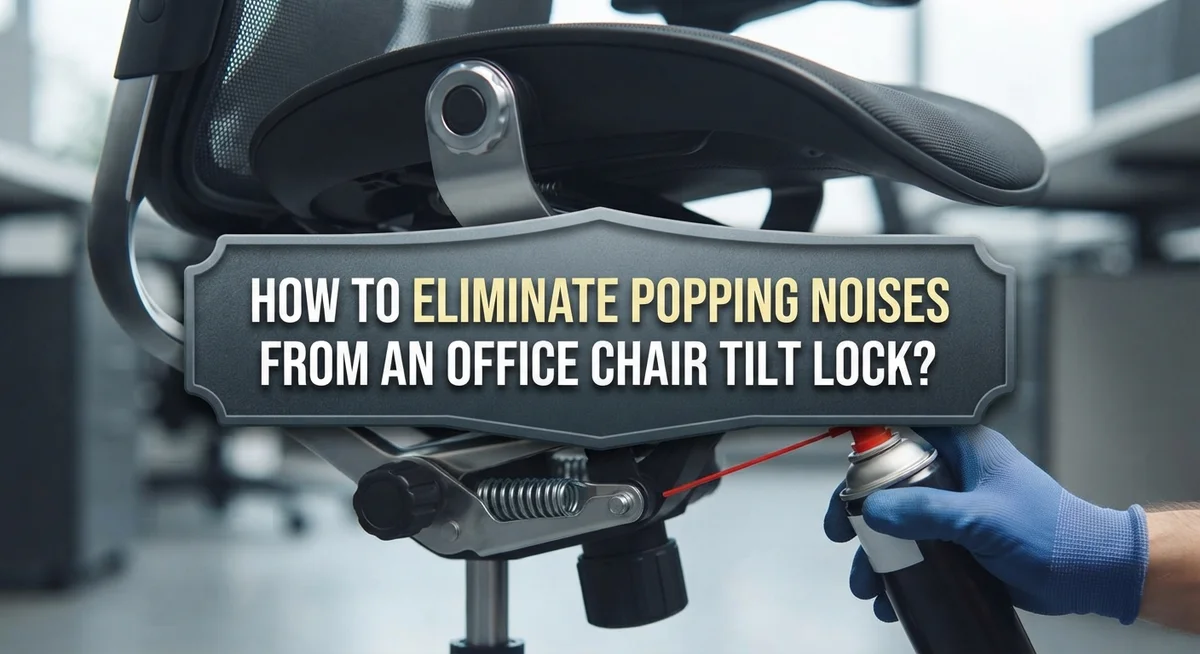
The tilt tension knob sits under your seat, usually on the front side. This large round knob controls how much resistance the mechanism provides. Turning it changes how tight or loose the tilt action feels.
When the mechanism works properly, your backrest moves smoothly without noise. You should feel consistent resistance as you lean back. If you hear popping or feel jerky movement, the mechanism needs attention.
The lock itself keeps the backrest from moving when you want it still. A functioning lock should engage and disengage clearly without grinding sounds. If the lock feels rough or makes noise, the internal parts likely need cleaning or adjustment.
Regular use causes wear inside the mechanism. Metal parts rub together, and small particles accumulate. This buildup creates the conditions for popping noises to develop. Knowing this helps you understand why the problem happens and why fixing it matters for your comfort and chair longevity.
Why Popping Noises Happen Over Time
Popping noises in your office chair tilt lock develop gradually over time. The sound comes from friction buildup inside the mechanism. As you use your chair daily, small particles accumulate in the tilt system.
Mechanical wear causes progressive resistance increases. Each time you lean back, the internal components rub together slightly. This friction creates microscopic debris. Over weeks and months, this debris builds up in the mechanism.
The tilt tension system relies on smooth movement between metal and plastic parts. When debris gets trapped, it creates a gritty sensation. You might notice the popping happens more frequently as time passes.
Lack of lubrication accelerates the problem. Office chairs experience constant movement. Without proper lubrication, the internal parts dry out. Dry mechanisms generate more friction and noise.
Temperature changes in your office also play a role. Metal and plastic expand and contract differently. This constant expansion and contraction can loosen internal connections. Loose connections vibrate and pop when you shift your weight.
Ignoring early popping signs leads to worse problems. The noise indicates your mechanism needs attention now. Waiting longer makes the damage more severe.
Regular use without maintenance speeds up deterioration. Your chair works harder each day. The tilt lock mechanism bears your weight repeatedly. Without care, it wears down faster.
Dust and dirt from your office environment settle inside the mechanism. Carpet fibers, skin cells, and paper dust accumulate. This combination creates a gritty mixture that interferes with smooth operation.
The popping sound is your chair’s way of telling you something is wrong. It signals that friction levels are too high. This friction will only increase if you do nothing.
Understanding these causes helps you take action quickly. Early intervention prevents expensive repairs later. Your chair will function better when you address popping noises immediately.
Step-by-Step: Disengaging and Resetting the Tilt Lock
Start by sitting in your office chair and locating the tilt lock mechanism. This is typically a lever or button positioned on the side of the seat base. You need to find it before you can disengage it.
Once you’ve found the tilt lock, move it to the unlocked position. Most chairs have a clear on and off setting. The unlock position allows your backrest to move freely without resistance. This step is essential because a locked mechanism cannot be properly adjusted.
Now recline your chair backward slowly. Move to a comfortable position where your back feels naturally supported. Hold this position for a few seconds. This allows the internal components to settle into a neutral state before you make any tension adjustments.
Locate the tilt tension knob underneath your seat. This is usually a large, round dial positioned on the front facing side. You may need to lean forward or get partially under the seat to see it clearly. The knob controls how much resistance the mechanism provides when you lean back.
Turn the tension knob counterclockwise slowly. Make small adjustments, rotating only a quarter turn at a time. After each adjustment, recline your chair again and listen for popping sounds. If popping continues, turn the knob another quarter turn counterclockwise.
Continue this process until the popping stops completely. The goal is finding the sweet spot where your chair moves smoothly without noise. Once you’ve eliminated the popping, test the mechanism several times by reclining and returning to upright.
Finally, re engage the tilt lock by moving the lever back to its locked position. Your chair should now function quietly. If popping returns after a few days, repeat this process with slightly larger adjustments to the tension knob. Consistent testing ensures your fix works properly over time.
Adjusting the Tilt Tension Knob Correctly
The tilt tension knob controls how much resistance your backrest experiences when you lean back. Finding the right adjustment stops popping noises and improves your seating comfort. This knob typically sits under your seat on the front side and has a round, easy to grip design.
Start by sitting in your chair in a relaxed position. Make sure the tilt lock is already disengaged so your backrest moves freely. You need free movement to feel how the tension responds to your adjustments.
Locate the tension knob underneath your seat. You may need to lean forward or use a mirror to see it clearly. The knob usually turns clockwise to increase resistance and counterclockwise to decrease it.
Turn the knob slowly in small increments. Make quarter turn adjustments rather than full rotations. After each adjustment, recline your chair and listen for popping sounds.
Pay attention to how the backrest feels as you lean back. The resistance should feel smooth and gradual without jerking or clicking sensations. If you still hear popping, continue adjusting counterclockwise. Each turn should bring you closer to eliminating the noise.
Test the tension at different recline angles. Your chair should feel comfortable at shallow angles and deep reclines. The resistance should increase smoothly as you lean further back.
Once you find the sweet spot where popping stops, leave the knob at that position. Don’t overtighten the knob because excessive tension creates new problems. A properly adjusted tilt tension knob prevents noise while maintaining comfortable support.
Re engage your tilt lock when you finish adjusting. Sit in your chair several more times to confirm the popping has stopped. The adjustment process may take a few tries to get exactly right, and that’s completely normal.
Tips for Smooth, Quiet Chair Operation
A smooth, quiet office chair makes your workday more pleasant. Popping noises signal that something needs attention right away.
Start by listening carefully to when the noise occurs. Does it happen when you first lean back? Does it continue throughout your recline? Pay attention to whether the sound is a single pop or multiple clicks. This helps you understand the severity of the problem.
Test your chair’s movement without the tilt lock engaged. Sit down and unlock the mechanism completely. Lean back slowly and notice how the backrest feels. Does it move smoothly, or does it feel gritty? A gritty sensation means friction is building up inside the mechanism.
Adjust your tilt tension knob in very small turns. Make quarter turns only, then test the chair. Sit back and feel the difference. Small adjustments work better than large ones. Big changes can make the chair too tight or too loose.
Keep your adjustments gentle and gradual. Rush through this process, and you might miss the exact point where the noise stops. Your goal is finding the sweet spot where your backrest moves without any popping sound.
Check the tilt lock position regularly during use. Make sure it engages fully when you lock it. A partially engaged lock creates different types of noises and can feel unstable.
Test your chair at different times of day. Temperature changes affect how mechanical parts move. Your chair might feel different in the morning versus the afternoon. This helps you understand if temperature is playing a role.
Pay attention to how your chair feels week by week. Early detection of new noises prevents bigger problems later. A chair that operates quietly supports better focus and comfort throughout your workday. Smooth operation also means your back gets proper support when you recline.
Common Mistakes That Worsen the Noise
Many people make simple mistakes that make their chair’s popping noise worse. Understanding these errors helps you avoid them and keep your chair quiet.
The biggest mistake is ignoring the popping sound when it first starts. Many office workers think the noise will go away on its own. It won’t. The popping indicates friction building up inside your tilt mechanism. Each day you wait, the problem gets worse and harder to fix.
Another common error is adjusting the tilt tension knob without disengaging the tilt lock first. Your lock holds the backrest in place while you work. If you try to adjust tension with the lock still engaged, you create extra pressure on the mechanism. This pressure makes the popping louder and can damage internal parts faster.
People also make large, aggressive turns on the tension knob instead of small adjustments. Turning the knob too far in one direction creates sudden changes in resistance. Your chair’s mechanism struggles to handle these big jumps. The result is more popping and jerky movement when you recline.
Skipping regular checks on your tilt lock is another mistake. Your lock should click firmly into place every time you engage it. If it feels loose or doesn’t catch properly, the mechanism stays under constant stress. This stress causes the popping to return quickly after you’ve fixed it.
Many people also fail to test their chair’s movement after making adjustments. You should always lean back gently after each small change to the tension knob. This testing tells you if you’re moving in the right direction or making things worse.
Finally, people often forget that dust and debris contribute to popping sounds. Leaving your chair mechanism dirty means friction builds up faster. A quick visual check under your seat every few weeks prevents this problem from developing.
Troubleshooting Persistent or Returning Popping Sounds
When popping sounds return after you’ve already fixed them, something else is happening underneath your seat. This usually means the mechanical parts are wearing down faster than expected, or your adjustments weren’t quite right the first time.
Friction buildup is the main culprit for returning noises. As your chair gets used day after day, dust and debris collect inside the tilt mechanism. This gritty material makes the parts rub together roughly, creating those annoying pops. Even a small amount of buildup can restart the problem.
Start by checking your tilt lock position. Make sure it engages completely each time you lock it. A loose or partially engaged lock won’t hold steady, and the mechanism will shift slightly during use. This shifting creates friction and noise all over again.
Next, revisit your tilt tension knob adjustment. Sometimes the sweet spot moves as your chair settles in. Sit down and lean back slowly to feel exactly where the popping starts. Adjust the knob in quarter turns only. Test between each small turn to find where the noise stops.
Progressive resistance changes matter too. Your chair’s resistance naturally increases as it ages. What worked perfectly last month might need tweaking now. Check your adjustments every few weeks, not just once.
If popping returns quickly after fixing it, the mechanism itself may have internal damage. Gritty or jerky sensations during movement signal real mechanical wear. In this case, the parts may need professional service or replacement.
The key is acting fast when noise returns. Don’t wait and hope it goes away. Address the problem immediately to prevent worse damage. Regular attention to your tilt lock and tension settings keeps your chair quiet and comfortable for years to come.
Final Thoughts
Popping noises from your tilt lock don’t have to become permanent. Most fixes are simple and take just minutes to complete.
Small, consistent actions make the biggest difference. Disengage your tilt lock before every adjustment. Turn your tension knob gently. Test your chair often.
Your chair tells you when something feels wrong. A gritty or jerky sensation means the mechanism needs attention right away.
Never ignore these early warning signs. Small problems become bigger ones when left unchecked. What starts as a minor pop can turn into a persistent grinding sound.
Regular maintenance protects your investment and your comfort. A well calibrated chair supports your body properly throughout the day. This matters for your posture and long term health.
Remember that proper tilt lock function connects directly to ergonomic health. Your spine needs consistent support during work hours. A popping, jerky chair cannot give you that support.
Quick action solves most problems. When you notice unusual sounds, address them immediately. Waiting only makes mechanical issues worse over time.
Check your tilt lock position during your workday. Make sure it clicks firmly into place each time. This simple habit prevents many common issues.
Adjust your tension knob with patience. Quarter turns work better than large twists. Test the movement after each small change you make.
If popping continues despite your best efforts, the mechanism might have internal wear. This happens naturally as chairs age through regular use.
Your comfort matters every single day. Don’t accept a noisy, jerky chair as normal. Take the time to diagnose and fix these issues properly.
A quiet, smooth tilt mechanism makes your workspace more pleasant. It also signals that your chair works as intended. Trust your senses and act on what you notice.
Frequently Asked Questions
Why does my office chair make popping sounds when I tilt back?
Popping happens inside your tilt mechanism when you lean backward. The tilt lock and tension system create friction as parts move. Over time, dust and wear build up inside the mechanism. This causes the gritty, popping sensation you hear and feel.
The sound means your chair is telling you something needs attention. Don’t wait for it to get worse.
What’s the difference between normal tilt noise and a real problem?
A healthy tilt lock clicks firmly when you engage it. Normal operation feels smooth when you recline. Popping, grinding, or jerky movements indicate a real issue. A gritty sensation means friction buildup is happening inside.
If your chair feels rough or sounds rough, address it right away. Your body will thank you.
Should I adjust the tilt tension knob myself?
Yes, you can adjust it safely. First, disengage your tilt lock completely. This lets your backrest move freely. Find the tension knob under your seat. It’s usually large and round.
Make small adjustments instead of big turns. Test your chair after each small change. Stop when the resistance feels comfortable to you.
When should I call for professional help?
If popping returns quickly after you fix it, internal damage may exist. If the mechanism feels completely stuck, don’t force it. If you hear metal grinding sounds, stop using the tilt immediately.
Professional help makes sense when DIY adjustments don’t work. Your chair’s mechanism deserves proper care.
Does tilt lock function affect my back health?
Yes, absolutely. A broken tilt lock forces you into poor posture. You can’t recline properly to reduce spine pressure. Improper positioning strains your back over hours of sitting.
Fix your tilt lock quickly to protect your posture and comfort.

Hi, I’m Clara! I started SitSmartGuide to help people find chairs that truly support their comfort and health — without the guesswork. After years of dealing with back pain from bad seating, I became obsessed with testing, researching, and reviewing chairs so you don’t have to learn the hard way.