How to Fix an Ergonomic Posture Chair That Forces You to Slouch?
You bought an ergonomic chair to fix your posture. But somehow, you still slouch by lunch time.
This is a common problem. Many people assume a fancy chair works like magic. It does not.
An ergonomic chair only supports good posture. It cannot force your body to sit correctly on its own.
Bad adjustment is often the real issue. Your seat height, lumbar support, or recline angle might be off. Even small errors can push you into a slouch.
Over time, sliding down the seat becomes a habit. Your shoulders round forward. Your spine takes the hit.
The good news? You can fix this without buying a new chair.
This article shows you exactly how to adjust your current chair the right way. You will learn simple fixes for seat height, lumbar support, and armrests.
In a Nutshell
- Adjust seat height first. Your feet should sit flat on the floor. Knees stay level with your hips. This small change stops you from sliding forward.
- Set lumbar support to touch your lower back. It should press gently into the curve above your hip line. This keeps your spine in its natural shape.
- Check your recline angle. A slight backward tilt of 100 to 110 degrees helps your back relax without forcing you to slump.
- Fix armrest height. Your shoulders should stay relaxed, not raised or dropped. Wrong armrest height often causes shoulder slouching.
- Sit fully back in the seat. Your hips need full contact with the chair back. This one habit fixes most slouching problems instantly.
- Build in hourly posture resets. Take a deep breath, roll your shoulders back, and reset your position. Your chair supports good posture, but your body needs to practice it too.
Why Your Ergonomic Chair Might Be Causing Slouching
Your ergonomic chair forces you to slouch for specific reasons. Understanding these reasons helps you fix the problem.
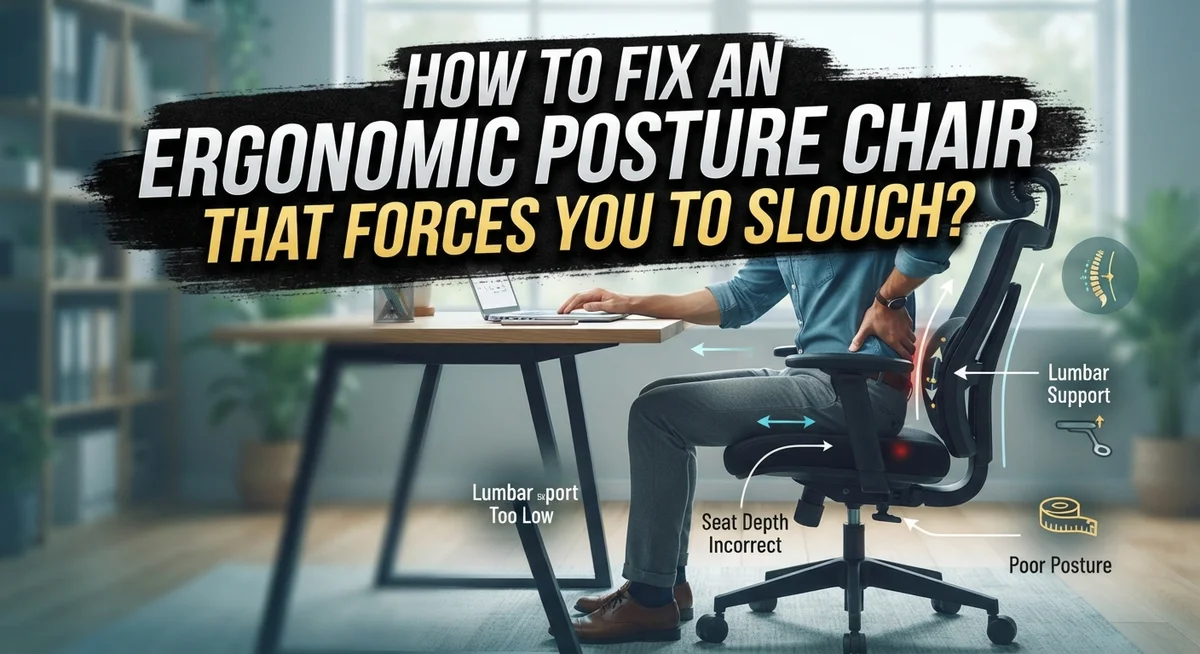
Most ergonomic chairs sit too low. When your seat height is wrong, your knees angle upward and your hips tilt backward. This position naturally pushes your spine into a slouch. Your body follows gravity instead of fighting it. A low seat removes the support your back needs.
Lumbar support might be positioned incorrectly. The lower back curve needs support right where your spine naturally bends. If the lumbar support sits too high, too low, or too far forward, it pushes you away from the backrest. You then slide down to find comfort, which creates slouching.
Your recline angle could be too aggressive. Some chairs tilt backward too much. When the seat tilts far back, your body slides forward to stay upright. This sliding motion forces your spine into a curved, slouched position.
Armrests positioned wrong cause shoulder problems. High armrests force your shoulders to lift. Low armrests make you lean sideways. Both situations cause your upper back to round forward into a slouch.
The chair backrest might be too short. If the backrest doesn’t reach your mid back, it leaves your upper spine unsupported. Your shoulders then roll inward and forward naturally.
You might simply be sitting too far forward. Many people perch on the front edge instead of settling into the seat fully. This removes all back support and forces slouching.
The real issue is usually not your chair’s design. It’s the adjustment. Your specific body needs specific positioning. Once you adjust these elements correctly, slouching becomes uncomfortable instead of easy.
Signs Your Chair Setup Is Working Against Your Posture
Your body sends clear signals when your chair setup is working against you. Pay attention to these warning signs.
Neck and shoulder pain appears first. When you slouch, your head moves forward and your neck muscles strain to hold the weight. You might feel tightness across your upper back or sharp pain between your shoulder blades. This happens because slouching forces your shoulders to round inward.
Lower back discomfort develops next. A chair that doesn’t support your lumbar curve leaves your lower spine unsupported. You feel an ache or stiffness after sitting for just a few hours. The pain gets worse as the day goes on.
Constant sliding down the seat is another red flag. If you find yourself moving toward the front of the chair every 30 minutes, your seat height or depth is wrong. Your body naturally slides when it cannot find a stable, comfortable position.
Fatigue sets in faster than normal. When your chair forces bad posture, your muscles work harder to keep you upright. You feel exhausted by midday even though you haven’t done physical work.
Headaches become frequent. Poor posture restricts blood flow and creates tension in your neck and shoulders. Headaches that start in the afternoon or evening often link to slouching during work.
You feel pressure on your thighs. If the seat edge digs into the back of your legs, your seat is too high or too deep. This cuts off circulation and causes discomfort.
These signs mean your chair needs adjustment, not replacement. Your body is telling you something is wrong with how the chair fits you.
Step-by-Step: Adjusting Seat Height, Lumbar Support, and Recline
Once you’ve identified why your chair forces slouching, adjustment becomes straightforward. Start by sitting fully back in the seat. Your hips must touch the backrest completely. This foundation prevents you from sliding forward into a slouch.
Next, adjust your seat height so your feet rest flat on the floor. Your knees should form a 90 degree angle. If your feet dangle or your knees point upward, the seat is wrong. Raise or lower it until this angle feels natural.
Now locate your lumbar support adjustment. This is the most important step for preventing slouching. The support should contact your lower back right where your spine curves inward, above your hip line. It should feel like a gentle press, not painful pressure. Many people set lumbar support too high or too low. Test different positions over several hours to find what feels right.
Check your recline angle next. A slight backward tilt between 100 and 110 degrees helps your back relax without forcing slouching. Too much recline encourages your body to slide down. Too little recline creates tension in your shoulders and neck.
Finally, verify your armrest height. Your shoulders should stay relaxed and down when your arms rest on them. High armrests force your shoulders upward, which leads to neck strain and slouching.
After adjusting everything, perform hourly posture resets. Take a deep breath, roll your shoulders back and down, and sit fully back again. This active habit reinforces good positioning. Remember: your chair is a support tool, not an automatic fix. Consistent adjustment plus conscious posture habits work together to stop slouching.
Correcting Armrest and Shoulder Positioning
Your armrests play a huge role in shoulder positioning. When they sit too high, your shoulders lift toward your ears, creating tension that forces your upper body to slouch forward to compensate. When they sit too low, you lean sideways or hunch to reach them.
Start by sitting upright with your arms at your sides. Your elbows should bend at roughly 90 degrees. Now check where your armrests sit. They should align with your elbow height, allowing your shoulders to stay relaxed and level.
Adjust your armrests so your forearms rest on them without effort. Your shoulders must stay down and back, not hunched up toward your neck. Many people ignore this step and wonder why their neck hurts after sitting for hours.
Pay attention to armrest width too. If they’re too wide, you’ll reach outward and rotate your shoulders inward. If they’re too narrow, your arms dangle without support. Your elbows should sit comfortably on the pads without spreading your arms apart unnaturally.
Once armrests are correct, roll your shoulders backward in slow circles. Feel how your chest opens up. This movement shows you what proper shoulder positioning feels like. Your upper back should feel supported, not strained.
Test your new armrest position for a full workday. Notice if your neck tension decreases or your shoulder pain improves. These changes take time to develop. Your body adapted to slouching over weeks or months, so adjustment takes patience.
If pain persists after correct armrest positioning, the problem likely sits elsewhere in your chair setup. Return to your seat height and lumbar support adjustments. Often, multiple small positioning errors combine to force slouching.
Building Posture Habits That Reinforce Chair Adjustments
Your chair adjustment means nothing if you don’t build habits to maintain good posture. The adjustment creates the opportunity, but your body’s muscle memory determines whether you actually sit upright or slide back into slouching.
Start by setting hourly reminders on your phone or computer. Every 60 minutes, stop what you’re doing and perform a posture reset. Sit fully back in your chair. Roll your shoulders backward and downward. Take three deep breaths. This simple routine retrains your nervous system to recognize proper alignment.
Muscle memory develops through repetition, not willpower. Your back, neck, and core muscles need consistent activation to support upright sitting. When you slouch, these muscles relax and weaken. When you sit correctly, they engage and strengthen. Over two to three weeks, good posture becomes your default position.
Create a physical cue in your workspace. Place a small object on your desk or wear a bracelet that reminds you to check your posture. Every time you notice it, sit back fully and adjust your position. These visual reminders break the slouching cycle.
Pay attention to when you slouch most. Do you lean forward during phone calls? Do you drop your shoulders while typing? Does your lower back flatten during afternoon fatigue? Once you identify your specific slouching triggers, you can address them directly.
Combine chair adjustments with stretching and strengthening exercises. Gentle chest stretches, shoulder blade squeezes, and core activation work together with your chair setup. Your chair supports proper posture, but your muscles maintain it.
Track your progress daily. Notice when you catch yourself slouching earlier in the day. Celebrate small wins. Building posture habits takes time, but consistency transforms your sitting experience completely.
Common Setup Mistakes That Undo Ergonomic Benefits
Most people make setup mistakes before they even sit down. These errors undo all the benefits your ergonomic chair can offer.
The first mistake is not sitting fully back in the chair. Many people perch on the front edge or slide partway back. This position forces your spine into an unnatural curve. Your chair’s lumbar support sits too far away from your lower back. Slouching becomes inevitable. Always position yourself completely against the backrest.
Another common error involves ignoring initial measurements. You need to check your setup before you start working. Measure the distance from your elbows to your keyboard. Your feet should rest flat on the floor without dangling. Your eyes should align with the top of your monitor. Skipping these checks means your chair works against you from day one.
Poor recline angle settings create major problems too. Many people leave their chair in a fully upright position. This extreme angle actually encourages slouching because it feels uncomfortable. A slight recline of 100 to 110 degrees feels more natural. Your muscles relax into proper alignment instead of fighting the position.
People also forget that chair adjustment is only half the solution. Your chair provides support, but you must actively maintain good posture. No adjustment alone can force you to sit correctly. Your muscles need to learn the proper position through repetition.
Finally, many users adjust their chair once and never revisit it. Your body changes. Your workspace changes. Seasonal adjustments matter. Review your setup monthly to ensure everything still supports your spine correctly. Small tweaks prevent slouching from creeping back into your routine.
Troubleshooting Persistent Slouching After Adjustments
Your chair adjustments might still feel uncomfortable because slouching often returns after a few hours. This happens for one simple reason: your body reverts to familiar patterns without active effort.
The most common culprit is muscle weakness in your core and back. Your muscles haven’t adapted to proper positioning yet. When you sit correctly, muscles work harder than when you slouch. This effort feels uncomfortable initially, so your body naturally slides back down into the familiar slouch position.
Start by recognizing when slouching happens most. Does it occur after lunch? During afternoon meetings? After two hours of work? Once you identify the timing, you’ve found your weakness point.
Next, strengthen the muscles that support upright posture. Simple exercises help tremendously. Wall angels, planks, and back extensions all build the endurance your body needs. Even ten minutes daily makes a real difference within two weeks.
Posture resets become your secret weapon. Every hour, stand up completely. Roll your shoulders backward. Take three deep breaths. This interrupts the slouch cycle and reminds your muscles what correct positioning feels like.
Your chair might also be fighting against you. If the seat is too soft or the backrest too reclined, even perfect adjustments won’t help. Test different recline angles to find what naturally supports upright sitting without constant muscle tension.
Finally, accept that habit change takes time. Your body spent months or years slouching. Three to four weeks of consistent effort rewires these patterns. Be patient with yourself. The combination of proper adjustments, muscle strengthening, and hourly resets transforms slouching into genuine discomfort rather than comfort.
Maintaining Good Posture Throughout the Workday
Your chair is just a tool. It cannot force you to sit upright if you don’t actively participate in maintaining good posture throughout your day.
The key is understanding that your body adapts to whatever position you repeat most often. If you slouch for eight hours daily, your muscles learn to slouch. Your chair supports this habit rather than fighting it. This is why adjustment alone fails without consistent effort.
Start by doing a “posture reset” every single hour. Stand up, roll your shoulders backward, take three deep breaths, and sit back down fully in your chair. This simple action interrupts slouching patterns before they take hold.
Pay close attention to when slouching sneaks back in. Does it happen after lunch? During afternoon meetings? When you focus intensely on your screen? Once you identify your slouching triggers, you can catch yourself before bad habits return.
Your core and back muscles need regular activation. Weak muscles cannot hold upright posture for long periods, no matter how perfect your chair adjustment is. Simple desk exercises like seated torso twists, shoulder blade squeezes, and gentle back extensions help strengthen these areas throughout your day.
Posture maintenance is not about willpower. It is about creating automatic responses. When your body feels the difference between slouching and sitting upright, good posture becomes the comfortable choice instead of the difficult one.
Your chair works best when you work with it. Combine your adjusted chair with hourly reminders, targeted strengthening, and conscious awareness. This combination transforms your chair from a slouching enabler into a genuine support tool. The effort you invest now prevents chronic pain and discomfort later.
Final Thoughts
Fixing a slouchy ergonomic chair takes more than one quick fix. It needs the right setup, steady habits, and a little patience.
Your chair is a tool, not a magic cure. It gives your body support, but you still decide how to sit in it.
Start with the basics. Check your seat height, lumbar support, and recline angle. These three settings make good posture feel natural instead of forced.
Then focus on your habits. Sit fully back, roll your shoulders down, and reset your posture every hour. Small actions like these add up over time.
Remember that muscles matter too. A weak core or back will pull you into a slouch, no matter how well your chair is set. Strengthening these muscles helps your body hold the position your chair supports.
Also, watch for common mistakes. Sliding down the seat, ignoring armrest height, or skipping your initial chair setup can undo all your progress. Fix these small issues before blaming the chair itself.
Give yourself time to adjust. Posture change is a skill, not an overnight switch. Your body needs repetition to build new movement patterns.
Think of your chair as a partner in this process. It supports your effort, but it cannot replace it. The real fix comes from combining smart adjustments with consistent, mindful sitting.
In the end, a posture chair works best when you actively work with it. Pay attention to your body, correct small habits early, and keep adjusting as needed.
With patience and the right approach, you can turn a slouch inducing chair into a tool that helps you sit tall every day.
Frequently Asked Questions
Why does my expensive ergonomic chair still make me slouch?
Price alone does not fix slouching. Even premium chairs require proper adjustment and active effort from you. The chair provides support, but your body decides whether to use it. Without correct setup and consistent posture habits, even the best chair becomes just another place to slouch.
Your role matters more than the chair’s cost. You must sit fully back, adjust lumbar support correctly, and maintain awareness throughout the day. The chair is a tool. You are the one doing the work.
What’s the most common reason my chair forces bad posture?
Most people adjust their chair once and stop. Your body slowly slides down the seat as you work. Armrests positioned too high or too low pull your shoulders forward. The recline angle might be too far back, encouraging slouching.
Check your setup every few days. Sit all the way back in the seat. Roll your shoulders down and back. Feel the difference between slouching and sitting tall. Your chair did not change, but your position did.
Can a slouchy chair be fixed without replacing it?
Yes. Most slouching problems come from incorrect adjustments, not broken chairs. Optimize your seat height so your feet rest flat. Position lumbar support at your lower back curve. Set the recline angle to support upright sitting without forcing you backward.
Then practice hourly posture resets. Take a deep breath, roll your shoulders, and sit fully back. Your muscles need retraining just as much as your chair needs adjusting.
Does core strength really affect how I sit in my chair?
Absolutely. Weak back and core muscles make slouching feel easier than sitting upright. A strong core holds you in position without effort. Weak muscles tire quickly, and slouching returns.
Build strength gradually. Your chair becomes comfortable only when your body can support good posture naturally. The chair and your muscles work together.

Hi, I’m Clara! I started SitSmartGuide to help people find chairs that truly support their comfort and health — without the guesswork. After years of dealing with back pain from bad seating, I became obsessed with testing, researching, and reviewing chairs so you don’t have to learn the hard way.