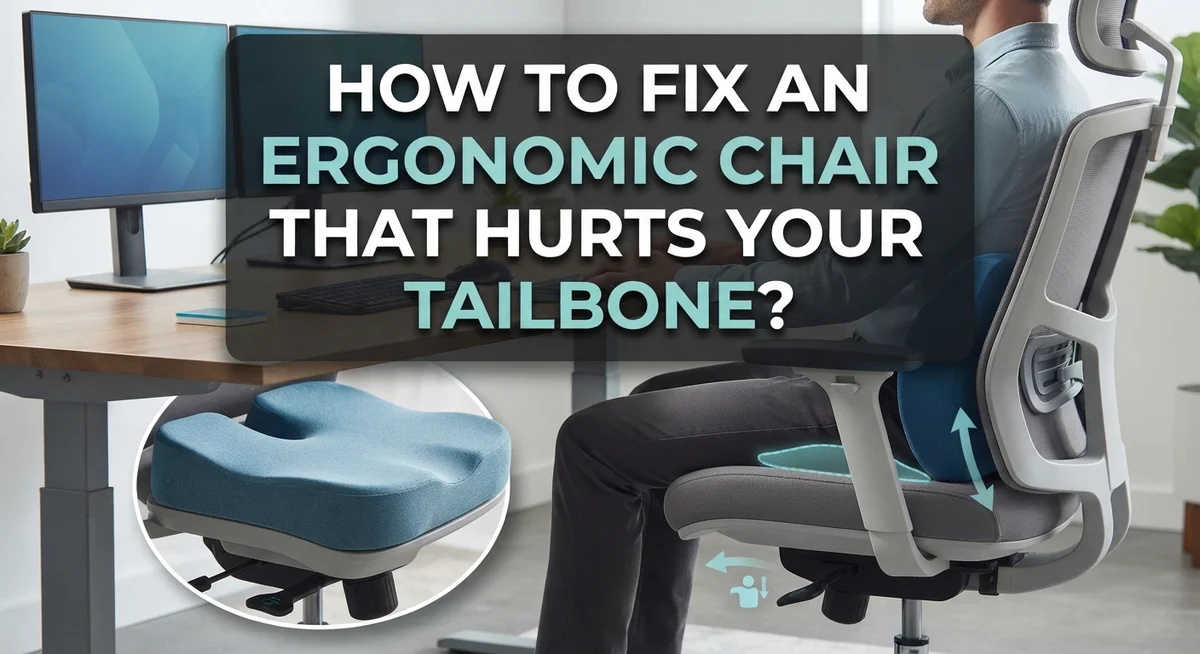
How to Fix an Ergonomic Chair That Hurts Your Tailbone?
Does your ergonomic chair hurt your tailbone instead of helping it? You are not alone. Many people buy a fancy chair expecting comfort, but end up with sharp pain at the base of their spine.
The problem is not always the chair itself. It is often about fit and adjustment. A chair that feels great for one person can cause serious tailbone pain for another.
Seat depth, cushion firmness, and posture all play a role. Even a well reviewed chair can fail if the seat pan is too deep or the cushion is too soft. Your sitting habits matter too.
This article will help you understand why your chair hurts your tailbone. You will learn simple fixes like adjusting your posture, changing seat angle, and checking seat depth.
By the end, you will know exactly how to stop the pain and sit comfortably again.
In a Nutshell
Check your posture first. Sit upright with your back straight. Lean slightly forward to shift weight off your tailbone.
Look at seat depth. A seat that is too deep or too shallow can create pressure. Your seat should match your leg length.
Avoid overly soft cushions. Soft padding feels nice at first but often makes tailbone pain worse over time. Firmer, contoured support works better.
Use a coccyx cutout if possible. This small design feature takes direct pressure off your tailbone area.
Do not add tilt to a deep seat. This combination causes sliding and more pain, not less.
Adjust often throughout the day. Small changes in position help prevent stiffness and pressure buildup.
Remember, price does not equal comfort. Even expensive ergonomic chairs can fail to fix tailbone pain. Focus on seat contour and depth instead of brand names. Trial and error often works best for chronic pain.
Why Your Ergonomic Chair Is Hurting Your Tailbone
Your tailbone hurts in an ergonomic chair for several specific reasons. Understanding these causes helps you fix the problem.
Seat depth matters most. A seat that extends too far back pushes your tailbone into the backrest. Your coccyx gets trapped between the seat and your body weight. Conversely, a shallow seat leaves your tailbone hanging off the edge, creating pressure from below. The ideal seat depth matches your thigh length so your tailbone stays supported but not compressed.
Cushion firmness directly affects pain. Overly soft cushions feel comfortable initially but actually sink under your weight. This causes your tailbone to drop deeper into the seat, increasing pressure on the coccyx. The cushion compresses unevenly, creating pressure points instead of even support.
Poor seat contour causes problems. Flat seats distribute your weight poorly. Your tailbone bears too much pressure because the seat lacks the proper curve. A contoured seat spreads pressure across your entire sitting surface and away from your coccyx.
Sitting position amplifies the issue. Slouching pushes your tailbone backward into the seat. Leaning back increases pressure on your coccyx. Forward tilt of your pelvis moves pressure away from your tailbone onto your thighs and hip bones.
Tilt settings can worsen pain. Adding seat tilt to a deep seat makes you slide forward. This creates friction and shifts your tailbone position awkwardly. The combination of depth and tilt becomes a pain generator rather than a solution.
Lack of coccyx cutouts removes relief. Many chairs have a flat back edge. A cutout or notch in the seat back creates space for your tailbone. Without this feature, your coccyx has nowhere to go but into the seat itself.
Your chair hurts your tailbone because of how these factors work together. One problem alone might be manageable. Multiple issues combined create significant pain that no amount of sitting adjustment can fix.
Key Chair Features That Affect Coccyx Pressure
Seat depth is the foundation of tailbone comfort. A seat that extends too far back pushes your tailbone directly into the backrest, creating constant pressure. Conversely, a seat that is too shallow fails to support your thighs properly, which shifts your weight onto your coccyx instead.
Measure your seat depth carefully. Sit back fully in your chair. Your fingertips should fit between the seat edge and the back of your knees. If no space exists, your seat is too deep. If significant gap remains, your seat may be too shallow.
Cushion firmness plays a critical role in pain relief. Hard seats seem uncomfortable but actually reduce tailbone pressure by distributing your weight evenly. Overly soft cushions feel pleasant initially but compress under body weight, creating a valley where your tailbone sinks deeper into the seat. This sinking motion concentrates pressure exactly where you feel pain most.
Seat contour affects how your weight spreads across the chair. Flat seats push pressure into a small area. Contoured seats with a slight curve distribute your body weight across a larger surface, reducing concentrated pressure on your tailbone.
Coccyx cutouts make a real difference. These small indentations or notches in the seat remove direct contact between your tailbone and the chair surface. Your weight rests on your thighs and sit bones instead of your sensitive coccyx.
Seat tilt angle influences pressure significantly. A slight forward tilt (5 to 10 degrees) reduces tailbone pressure by shifting your weight toward your thighs. However, combining forward tilt with a deep seat causes sliding, which worsens pain rather than relieving it.
When evaluating any chair, examine these features in order: depth first, then cushion firmness, then contour, then cutout availability, and finally tilt capability. Individual responses vary greatly, so testing different combinations helps you find what works for your specific situation.
Step-by-Step: Adjusting Your Chair to Relieve Tailbone Pain
Start by sitting all the way back in your chair. Notice where your tailbone makes contact with the seat. This is your baseline for understanding the problem.
Next, check your seat depth by measuring from the backrest to the front edge. Your measurement should leave about two to three inches of space between the seat edge and the back of your knees. If the seat extends too far, your tailbone gets pushed backward into pressure.
Adjust your sitting position first. Lean slightly forward instead of resting completely back. This small shift removes pressure from your coccyx immediately. Many people find relief simply by changing how they sit rather than buying a new chair.
Examine your cushion firmness. Press down on the seat with your hand. If it compresses deeply and slowly returns, it’s too soft. Firm cushions support your weight better and prevent your tailbone from sinking into painful positions.
Check if your chair has a coccyx cutout. This is a small notch or indentation in the seat where your tailbone sits. Run your fingers across the seat surface to feel for this feature. If present, position yourself directly over it.
Adjust the seat tilt carefully. If your seat tilts, start with a neutral position first. Only tilt backward if your seat is shallow. Never add tilt to a deep seat because this causes sliding and increases pain.
Move around throughout your day. Spend five minutes every hour in a different position. Stand up and stretch. Shift your weight side to side while sitting. Small movements prevent pressure buildup in one spot.
If pain continues after these adjustments, the chair’s base design may not suit your body. Some people need specialized seat designs with better contouring or different depth measurements. Trial and error is normal for chronic tailbone issues.
Posture and Sitting Habits That Reduce Pressure
Your sitting habits have a direct impact on tailbone pain. The way you position your body in the chair matters just as much as the chair’s design itself.
Maintain upright posture with good spinal alignment. Sit with your shoulders back and your spine in a neutral position. Your ears should align with your shoulders, and your shoulders should align with your hips. This alignment reduces pressure on your tailbone by distributing your weight more evenly across the seat.
Avoid slouching or leaning back excessively. When you slouch, your tailbone tilts backward and pushes directly into the seat. This concentrates pressure on a small area, which increases pain. Instead, keep your chest open and your core engaged.
Lean slightly forward periodically throughout your day. You don’t need to stay in one position constantly. Shift your weight forward by about 10 to 15 degrees. This movement reduces contact between your tailbone and the seat cushion. Even small forward leans give your coccyx relief.
Change your sitting position every 30 minutes. Move around and stand up when possible. Sitting in any single position for hours compounds tailbone pain. Movement breaks the cycle of constant pressure.
Keep your feet flat on the floor or footrest. This supports your legs and prevents you from sliding forward in the seat. When your feet dangle, you tend to slouch or shift your weight onto your tailbone.
Adjust your hip angle based on what feels right. Some people find relief by sitting with their hips slightly higher than their knees. Others prefer a more level hip position. Pay attention to what reduces your pain.
These sitting habits work together with proper chair adjustments. Good posture alone won’t fix a poorly designed chair, but poor posture will worsen pain in even a well designed one. Focus on both elements for the best results.
Using Cutouts, Cushions, and Contours Effectively
When your tailbone hurts, the right combination of cutouts, cushions, and contours can make a real difference. Let’s explore how to use these features effectively.
Coccyx cutouts are your first line of defense. These small notches or indentations sit right where your tailbone would contact the seat. A proper cutout removes direct pressure from this sensitive area. Look for a cutout that’s deep enough to create real space, not just a shallow dip. Your tailbone should fit comfortably into the opening without touching the edges.
Cushion firmness works hand in hand with cutouts. A cushion that’s too soft will compress under your weight and reduce the effectiveness of any cutout. You want a cushion firm enough to support your weight while still being comfortable. Medium to firm cushions typically work better than plush options for tailbone pain relief. The cushion should maintain its shape throughout the day.
Seat contour is equally important. A properly contoured seat distributes your weight evenly across the sitting surface. Flat seats force all your weight onto a small area, which increases pressure on your tailbone. Look for a seat that curves slightly to match your body’s natural shape. The contour should support your sit bones while creating that crucial space for your coccyx.
Combine these three elements strategically. Start by checking if your chair has a quality cutout. Then assess your cushion firmness by pressing it with your hand. Finally, examine the overall seat contour by looking at the chair from the side.
The real magic happens when all three work together. A deep cutout with a soft cushion won’t help much. A firm cushion without a cutout still puts pressure on your tailbone. A well contoured seat without proper cushioning feels uncomfortable. Evaluate each feature and adjust what you can. If your current chair lacks these elements, consider whether a different chair design might serve you better.
Common Mistakes That Make Tailbone Pain Worse
Many people accidentally make their tailbone pain worse by making the wrong adjustments. Understanding these mistakes helps you avoid them.
Adding tilt to an already deep seat is one of the biggest errors. When your seat is already deep and you tilt it backward, your body slides forward. This increases pressure on your tailbone instead of relieving it. Tilt works best with shallow seats, not deep ones.
Another common mistake is relying on adjustability alone. You might think a chair with many adjustment options will solve your pain. The truth is different. If the chair’s base design doesn’t fit your body shape, no amount of tweaking will help. Adjustability matters, but it cannot fix a fundamentally incompatible seat.
Shallow seats with backward tilt create another problem. A shallow seat doesn’t provide enough support for your sitting bones. Adding tilt to this shallow design won’t help either. Your weight concentrates on a smaller area, making pain worse.
Many people also overlook seat depth completely. They focus on cushion softness or trying expensive brands instead. Seat depth is actually more important than brand reputation. A shallow seat with poor contour causes problems even if it costs a lot of money.
Ignoring your sitting habits while adjusting the chair is another mistake. You can have the perfect chair setup, but if you slouch or lean back constantly, pain returns. Your posture and position changes matter just as much as the chair itself.
Finally, some people give up too quickly. Finding the right chair takes trial and error, especially for chronic tailbone pain. What works for one person might not work for another. Be patient with the adjustment process and test different configurations before concluding a chair won’t work for you.
Troubleshooting Persistent Pain After Adjustments
When you’ve adjusted your chair but still feel tailbone pain, the issue often runs deeper than simple tweaks. Your chair’s base design may fundamentally not match your body. Some seats have structural problems that no amount of cushioning can fix.
Start by checking if pain appears after 30 to 60 minutes of sitting. This timing tells you whether the problem is your chair’s foundation or your adjustment approach. If pain hits quickly, the seat depth or contour is likely wrong for your frame.
Test your sitting position by leaning forward slightly. Does the pain ease? If yes, your chair may be pushing your tailbone into an unnatural angle. This suggests the seat contour doesn’t support your specific body shape. You may need a different chair style entirely rather than more adjustments.
Consider whether you’re fighting against the chair’s design. Some seats have a backward tilt that works against upright posture. Others have cushioning so soft that you sink too deeply, putting pressure directly on your coccyx. Neither problem solves itself with minor adjustments.
Pay attention to how your hips sit relative to your knees. When your hips are lower than your knees, pressure increases on your tailbone. Raising your seat height or using a seat wedge can help, but only if your chair’s basic shape suits you.
If pain persists after one to two weeks of consistent adjustments and posture changes, accept that this particular chair may not work for your body. Different seat designs, depths, and contours suit different people. What feels comfortable to someone else might never work for you.
Keep a simple log of when pain occurs and what position you were in. This information guides your next chair choice and helps you avoid similar designs.
Final Thoughts
Fixing a chair that hurts your tailbone takes patience. You won’t solve this problem overnight. Small changes add up over time.
Start with the basics first. Check your seat depth and contour before anything else. These two factors matter more than brand names or price tags.
Remember that adjustability alone won’t fix a poorly designed base. A chair with tilt features still won’t help if the seat depth is wrong. Design fundamentals come before fancy features.
Your sitting habits play a huge role too. Even the best chair won’t help if you slouch or sit still for hours. Combine good posture with proper chair adjustments for real results.
Give any changes enough time to work. Test new positions for at least one to two weeks. Your body needs time to adjust to new sitting patterns.
Keep track of what works and what doesn’t. A simple log helps you spot patterns in your pain. This information guides your next steps.
Some solutions surprise people. Unconventional options like camp chairs have helped chronic sufferers find relief. Don’t rule out unexpected fixes just because they seem unusual.
Trial and error is normal here. Every person’s body responds differently to seat design. What works for someone else might not work for you.
If pain continues after genuine effort, consider that this chair might not suit your body. Sometimes the honest answer is switching chairs entirely.
Your tailbone pain has a solution. It might take some testing and patience to find it. Focus on seat depth, contour, and cutouts first. Pair these features with better sitting habits.
Stay consistent with your adjustments. Give changes real time to work before judging results. With the right combination of chair features and habits, most people find lasting relief.
Frequently Asked Questions
Why does my chair hurt my tailbone in the first place?
Your tailbone pain comes from how the seat presses against your coccyx. Flat seats without proper contouring push directly on this sensitive bone. Overly soft cushions can feel comfortable at first, but they often collapse and create pressure points. Poor seat depth makes things worse because your legs don’t have enough support, forcing you to shift your weight backward onto your tailbone.
Can an expensive chair fix tailbone pain?
Price doesn’t guarantee relief. Many premium chairs cost hundreds or thousands of dollars but still cause tailbone pain for some people. The real solution depends on your specific body shape and sitting style, not the brand name. What works for one person might not work for another. Focus on seat design features instead of the price tag.
Should I add more cushioning to my chair?
Adding cushioning alone won’t solve the problem. Extra padding might feel softer temporarily, but it often makes tailbone pain worse by creating deeper pressure points. A thick cushion can also cause you to sink too far into the seat, changing your posture in unhelpful ways. The cushion needs to work with proper seat contour and depth, not replace them.
How long should I wait to see if my adjustments actually work?
Give your changes one to two weeks of consistent use before deciding they don’t work. Your body needs time to adapt to new positions and support. Track when pain happens and what position you were in during those moments. This information helps you understand whether the chair itself is the problem or your sitting habits need adjustment.

Hi, I’m Clara! I started SitSmartGuide to help people find chairs that truly support their comfort and health — without the guesswork. After years of dealing with back pain from bad seating, I became obsessed with testing, researching, and reviewing chairs so you don’t have to learn the hard way.