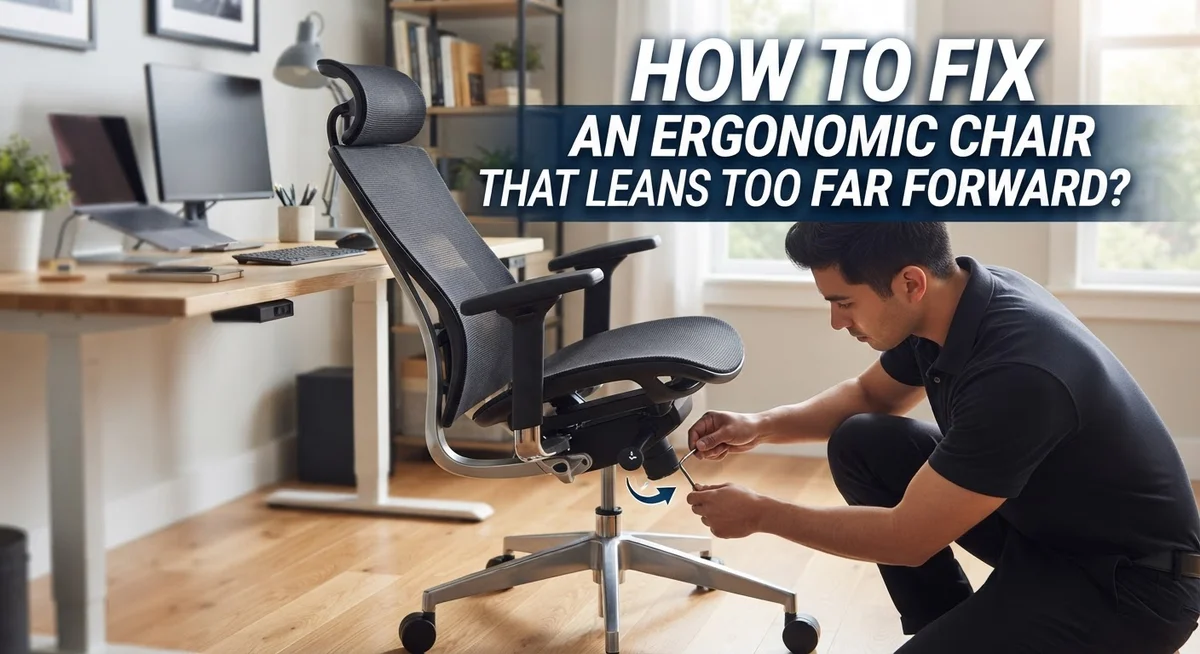
How to Fix an Ergonomic Chair That Leans Too Far Forward?
Does your ergonomic chair tip forward every time you sit down? This small problem can cause big discomfort during your workday.
A forward lean often points to a loose seat plate or a worn tilt mechanism. Sometimes the fix is even simpler than you think.
Many people install their chair base backwards without knowing it. This one mistake can throw off the entire balance of your seat.
Loose screws around the backrest and base also play a big role. Over time, regular use loosens these small but important parts.
The good news? You can fix most of these issues yourself. No need to call a technician or buy a new chair.
In this guide, we will walk you through simple steps to stop the forward lean. You will learn how to check your base assembly and spot common mistakes.
By the end, your chair will sit right where you want it. Let’s get your seat back to a comfortable and balanced position.
In a Nutshell
- Check the base first. A backwards base is the most common cause of forward lean. Flip it around if the height lever sits in front instead of the rear.
- Tighten every screw. Grab a screwdriver and check screws around the seat, backrest, and base. Loose fasteners anywhere can cause the whole chair to tilt.
- Adjust the tilt lock knob. This knob sits under your seat. Turn it clockwise until you feel firm resistance.
- Inspect for damage. Look at your casters and gas lift cylinder. A worn tilt mechanism often needs replacement parts, not just tightening.
- Fix your posture too. Sit fully back in the chair with a neutral spine. Poor posture can make a chair feel like it leans even when it works fine.
- Test after each fix. Sit down slowly after every adjustment. This helps you pinpoint exactly what solved the problem.
Why Ergonomic Chairs Lean Too Far Forward
Your ergonomic chair leans forward for specific reasons. Understanding these causes helps you fix the problem quickly and correctly.
Loose fasteners are the main culprit. Screws around your seat plate, backrest, and base loosen over time. Vibration from daily use causes this. When screws slip, your seat tilts forward. The connection between parts weakens, and gravity pulls the chair nose down.
The tilt mechanism wears out with age. Inside your chair sits a mechanism that controls forward and backward movement. Springs and locks inside this system can break or stretch. When the lock weakens, your seat stays tilted forward even when you want it level. This is especially common in older chairs.
Your gas lift cylinder can fail. This metal tube under your seat holds you up. A damaged cylinder loses pressure and can’t support your weight properly. Your body sinks down, which pushes the front of the seat lower. You might hear a hissing sound if this part leaks.
The base assembly might be backwards. This sounds simple, but it happens often. If your base installed incorrectly, the angles are all wrong. The height lever should sit at the rear of the base. The tilt adjustment should be at the front. A backwards base makes your chair naturally lean forward.
Bent or damaged parts cause misalignment. If your chair took a hard fall or got dropped, metal pieces inside can bend. Even small bends change how parts fit together. This throws off the whole balance of your chair.
Your posture might make it worse. Sitting forward in your chair trains it to lean that way. Your weight pushes the front down repeatedly. Over time, this stresses the mechanisms and loosens connections.
Most forward lean issues come from loose screws or incorrect assembly. Check these two things first before assuming something broke inside.
Step 1: Check the Base Assembly for Backwards Installation
Your chair base might be installed backwards. This is the most common reason for forward lean, and it’s easy to fix once you know what to look for.
Start by flipping your chair upside down or tilting it back so you can see the base clearly. Look at where the height adjustment lever connects to the base. On a correctly installed chair, this lever should point toward the back of the chair. If it points forward, your base is backwards.
Next, check the tilt adjustment mechanism. This control should be positioned at the front of the base, closer to where your feet rest. When the base is backwards, the tilt mechanism ends up in the wrong spot. This causes your seat to angle forward unnaturally.
To fix this, you’ll need to remove the seat plate from the base. Use your screwdriver to unbolt the connection points. Most chairs have four bolts holding the seat plate to the base. Keep these bolts in a safe place so you don’t lose them.
Once the seat plate is free, rotate the base 180 degrees. The height lever should now point backward. The tilt adjustment should face forward. Reattach the seat plate using the same bolts you removed.
Before you fully tighten everything, sit in the chair briefly to check the angle. Your seat should feel level or slightly reclined, not pitched forward. If it still leans forward, the base might not be the problem.
After confirming the base is correct, tighten all bolts firmly but don’t over tighten. Use steady pressure with your screwdriver. A backwards base assembly explains forward lean in many cases. This simple fix takes just a few minutes and often solves the problem completely.
Step 2: Tighten Seat Plate, Backrest, and Base Screws
Now that you’ve confirmed your base is installed correctly, it’s time to tighten every screw on your chair. Loose fasteners are the primary reason your chair leans forward, so this step matters greatly.
Start by gathering a screwdriver set. You’ll need both Phillips and flathead options depending on your chair’s screw types. Check every screw around your seat plate first. This is where your body weight sits, and loose screws here cause immediate forward lean problems.
Look underneath your seat. You’ll find bolts connecting the seat plate to the base. Tighten these in a crisscross pattern, similar to how you’d tighten car wheel bolts. This prevents uneven pressure that creates tilting.
Move to your backrest next. Tighten all screws connecting the backrest to the seat frame. Many people skip this area, but a loose backrest contributes to overall instability. Work methodically from top to bottom.
Don’t forget the base itself. Examine where the five wheels (casters) attach to the base. Each connection point has screws that loosen with regular use. Tighten these firmly.
Pay special attention to the tilt lock knob underneath your seat. This isn’t a screw, but it controls your chair’s forward and backward movement. Turn it clockwise until you feel resistance. This adjustment prevents unwanted forward lean during sitting.
After tightening, sit in your chair and check the angle. Rock gently to test stability. If your chair still leans forward, you may have missed a screw or discovered a bent component.
Take your time here. Rushing through this step means returning to the same problem later. Proper tightening solves forward lean issues in most cases without requiring replacement parts or professional help.
Step 3: Adjust the Tilt Lock Knob and Tension Mechanism
The tilt lock knob sits underneath your seat and controls how far your chair can recline. This knob directly affects forward lean problems. Locate this knob by flipping your chair upside down or tilting it back carefully.
You’ll see a round knob with ridges. This knob has a tension mechanism inside that resists movement. When it loosens, your chair loses its ability to stay in position and drifts forward.
Turn the knob clockwise slowly. Make small quarter turn adjustments. Each turn increases resistance against forward tilting. Stop when you feel firm resistance but the chair still reclines smoothly.
Test after each adjustment. Sit in the chair with your full weight. Lean back gently. The chair should feel stable and not slide forward. If it still leans, turn the knob another quarter turn clockwise.
Don’t over tighten the knob. Too much tension makes the chair impossible to recline. You want balance between stability and function. The chair should stay where you position it without requiring force to move.
Check the tension mechanism for damage while you work. Look for cracks or worn spots around the knob. If you see damage, the internal mechanism may need replacement.
Some chairs have a tension dial instead of a knob. These work the same way. Turn clockwise to increase tension. Turn counter clockwise to decrease tension.
After adjusting the tilt lock, sit in your chair for several minutes. Notice how the angle feels. Your chair should maintain position without drifting. The backrest should support you comfortably. If forward lean returns after a few hours, the mechanism may have internal wear requiring deeper inspection.
Regular adjustments keep your chair working properly. Check the tilt lock knob every few months. Tighten it if you notice new forward lean developing. This simple maintenance prevents bigger problems later.
Step 4: Inspect Casters and the Gas Lift Cylinder
Your chair’s casters and gas lift cylinder work together to support your weight and maintain proper height. When your chair leans forward, these components might be the culprit.
Start by checking your casters. These are the wheels under your chair base. Flip your chair upside down or tilt it back so you can see all four casters clearly. Look for cracks, flat spots, or visible damage on each wheel. Damaged casters can cause your chair to sit unevenly, which makes the seat angle forward. Roll each caster by hand to see if it spins freely. If a caster doesn’t roll smoothly or feels stuck, it needs replacement.
Next, inspect the gas lift cylinder itself. This metal tube sits directly under your seat and controls your chair’s height. Look for dents, cracks, or bends along the entire cylinder. A bent cylinder pushes your seat at an angle instead of straight up. Check the connection points where the cylinder attaches to both the seat plate and the base. These connections should be tight and secure.
Listen for hissing sounds when you sit down. A failing gas lift cylinder sometimes leaks air, which causes gradual height loss. This makes your chair sink forward over time. If you hear hissing or notice your chair sinking throughout the day, the cylinder has likely failed.
Check the base attachment point where the cylinder connects. Tighten any loose bolts with your screwdriver. Make sure the cylinder sits straight and doesn’t angle to one side. An angled cylinder transfers weight unevenly across your seat.
If your casters roll freely and the cylinder looks undamaged with no leaks, these parts aren’t causing your forward lean. Move on to check other components. However, if you find damage here, these parts will need attention to restore your chair’s proper angle.
Tips for Maintaining Proper Chair Balance and Posture
Proper chair balance starts with understanding how your body interacts with the seat. Your posture directly affects how the chair feels and performs. When you sit, position yourself fully back in the seat with your spine neutral. This means your shoulders should rest comfortably against the backrest, and your feet should touch the floor flat.
Many people experience forward lean because they don’t sit deeply enough in the chair. Your weight needs to distribute across the entire seat plate. If you perch on the edge, the chair’s balance shifts forward automatically. Push your hips all the way back before settling your weight down.
Your spine alignment matters significantly for maintaining proper balance. Keep your head directly above your shoulders. Your arms should rest at a 90 degree angle when typing or working. This neutral position prevents the chair from tilting forward under uneven weight distribution.
Regular maintenance keeps your chair balanced long term. Check all fasteners monthly, especially around the seat plate and base connection points. Loose screws develop gradually as you sit and shift your weight daily. Tightening them prevents the forward lean from returning.
Adjust your chair height so your thighs sit parallel to the floor. This position naturally encourages proper posture and prevents slouching. When your knees angle downward too steeply, you tend to slide forward in the seat.
Pay attention to how you transition in and out of your chair. Avoid twisting your spine or leaning heavily to one side. These movements can loosen fasteners and shift the base alignment over time.
Your work setup environment also influences posture. Position your desk and monitor at proper heights. When your workspace requires you to reach or bend forward, your chair balance suffers. A well organized desk keeps you sitting properly centered in your chair throughout the day.
Common Mistakes That Cause Ongoing Forward Lean
People make several mistakes that keep their chairs leaning forward even after attempting fixes. Understanding these errors helps you avoid repeating them.
Installing your base backwards is the most common mistake. The height lever should sit at the rear of the base, while the tilt adjustment mechanism belongs at the front. Many people flip this around without realizing it. Check your base orientation before troubleshooting anything else. This single mistake causes more forward lean complaints than any other factor.
Ignoring loose fasteners throughout the chair is another frequent error. People tighten only the seat plate or backrest but miss screws elsewhere. Your chair has fasteners connecting the base to the seat, the backrest to the seat, and the cylinder to the base. Loose screws in any location create instability that feels like forward lean. Go through your entire chair with a screwdriver and check every connection point.
Poor seated posture contributes to the problem too. When you don’t sit fully back in your seat, your weight shifts forward. This creates the sensation of forward lean even when your chair works correctly. Your body position matters as much as your chair’s mechanics.
Overlooking the tilt lock knob adjustment leaves your chair too loose. Some people find the knob and assume it’s already set correctly. It needs firm resistance when turned, not loose spinning. Test the adjustment by sitting in your chair and checking if it feels stable.
Skipping regular maintenance allows small problems to become big ones. Fasteners loosen naturally over time from daily use and chair movement. Monthly checks catch issues before they cause noticeable forward lean. Set a reminder to inspect your chair regularly.
Final Thoughts
Fixing a forward leaning chair does not need to be complicated. Most problems come from simple things like loose screws or a backwards base. Checking these basics first saves you time and effort.
Your chair is a system of connected parts. Each piece affects the others. A loose seat plate changes how the tilt mechanism behaves. A backwards base throws off the entire balance.
Take a systematic approach when troubleshooting. Start with the base orientation. Move to the screws and fasteners. Check the tilt lock knob last.
This order makes sense because base problems affect everything else. Fixing screws before checking the base wastes effort if the base is wrong.
Remember that your body plays a role too. Even a perfectly fixed chair feels wrong if you sit incorrectly. Good posture works with your chair, not against it.
Small issues grow into bigger ones over time. A slightly loose screw today becomes a wobbly chair next month. Regular checks catch these problems early.
You do not need special tools for most fixes. A simple screwdriver handles most repairs. Your own hands can test tightness and stability.
Patience helps during this process. Some fixes work right away. Others need small adjustments over several days. Give your chair time to settle after changes.
If basic fixes do not solve the lean, the problem might be deeper. Worn internal parts sometimes need professional attention. This happens less often than simple fixes though.
Most chairs respond well to the steps outlined here. Checking the base, tightening screws, and adjusting the tilt lock solve the majority of forward lean issues.
Your comfort at work depends on a properly balanced chair. Taking time now to fix these issues pays off in daily comfort. A stable chair supports better posture and reduces strain throughout your workday.
Frequently Asked Questions
Why does my ergonomic chair lean forward even after I tighten screws?
Forward lean usually happens for one of three reasons. First, your chair base might be installed backwards. The height lever should sit at the rear, while the tilt adjustment knob belongs at the front. Second, you may have loose fasteners in multiple spots. Don’t just tighten the seat area. Check screws around the backrest and base too. Third, your tilt lock knob under the seat might need adjustment. Turn it clockwise until you feel firm resistance.
How do I know if my base is installed backwards?
Look at your chair from the side. The height lever (the part you pull to raise or lower the seat) should point toward the back of the chair. The tilt adjustment knob should face forward. If these are reversed, your base is backwards. Remove the seat from the base and flip the base around. Reattach everything carefully and test the lean.
Can my sitting posture cause the chair to seem like it leans forward?
Yes. Many people sit too far forward or don’t sit deeply enough in the seat. This creates the feeling of forward lean even when the chair itself is balanced. Slide your body all the way back until your spine touches the backrest. Keep your thighs parallel to the floor. This neutral position shows whether the chair actually leans or if your posture needs adjustment.
What should I check if basic tightening doesn’t fix the lean?
Inspect your gas lift cylinder for leaks or damage. Look for oil spots under your chair. Check your casters (wheels) to make sure they roll smoothly. A broken caster can cause uneven weight distribution. If these parts look fine, the tilt mechanism itself might be worn and need replacement.

Hi, I’m Clara! I started SitSmartGuide to help people find chairs that truly support their comfort and health — without the guesswork. After years of dealing with back pain from bad seating, I became obsessed with testing, researching, and reviewing chairs so you don’t have to learn the hard way.