How to Unjam the Tilt Lock Mechanism on a Modern Office Chair?
Does your office chair suddenly refuse to recline? Or maybe it locks in one spot and won’t budge no matter how hard you try?
A jammed tilt lock mechanism is a common headache for many chair owners. The good news is that you can often fix it yourself.
This article will walk you through the exact steps to unjam your tilt lock. We will cover how the mechanism works and why it controls your backrest movement.
By the end, your chair should tilt back smoothly again. You will also know how to spot warning signs before they turn into bigger problems.
Ready to get your chair moving again? Let’s dive in.
In a Nutshell
- Find the lever first. It’s usually under the seat, near the front or side. Pull or push it to disengage the lock fully.
- Check the tension knob. A tight tension setting can feel like a jam. Loosen it slowly until you feel resistance ease.
- Inspect the fasteners. Loose screws or bolts can throw off the tilt mechanism. Tighten anything that feels wobbly.
- Look at the springs. Worn or damaged springs stop smooth recline. You may need to replace them if they look bent or rusted.
- Test the recline motion. Sit down and lean back gently. The backrest should move freely between 100 and 110 degrees.
- Detach the base if needed. For stubborn jams, you might have to remove the base plate. This gives you full access to the tilt mechanism underneath.
Understanding How the Tilt Lock Mechanism Works
Your office chair’s tilt lock mechanism is a simple but important part. It controls whether your backrest can recline or stays fixed in place. Understanding how it works helps you fix jams faster.
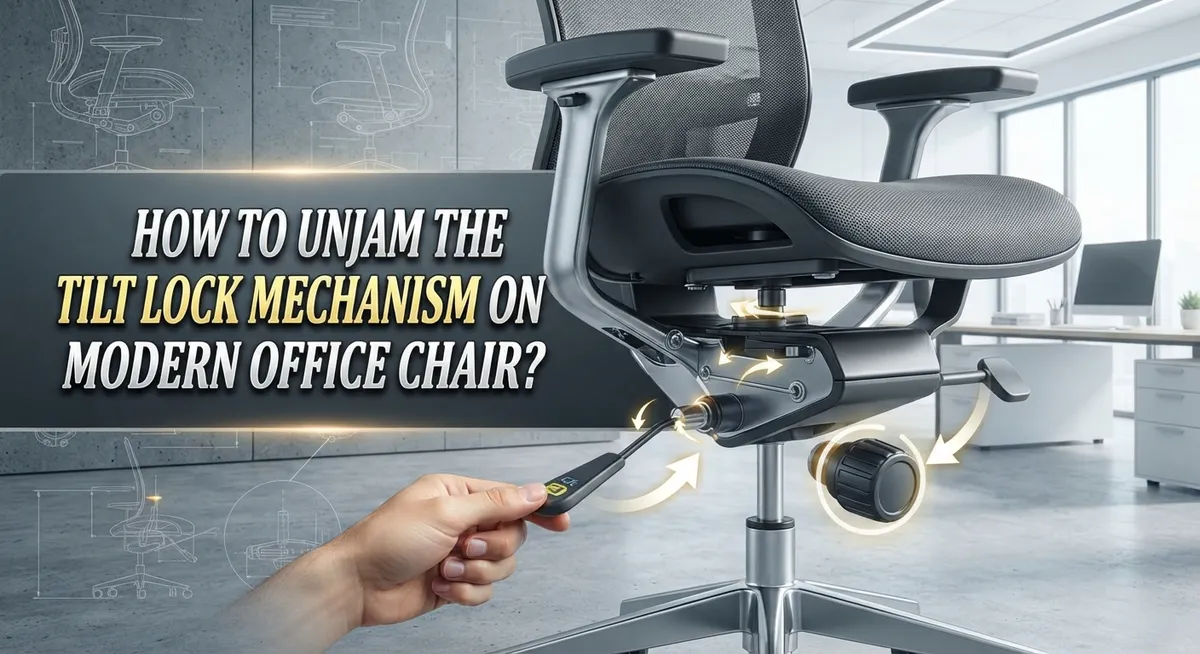
The tilt lock lever sits underneath your seat. You’ll find it near the front or side of the chair base. When you push or pull this lever, it engages or disengages the lock. An engaged lock prevents your backrest from moving backward. A disengaged lock allows free recline motion.
Inside the mechanism, a metal pin or latch holds the backrest in position. When locked, this pin prevents the backrest from tilting. When unlocked, the pin releases, and your backrest moves freely. The tension knob works alongside this system. It controls how much resistance you feel when reclining.
The natural recline angle sits between 100 and 110 degrees. This range lets you lean back comfortably without tipping. Springs underneath support this motion and return your backrest to upright position.
A jam happens when the pin gets stuck, fasteners loosen, or springs wear out. Sometimes the tension knob gets twisted too tight, creating false resistance that feels like a jam. Other times, debris or dust blocks smooth movement.
The seat plate connects all these parts together. If it becomes damaged or bent, the entire tilt system fails. Fasteners hold everything secure. Loose bolts or screws throw off the alignment and cause binding.
Knowing these components helps you diagnose the problem accurately. You can then target the exact cause instead of guessing. This saves time and prevents unnecessary repairs.
Signs Your Tilt Lock Mechanism Is Jammed
Your office chair tells you when something is wrong. Pay attention to these warning signs that your tilt lock mechanism is stuck.
The backrest won’t recline at all. You sit down, pull the lever, and nothing happens. The chair stays upright no matter how hard you push back. This is the most obvious sign of a jammed lock. The mechanism refuses to release the backrest from its locked position.
The chair reclines too easily or won’t stay put. The opposite problem also signals trouble. Your backrest drops back suddenly when you barely touch it. Or it keeps sliding down even after you lock it. Both mean the tilt lock is not holding properly.
You hear grinding or clicking sounds. Strange noises come from under your seat when you try to recline. These sounds mean internal parts are catching or rubbing against each other. The mechanism is struggling to move.
The lever feels stiff or stuck. You grip the tilt lock lever and it barely moves. It takes extreme force to push or pull it. A healthy lever should move smoothly with light pressure.
The tension knob doesn’t respond. You turn the tension adjustment dial, but nothing changes. The backrest still feels too tight or too loose. This suggests the knob is not connected properly to the locking mechanism.
Visible damage or debris under the seat. Look underneath your chair. You might see broken plastic pieces, rust, or dust clogging the mechanism. Bent metal parts also point to damage.
These signs tell you the tilt lock needs attention soon. Ignoring them makes the problem worse over time.
Tools and Preparation Before You Start
Before you start working on your office chair’s tilt lock, gather a few basic items. You won’t need anything fancy or expensive for this job.
Grab a flashlight or headlamp first. The tilt lock mechanism sits underneath your seat in a dark spot. A light source helps you see the lever, fasteners, and springs clearly. You can use your phone’s flashlight if you don’t have a dedicated light.
Get a wrench or socket set ready. Most office chairs use bolts to connect the seat plate to the base. You need the right size to loosen and tighten these fasteners without stripping them. Check your chair’s manual to find the correct bolt sizes.
Have a screwdriver set on hand. Some chairs use screws instead of bolts. Keep both Phillips and flathead screwdrivers nearby. You might need them to access hidden fasteners or adjust tension knobs.
Bring a clean cloth or brush. Dust and debris often jam up the tilt lock mechanism. Wipe away dirt before you attempt any fixes. A soft brush works great for removing buildup from springs and metal parts.
Set up a clear workspace. You’ll need room to flip your chair upside down or tip it on its side. A hard floor works better than carpet because you can see small parts if they fall. Keep children and pets away during this process.
Wear work gloves if possible. Metal edges under office chairs can be sharp. Gloves protect your hands while you inspect and adjust the mechanism. They also give you better grip on fasteners.
Step-by-Step Guide to Unjamming the Tilt Lock
Start by sitting in your chair and locating the tilt lock lever. This lever sits underneath your seat, typically on the right side. Pull the lever toward you gently to disengage the lock mechanism.
If the lever doesn’t move, apply steady pressure without forcing it. A stuck lever often just needs consistent pressure rather than sudden jerking motions. Give it a few seconds to respond.
Once you disengage the lever, test the backrest by leaning back slowly. The chair should recline smoothly. If it still doesn’t move, the lock may be jammed deeper inside the mechanism.
Next, locate the tension knob on the underside of your seat. This knob controls how much resistance your backrest has when reclining. Turn the knob counterclockwise to reduce tension. This adjustment often helps free up stuck mechanisms.
Flip your chair upside down to inspect the tilt lock assembly more closely. Use your flashlight to examine the metal pin and latch system. Look for debris, dust, or bent metal parts blocking movement.
Clean away any dirt or dust using a soft brush or cloth. Debris frequently jams the lock mechanism. Wipe the metal components gently to remove buildup.
Check all fasteners connecting the seat plate to the base. Use your wrench or screwdriver to tighten any loose bolts or screws. Loose fasteners prevent the mechanism from functioning properly.
Test the lever again after tightening. It should move more freely now. Flip your chair back upright and try reclining once more.
If the backrest still won’t move, the springs may be damaged. Worn springs prevent proper tilt function. In this case, you may need to replace the spring assembly or contact a professional technician for deeper repairs.
Adjusting Tension and Recline Settings for Smooth Operation
Once you’ve freed up the tilt lock lever, focus on getting your chair to recline smoothly. The tension knob controls how much resistance you feel when you lean back. This dial sits underneath your seat near the tilt lock assembly.
Start by adjusting the tension knob to its middle position. Turn it slowly and feel for resistance. A knob turned too tight makes reclining nearly impossible. A knob turned too loose lets your chair collapse backward without control.
Sit in your chair and engage the tilt lock again. Push the lever to unlock the backrest. Now lean back gently and notice how the chair responds. Does it move smoothly, or does it feel sticky? The recline should feel natural around a 100 to 110 degree angle.
If the chair reclines too easily, tighten the tension knob by turning it clockwise. Make small adjustments in quarter turns. Test after each adjustment to find your comfort level. If reclining feels stiff, turn the knob counterclockwise to reduce tension.
Check that all fasteners remain tight after adjusting tension. Loose bolts or screws cause uneven pressure on the tilt lock mechanism. This creates grinding sounds and rough movement. Tighten any loose connections you find.
Test your recline motion several times. The backrest should move without jerking or sticking. Listen for strange noises. Smooth, quiet operation means your adjustments worked.
If tension adjustment doesn’t solve the problem, the issue may run deeper. Worn springs or internal damage might prevent smooth operation. In these cases, you may need to inspect the spring assembly more closely or seek professional help.
Inspecting Fasteners, Springs, and the Seat Plate
The seat plate and fasteners form the foundation of your tilt lock system. When these components loosen or corrode, the entire mechanism jams. Start by flipping your chair upside down in your workspace. Use your flashlight to see the bolts and screws connecting the seat plate to the base clearly.
Inspect each fastener carefully. Look for rust, debris, or visible damage around the connection points. Loose bolts are the most common cause of tilt lock problems. Use your wrench or socket set to check tightness. Turn each bolt clockwise gently. Do not over tighten, as this can strip threads or crack the seat plate.
Next, examine the seat plate itself for cracks or bends. A damaged plate prevents smooth tilt lock operation. Run your fingers along the edges to feel for deformities. If you find cracks, the plate may need replacement.
Now focus on the springs attached to the seat plate. Springs provide tension for your backrest recline. Look for springs that appear stretched, compressed unevenly, or disconnected. A broken spring causes one side of the backrest to lean differently than the other.
Check all connection points where springs attach to the seat plate. These bolts must stay tight. Tighten any loose connections you find. Springs work best when all fasteners are secure.
Clean around the fastener areas with your brush. Dust and debris accumulate here and prevent proper tightening. After cleaning, recheck all bolts one final time. This inspection reveals whether your jam comes from loose hardware or internal spring damage. Most tilt lock problems stem from fastener issues rather than broken components.
Common Mistakes That Worsen Tilt Lock Problems
Many people make simple mistakes that make their tilt lock problems worse. Understanding these errors helps you avoid them and keep your chair working properly.
Forcing the lever is the biggest mistake. When the tilt lock feels stuck, people push hard on the lever. This can bend or crack the internal mechanism. Instead, apply steady, gentle pressure and wait a few seconds. Let the mechanism respond naturally.
Another common error is ignoring the tension knob completely. Many users don’t realize this knob exists or think it’s not important. The tension knob controls how hard your backrest resists movement. If you skip adjusting it, your chair will either lock up or recline too freely.
Leaving the tilt lock engaged while trying to recline is another frequent mistake. Some people engage the lock, then wonder why their backrest won’t move. Always verify the lever is fully disengaged before testing the recline motion. Check the lever position twice to be sure.
Skipping the fastener check causes ongoing problems. People assume the tilt lock mechanism is broken when loose bolts are really the culprit. Vibration from daily use loosens these bolts gradually. Check them regularly to prevent future jams.
Not cleaning the mechanism leads to recurring issues. Dust and debris accumulate under your seat over time. This buildup prevents smooth movement of the lock lever. A quick cleaning with a soft brush solves many problems.
Finally, people often test their repair once and assume it’s fixed. Test your recline motion several times in different positions. This reveals whether the problem truly disappeared or just temporarily improved. Proper testing ensures your fix actually works.
Troubleshooting Persistent or Recurring Jams
When your office chair’s tilt lock keeps jamming repeatedly, the problem usually goes deeper than a one time fix. Recurring jams signal that something in your chair’s system needs attention. Start by tracking when the jam happens. Does it occur right after you adjust tension? Does it happen when you sit down? Does it jam after the chair sits unused? These patterns reveal what’s actually broken.
Next, remove the chair base completely. This gives you full access to the underside where the tilt mechanism lives. Look for debris trapped between moving parts. Dust, hair, and crumbs accumulate over time and cause repeated sticking. Use a soft brush to clean every crevice thoroughly. Pay special attention to where the lever connects to the locking bar.
Check if the tension knob spins freely without catching. A tension knob that binds will cause the whole system to jam. Turn it slowly through its full range. Listen for grinding sounds. Feel for spots where it gets stuck.
Examine the metal components for rust or corrosion. If your office has high humidity, moisture can cause the lock mechanism to corrode. Corrosion makes the parts stick repeatedly no matter how much you clean. Wipe down all metal surfaces with a dry cloth.
Test the lever’s movement by hand without sitting in the chair. It should move smoothly from locked to unlocked position. If it still catches after cleaning and checking fasteners, the internal springs may be permanently bent or damaged. At this point, the mechanism itself needs replacement rather than repair.
Final Thoughts
Fixing a jammed tilt lock does not need to feel like a big challenge. Most problems come down to three things. These are a stuck lever, a bad tension setting, or worn parts.
Start simple every time you face this issue. Check the lever first. Then look at the tension knob. Only move to deeper repairs if these steps fail.
Patience matters more than force when working with these mechanisms. Springs and levers respond well to gentle handling. Rushing the process often creates new problems instead of solving old ones.
Your chair tells you what it needs through small signs. A stiff lever means something is stuck. A loose recline means tension needs adjusting. Learn to read these signals early.
Regular checks prevent most tilt lock issues before they start. Spend a few minutes every month testing your chair’s movement. This small habit saves you from bigger repairs later.
Safety should guide every step you take during this process. Always test the chair slowly after any adjustment. Never sit down fully until you know the lock works right.
Some chairs have designs that make repairs harder than others. If you feel stuck after trying every step, that is normal. Some mechanisms need professional help to fix properly.
Keep your tools handy for future use. A simple screwdriver and some lubricant can solve most tilt lock problems. Having these ready saves time when issues come up again.
Your office chair supports you through long work hours. Taking care of its tilt lock keeps your workspace comfortable and safe. A little maintenance now prevents bigger headaches down the road.
Frequently Asked Questions
Why won’t my office chair tilt lock disengage?
A stuck tilt lock lever usually means the mechanism has dirt buildup or the internal components are misaligned. Try gently wiggling the lever side to side while pulling it outward. If resistance continues, the lock may need cleaning around its base. Sometimes the tension knob is set too tight, which prevents the lever from moving smoothly.
What’s the difference between tilt lock and tension adjustment?
Tilt lock completely freezes your backrest in place. Tension adjustment controls how much force you need to recline. You can have the lock disengaged but still feel resistance from the tension knob. Think of it this way: the lock is an on/off switch, while tension is a volume dial.
Can I use my chair if the tilt lock is jammed?
You can sit in it, but you should avoid reclining until you fix the jam. A jammed lock often means the mechanism is under stress. Using the chair anyway risks damaging the internal springs or metal components further. Take 10 minutes to address it before continuing your work.
How do I know if my tilt lock is fully disengaged?
Pull the lever all the way toward you until it stops. You should hear a small click or feel it reach an endpoint. Your backrest should move freely when you lean back. If the chair still won’t recline smoothly, the lock may not be fully released.
When should I call a professional instead of fixing it myself?
If the lever breaks off, the seat plate has visible cracks, or springs are visibly damaged, professional repair makes sense. Also, if you’ve tried cleaning and adjusting the tension but the lock still jams, the internal mechanism likely needs replacement parts.

Hi, I’m Clara! I started SitSmartGuide to help people find chairs that truly support their comfort and health — without the guesswork. After years of dealing with back pain from bad seating, I became obsessed with testing, researching, and reviewing chairs so you don’t have to learn the hard way.