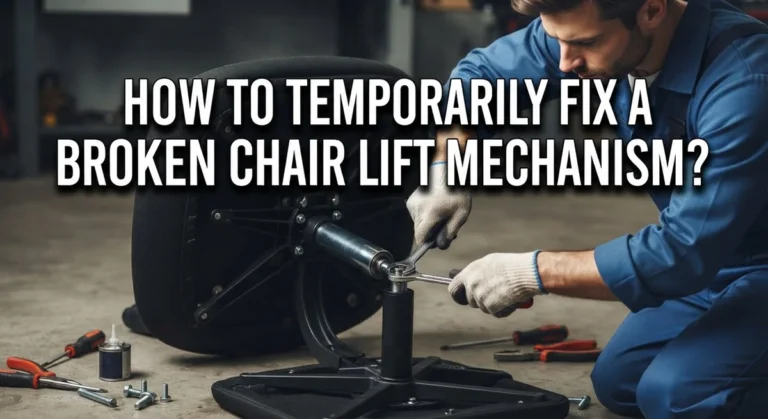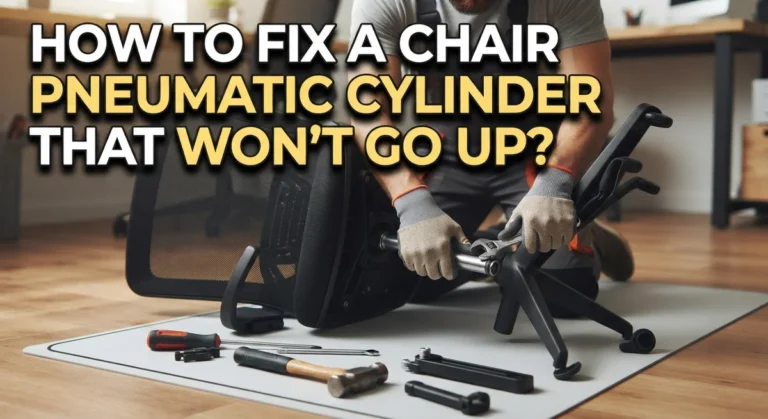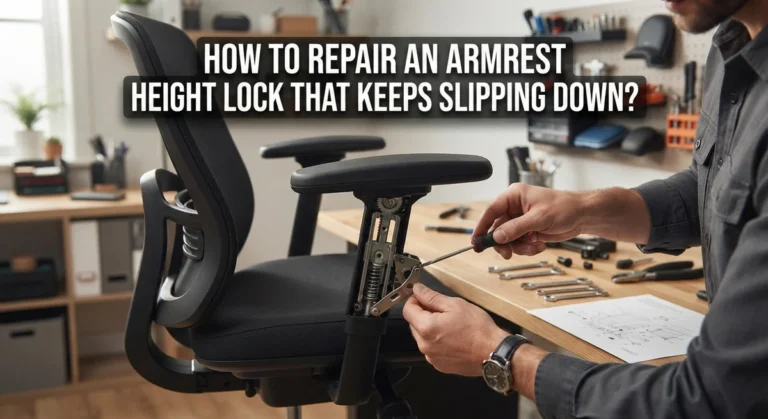

How To Fix A Gas Lift Cylinder Without Replacing It?
Have you ever sat down in your office chair only to slowly sink to the floor like a deflating balloon? If your gas lift cylinder has lost its ability to hold your weight, you are not alone. Millions of office chairs develop this exact problem after just a few years of use.
The good news is that you do not need to buy a new cylinder or a brand new chair. Several affordable and effective DIY fixes can get your chair back to a comfortable height in under 30 minutes.
This guide walks you through every practical method step by step, using common household tools and inexpensive materials. Whether you want a quick temporary solution or a longer lasting fix, you will find a method here that fits your situation and budget perfectly.
In a Nutshell
- The gas lift cylinder in your office chair fails because the internal seals wear out and can no longer hold pressurized gas. This causes the chair to slowly sink under your weight. You cannot re-pressurize the cylinder at home, but you can stop the sinking with simple workarounds.
- A hose clamp and duct tape fix costs under five dollars and takes about ten minutes. You wrap the clamp around the exposed metal cylinder at your preferred height, and it acts as a physical stopper to prevent sinking.
- The PVC pipe method is more stable and durable than the hose clamp approach. A pipe cut to the right length and snapped around the cylinder bears your weight and keeps the chair locked at one height.
- You will lose the ability to adjust the chair height with most of these DIY methods. Set your chair to the correct ergonomic position before you start the repair, because changes afterward can be difficult.
- A poly insert coupling is the only method that preserves some height adjustment. This small plumbing fitting grips the cylinder and can be rotated with a light coating of lubricant to make minor height changes.
- These fixes are best suited as short to medium term solutions. If your chair is expensive and still in good structural condition, replacing just the gas cylinder is worth considering for a permanent restoration.
What Is a Gas Lift Cylinder and How Does It Work
A gas lift cylinder is the metal tube located beneath the seat of most modern office chairs. It connects the seat mechanism at the top to the wheelbase at the bottom. Inside this cylinder is a sealed chamber filled with pressurized nitrogen gas.
When you pull the height adjustment lever, a valve inside the cylinder opens. The pressurized gas pushes a piston upward, which raises the seat. When you sit on the chair with the lever released, the valve closes and the gas pressure holds the piston in place. This keeps the chair at a fixed height under your body weight.
The cylinder also contains internal seals made of rubber or polymer materials. These seals keep the pressurized gas contained within the chamber. Over time, these seals wear down due to friction, heat, and repeated use. Once the seals deteriorate, gas slowly escapes from the chamber.
The result is a chair that cannot maintain its height. You raise it, sit down, and within seconds or minutes it starts sinking. The sinking speed depends on how badly the seals have failed. Some chairs drop immediately while others take several minutes to reach their lowest point.
Understanding this mechanism is important because it explains why you cannot simply “fix” the gas inside the cylinder at home. The cylinder is a sealed, pressurized unit that cannot be safely opened or recharged without specialized equipment. Instead, the DIY methods in this article work by physically preventing the cylinder from telescoping downward.
Why Does Your Gas Lift Cylinder Fail
Gas lift cylinders have an average lifespan of seven to ten years under normal use. However, several factors can cause them to fail much sooner than expected. Knowing the causes helps you prevent early failure in future chairs.
The most common cause is simple wear and tear on the internal seals. Every time you adjust your chair height, the piston moves inside the cylinder. This movement creates friction against the seals. Over thousands of adjustments, the seals gradually lose their ability to contain the pressurized gas.
Excessive weight is another major factor. Every gas cylinder has a maximum weight rating. If you regularly exceed this rating, you put extra strain on the seals and piston. This accelerates the wear process and can cause premature failure within just a year or two.
Temperature changes can also play a role. Gas expands in heat and contracts in cold. If your office experiences large temperature swings, the repeated expansion and contraction can stress the cylinder walls and seals. Chairs stored in garages or unheated rooms during winter are especially vulnerable.
Manufacturing defects account for some early failures as well. Budget office chairs often use lower quality cylinders with thinner seals. A cheap cylinder might fail in under two years, while a premium one from a reputable manufacturer can last over a decade.
Finally, dirt and debris can work their way into the cylinder mechanism. Dust particles act as tiny abrasives that wear down the seals faster. Keeping the cylinder area clean and free of grime can extend its life.
Signs Your Gas Lift Cylinder Needs Fixing
Before you grab your tools, it helps to confirm that the gas lift cylinder is actually the problem. Several other chair issues can mimic a failing cylinder. Misdiagnosing the problem means wasting time on the wrong repair.
The clearest sign is gradual sinking while you are seated. If you set the chair to your preferred height and it slowly lowers over a few minutes, the cylinder seals have almost certainly failed. Try raising the chair and sitting on it a few times to see if the sinking is consistent.
Another sign is the chair dropping to its lowest position the moment you sit down. This indicates a more severe seal failure where the cylinder has lost nearly all its gas pressure. The chair may still rise when empty but cannot support any weight.
Listen for hissing sounds near the base of the chair. A faint hiss when you sit down or adjust the height can indicate gas escaping from a damaged seal. This sound is not always present, but it is a strong indicator when you do hear it.
Check whether the height adjustment lever still feels responsive. If the lever moves but nothing happens, the problem might be with the lever mechanism itself rather than the cylinder. Apply a small amount of lubricant to the lever pivot point and test again before assuming the cylinder has failed.
Also inspect the cylinder for visible damage. Look for rust, dents, or cracks on the metal surface. A bent or dented cylinder may need replacement rather than a DIY fix, as the structural integrity could be compromised.
How To Fix a Gas Lift Cylinder With a Hose Clamp
The hose clamp method is the fastest and cheapest way to stop a sinking chair. You need a 3/4 inch hose clamp, a flat head screwdriver, and optionally some duct tape or a strip of rubber. The total cost is usually under five dollars.
Start by sliding the plastic skirt down or up to expose the metal cylinder underneath. Most office chairs have a decorative plastic tube that covers the cylinder. Push this out of the way so you can see the shiny metal surface.
Next, set your chair to the exact height you want. This is critical because you will not be able to adjust the height after this fix. A good rule is to set the seat level with your kneecaps while you are standing. This ensures an ergonomic seating position.
Now wrap two to three layers of duct tape around the cylinder at the highest visible point. This creates a grippy surface for the hose clamp to grab onto. Without the tape, the clamp may slowly slide down the smooth metal.
Open the hose clamp by loosening its screw with a screwdriver. Wrap it around the taped section of the cylinder. Position it just below where the cylinder enters the chair mechanism, then tighten the screw as firmly as possible.
Sit in the chair and test the fix. The clamp should act as a physical barrier that stops the outer cylinder tube from sliding downward. If it still slips, remove the clamp, add more duct tape layers or a rubber strip, and try again with even more tightening force.
How To Fix a Gas Lift Cylinder With PVC Pipe
The PVC pipe method is more reliable than the hose clamp and provides better long term results. It works by encasing the cylinder in a rigid pipe that bears your weight instead of relying on the failed gas mechanism. You need a length of PVC pipe, a saw, and a measuring tape.
First, expose the metal cylinder by sliding the plastic skirt aside. Measure the diameter of the cylinder by holding a ruler across it. Most office chair cylinders are about 1.1 inches in diameter. Also measure the length of exposed cylinder when the chair is at your ideal height.
Visit a hardware store and buy a PVC pipe that is slightly wider than your cylinder diameter. A 1.5 inch diameter pipe works well for most chairs. Buy enough pipe to span from the wheelbase to the bottom of the seat mechanism.
Secure the pipe in a vise or clamp it to a work surface. Using a hacksaw, cut a straight line down the entire length of the pipe on one side only. You want to create a slit, not two separate halves. Wear a mask while cutting PVC to avoid inhaling plastic particles.
Now take the slit pipe and push it against the exposed cylinder. The slit should open just enough to snap the pipe around the metal surface. Once in place, the pipe creates a solid sleeve that holds the chair at a fixed height.
Test the chair by sitting down. If the height is too low, raise the chair and add more pipe segments. If it is too high, trim some length off the pipe. You can cut the pipe into shorter sections for easier adjustment. This method is sturdy, quiet, and visually cleaner than the hose clamp approach.
How To Fix a Gas Lift Cylinder With a Poly Insert Coupling
This lesser known method uses a plumbing fitting called a poly insert coupling. It is the only DIY fix that allows you to retain some height adjustability after the repair. You need a poly insert coupling that fits your cylinder diameter and a can of multipurpose lubricant.
Set your chair to the preferred sitting height before you begin. Locate the plastic skirt that covers the cylinder and slide it down to expose the metal tube. Clean the cylinder surface with a dry cloth to remove any dust or grease.
Place the poly insert coupling on top of the plastic skirting. The coupling should fit snugly around the cylinder. Twist the coupling until it tightens and grips the metal surface firmly. The ribbed interior of the coupling creates friction against the cylinder.
Now test the chair by sitting on it. The coupling should prevent the cylinder from sliding downward under your weight. If it holds firm, you have a working fix that also looks relatively neat.
The key advantage of this method is that you can still make small height adjustments. Apply a light coating of lubricant around the top of the coupling. This allows you to twist and rotate the coupling by a few degrees, which moves it slightly up or down the cylinder.
This method works best for chairs that experience only minor sinking. If your cylinder has completely lost all pressure and drops immediately, the poly insert coupling may not provide enough grip. In that case, combine this method with a hose clamp below the coupling for extra support.
How To Fix a Gas Lift Cylinder Using Duct Tape Alone
If you need an immediate fix and have no tools or hardware available, duct tape alone can serve as a quick emergency solution. This is the least durable method, but it can buy you a few days or weeks until you can apply a better fix.
Pull the plastic skirt away from the cylinder to expose the metal surface. Clean the metal with a dry cloth. Any grease, oil, or dust on the surface will prevent the tape from sticking properly.
Set the chair to your desired height. If the chair keeps sinking while you work, lay it on its side to hold it in position. You need clear access to the area right above where the cylinder meets the wheelbase.
Begin wrapping duct tape tightly around the cylinder at this point. Use firm, overlapping wraps. Build up at least eight to ten layers of tape to create a thick band around the cylinder. The tape band acts as a bulge that prevents the outer tube from sliding past it.
Press the tape firmly after each layer to remove any air bubbles. Air pockets reduce the grip and make the tape more likely to slide. Some people find that wrapping the tape in alternating directions creates a stronger hold.
Sit in the chair and observe whether the tape holds. The success of this method depends on how much weight the tape must support and how smooth the cylinder is. For heavier individuals or very smooth cylinders, duct tape alone may not provide enough friction.
To improve durability, apply a thin layer of superglue to the cylinder before wrapping the first layer of tape. This bonds the tape directly to the metal and significantly reduces sliding. Let the glue dry completely before sitting in the chair.
Tools and Materials You Will Need
Before starting any repair, gather your tools and materials so you can work without interruptions. The specific items depend on which method you choose, but having everything on hand saves time and frustration.
For the hose clamp method, you need a 3/4 inch hose clamp and a flat head screwdriver. A roll of duct tape or a strip of rubber provides extra grip. Medium grit sandpaper is useful for roughening the cylinder surface if the clamp keeps slipping.
For the PVC pipe method, you need a measuring tape, a length of 1.5 inch PVC pipe, and a hacksaw. A vise makes cutting much safer and more accurate. A dust mask protects your lungs from PVC particles during cutting.
The poly insert coupling method requires only the coupling itself and a can of multipurpose lubricant. You can find poly insert couplings at any plumbing supply or hardware store. Bring the approximate diameter measurement of your cylinder to ensure you buy the right size.
For the duct tape method, you need a fresh roll of high quality duct tape. Cheap tape loses its adhesion quickly and will not hold under body weight. Consider using a premium brand that is known for strong sticking power.
A few general items are helpful regardless of the method. A clean rag removes grease and dirt from the cylinder. A spray degreaser or rubbing alcohol cleans the metal surface thoroughly. Having the chair’s user manual nearby can help you identify parts and avoid accidental damage during disassembly.
Safety Precautions You Should Follow
Working with a gas lift cylinder requires some basic safety awareness. The cylinder contains pressurized gas, and mishandling it can lead to injury. Follow these precautions to keep yourself safe during the repair.
Never drill into the gas cylinder. The cylinder contains nitrogen gas under significant pressure. Puncturing it can cause a sudden and violent release of gas. This can send metal fragments flying or cause the cylinder to launch from the chair base. This is the single most important safety rule to remember.
Work in a well lit area with enough space to move around the chair freely. If you are cutting PVC pipe, do it outdoors or in a well ventilated space. PVC dust irritates the lungs and throat, so wear a mask or respirator while sawing.
Use a vise or clamp to secure the PVC pipe before cutting. Holding the pipe by hand while sawing is dangerous because the saw can slip. A stable work surface and a properly secured pipe reduce the risk of cuts.
Wear gloves when handling hose clamps. The metal edges of clamps can be sharp enough to cut your skin. Gloves also provide better grip when tightening the clamp screw.
If your chair has a spring loaded mechanism, be cautious when flipping it upside down. Some mechanisms can snap or shift unexpectedly. Support the chair firmly and keep your hands clear of moving parts.
After completing any fix, test the chair carefully. Place your weight on it gradually rather than dropping into it suddenly. This lets you verify the fix holds before trusting it with your full body weight.
How To Set the Correct Height Before Fixing
Since most DIY fixes lock the chair at a single height, choosing the right position before you start is essential. An incorrect height can cause back pain, neck strain, and discomfort over long work sessions.
Stand next to your chair and adjust it so the seat is level with the bottom of your kneecaps. This is a reliable starting point for most people. When you sit down, your feet should rest flat on the floor with your thighs roughly parallel to the ground.
Your elbows should bend at approximately 90 degrees when your hands rest on your desk surface. If the chair height forces your shoulders to hunch upward or your arms to reach down, adjust accordingly before applying the fix.
Consider your desk height as well. If you use a standard desk that is about 28 to 30 inches tall, a seat height of 16 to 20 inches works for most adults. Taller individuals may need the higher end of this range, while shorter individuals may need the lower end.
Test the height by sitting in the chair and working at your desk for several minutes. Pay attention to any tension in your shoulders, lower back, or wrists. Make adjustments now, because changing the height later will require removing and reapplying the fix.
If multiple people use the same chair, choose a height that works for the primary user. Alternatively, consider the hose clamp method because it is the easiest to remove and reposition if the height needs to change.
When You Should Consider Replacing the Cylinder Instead
DIY fixes are great for saving money and extending the life of your chair. However, there are situations where replacing the gas cylinder is the smarter choice. Knowing when to stop patching and start replacing saves you time and frustration in the long run.
If your chair is high quality and still in excellent structural condition, a new cylinder restores full functionality. Replacement cylinders cost between 20 and 50 dollars for most standard office chairs. This is far cheaper than buying a new chair, and it gives you back the height adjustment feature.
Consider replacement if you frequently need to change your chair height. Shared workstations where multiple people use the same chair are a good example. A fixed height fix does not work well in these situations.
The age and overall condition of the chair matters too. If the armrests are worn out, the upholstery is torn, and the wheelbase wobbles, a new cylinder will not solve your problems. At that point, investing in a new chair makes more sense than fixing individual components.
Replacing a gas cylinder is a straightforward process. You flip the chair over, remove the old cylinder from the base and seat mechanism, and insert the new one. Most cylinders use a standard taper fit that does not require any tools beyond a rubber mallet and a pipe wrench.
Before buying a replacement, measure your current cylinder’s length and diameter. Check the manufacturer’s specifications or contact customer support to find the correct part number. Most replacement cylinders follow universal sizing standards, so finding one that fits should not be difficult.
Tips To Make Your Gas Lift Cylinder Last Longer
Prevention is always better than repair. A few simple habits can extend the life of your gas lift cylinder significantly and delay or prevent the sinking problem entirely.
Stay within the weight limit specified by the manufacturer. This is the single most effective way to protect your cylinder. The weight rating is usually listed in the chair’s manual or on a sticker under the seat. Exceeding it by even a small amount over long periods accelerates seal wear.
Avoid sitting on the edge of the chair or leaning heavily to one side. Uneven weight distribution creates lateral stress on the piston, which wears the seals unevenly. Sit centered in the chair with your weight distributed across the full seat surface.
Keep the cylinder area clean. Wipe down the exposed metal surface every few months with a dry or slightly damp cloth. Dust and grit that accumulate on the cylinder can work their way past the seals and act as abrasives.
Minimize unnecessary height adjustments. Every adjustment cycle moves the piston and wears the seals slightly. Set your chair to a comfortable height and leave it there. If you share a chair with someone of a similar height, you may not need to adjust it at all.
Store your chair in a climate controlled environment. Extreme cold makes the gas contract and can cause temporary stiffness or sinking. Extreme heat can degrade the rubber seals faster. A consistent room temperature between 60 and 80 degrees Fahrenheit is ideal for preserving cylinder life.
Frequently Asked Questions
Can you recharge or re pressurize a gas lift cylinder at home?
No, you cannot safely recharge a gas lift cylinder at home. The cylinder is a factory sealed unit filled with pressurized nitrogen gas. Opening or puncturing the cylinder to add more gas requires specialized industrial equipment and is dangerous without proper training. The DIY methods described in this article work by mechanically preventing the cylinder from telescoping downward, rather than restoring the internal gas pressure. If you want full pneumatic function restored, replacing the entire cylinder is the only practical option.
How long will a hose clamp or PVC pipe fix last?
A properly installed PVC pipe fix can last for several years because the rigid pipe bears your weight directly. The hose clamp method is less durable and typically lasts a few months to a year before the clamp loosens or slides out of position. Environmental factors like humidity and temperature affect duct tape adhesion, which can shorten the lifespan of the hose clamp fix. Check your repair every few weeks and tighten or reapply materials as needed to maintain a safe and stable seating position.
Is it safe to drill holes in a gas lift cylinder?
Drilling into a gas lift cylinder is strongly discouraged and potentially dangerous. The cylinder contains nitrogen gas under high pressure. Puncturing the cylinder wall can cause an uncontrolled release of pressurized gas, which may launch the cylinder or send metal fragments outward. While some online guides suggest drilling through the cylinder and inserting bolts, this approach carries real safety risks. Stick with external methods like hose clamps, PVC pipe, or poly insert couplings that do not compromise the cylinder’s structural integrity.
Will these DIY fixes void my chair’s warranty?
Most of these fixes involve adding external components to the cylinder and do not permanently alter the chair itself. However, some manufacturers may consider any modification to the gas cylinder or chair mechanism as grounds for voiding the warranty. Check your warranty terms before proceeding. If your chair is still under warranty and the cylinder has failed, contact the manufacturer first. Many companies will send a free replacement cylinder for chairs covered under warranty.
Can I use these methods on gaming chairs and drafting stools?
Yes, the same basic principles apply to any chair that uses a pneumatic gas lift cylinder. Gaming chairs, drafting stools, salon chairs, and bar height office chairs all use similar cylinder designs. The key difference is the cylinder length and diameter, which varies between chair types. Measure your specific cylinder before purchasing PVC pipe or hose clamps to ensure the materials fit properly. Drafting stools and bar height chairs have longer cylinders, so you will need more PVC pipe or multiple hose clamps spaced along the cylinder length.
What is the average cost of a replacement gas lift cylinder?
Replacement gas lift cylinders typically cost between 20 and 50 dollars depending on the brand, length, and weight capacity. Heavy duty cylinders rated for higher weights may cost slightly more. Installation is a DIY friendly task that requires a rubber mallet and a pipe wrench. The old cylinder is held in place by friction fit at both ends, so removing it involves firm tapping with the mallet. If the total cost of a new cylinder plus your time feels worthwhile, replacing the cylinder gives you back full height adjustment capability and eliminates the need for external fixes.

Hi, I’m Clara! I started SitSmartGuide to help people find chairs that truly support their comfort and health — without the guesswork. After years of dealing with back pain from bad seating, I became obsessed with testing, researching, and reviewing chairs so you don’t have to learn the hard way.