How to Fix a Squeaky Office Chair? A Complete Guide
A squeaky office chair can turn a productive workday into an annoying struggle. Every time you lean back, swivel, or shift your weight, that persistent creak or squeal breaks your concentration. It might even draw stares from your coworkers.
The good news? You probably do not need a new chair. Most squeaks come from simple problems you can fix at home in under 30 minutes with basic tools.
Whether your chair squeaks while leaning back, makes noise during swiveling, or creaks every time you sit down, this guide covers every possible cause and solution.
You will learn how to identify the exact source of the squeak, choose the right fix, and prevent it from returning. Let’s turn your noisy chair back into a silent, comfortable seat.
In a Nutshell
- Identify before you fix. The single most important step is finding the exact source of the squeak. Applying lubricant everywhere without a diagnosis wastes time and creates a mess. Sit in the chair and test each movement one at a time to isolate the noise.
- Tightening loose hardware solves most squeaks. Loose screws, bolts, and fasteners are the number one cause of office chair noise. A simple Allen key or screwdriver can eliminate the problem in minutes.
- Use the right lubricant for the right material. Silicone spray works best on plastic parts and caster wheels. White lithium grease is ideal for metal joints and tilt mechanisms. Standard WD 40 is a temporary fix, not a long term solution.
- The tilt mechanism is the most common squeak source. The springs, pivot points, and metal plates under your seat bear the most stress. They deserve the most attention during repair.
- Regular maintenance prevents future squeaks. A quick inspection every six months keeps your chair silent and extends its lifespan by years.
- Some problems require part replacement. A failing gas lift cylinder or cracked base cannot be fixed with lubricant. These parts need to be swapped out entirely for safety.
Why Does Your Office Chair Squeak in the First Place
Understanding why your chair squeaks helps you choose the right fix. Office chairs have many moving parts, and each one can become a noise source over time. The most common causes include loose screws and bolts, lack of lubrication, rust buildup, and worn out components.
Every time you sit down, your chair bears your full body weight. This constant pressure gradually loosens the hardware that holds everything together. Temperature changes also play a role. Metal screws expand and contract with heat and cold, which slowly works them free from their threads.
Friction is another major cause. Metal parts rubbing against other metal parts without proper lubrication create squeaks and groans. Plastic components grinding against each other produce a different, higher pitched noise. Rust adds rough texture to metal surfaces, which increases friction and makes the squeaking worse.
The gas lift cylinder, tilt mechanism, casters, armrests, and backrest all contain joints and fasteners that can loosen or dry out. Even a brand new chair can start squeaking after a few months of daily use. The key is to treat squeaks early before they signal a bigger structural problem.
Tools and Supplies You Will Need
Gathering the right tools before you start saves time and frustration. You probably already have most of these items at home. Here is what you need for a complete office chair squeak repair.
Basic tools include an Allen key set (hex wrenches), a Phillips head screwdriver, and a flat head screwdriver. Most office chairs use hex bolts, so Allen keys are essential. A small adjustable wrench is also helpful for any standard nuts.
For cleaning, grab a can of compressed air and a few clean microfiber cloths. Isopropyl alcohol helps remove old lubricant and grime from metal surfaces. You want clean joints before applying fresh lubricant.
For lubrication, you need two products. Silicone spray handles plastic parts, caster wheels, and the gas lift column. White lithium grease is the best choice for metal joints, tilt mechanism gears, and springs. Avoid using standard WD 40 as your primary lubricant. It works as a solvent and water displacer, but it evaporates quickly and attracts dust.
Optionally, keep a tube of medium strength thread locking compound (blue type) on hand. This helps keep bolts that repeatedly loosen from backing out again. A drop cloth or old towel protects your floor from grease drips during the repair.
Step 1: Identify the Source of the Squeak
This is the most important step. Skipping the diagnosis and spraying lubricant everywhere rarely works. You need to find the exact joint, bolt, or mechanism causing the noise. The best approach is a systematic test of each chair component one at a time.
Start with the casters. While standing, roll the chair forward and backward across the floor. Listen for squeaks during the rolling motion. If the noise happens here, the caster wheels or their stems are the problem.
Next, sit in the chair and plant your feet flat on the floor. Swivel left and right without leaning. A squeak during this motion usually comes from the connection between the gas lift cylinder and the base, or where the cylinder meets the seat mechanism above it.
Now test the tilt function. Lean back slowly and return to the upright position several times. This is the most common squeak source. The springs, pivot pins, and metal plates inside the tilt mechanism take the most stress during daily use.
Finally, push down on each armrest individually and press back against the backrest. Noise during these tests points to loose bolts at those specific attachment points. Write down which movements cause the squeak so you can target your repair efforts.
Step 2: Tighten All Loose Hardware
Loose bolts and screws cause the majority of office chair squeaks. Metal parts that should be held firmly in place shift under your body weight and rub against each other. Tightening them properly can eliminate the noise instantly without any lubrication needed.
Flip your chair upside down or lay it on its side on a soft surface. Locate every bolt and screw you can see. Start with the bolts that attach the seat to the tilt mechanism. These four bolts carry most of the load and loosen most often.
Use the correct Allen key or screwdriver and snug each fastener. Follow the “firm but free” rule. Tighten until the bolt is secure and there is no play between parts, but do not overtighten. Stripping a bolt or cracking a plastic component creates a much bigger problem.
Check the armrest mounting bolts next. Then move to the backrest attachment hardware. Give each bolt a quarter turn past finger tight. For pivot joints, verify that the connected part still moves freely after tightening.
If you find a bolt that keeps loosening after repeated tightening, apply one small drop of blue thread locking compound to the threads. This creates a semi permanent hold that prevents vibration from loosening it. You can still remove it later with a wrench if needed.
Step 3: Lubricate the Tilt Mechanism
The tilt mechanism is the metal assembly under your seat that controls recline, tension, and sometimes height lock. It contains springs, gears, pivot pins, and metal plates. This is the most frequent source of squeaky chair noise because it handles the most movement and stress.
With the chair on its side, look at the underside of the seat. You will see a metal housing with visible joints and springs. First, blow compressed air through the entire mechanism to remove dust, hair, and debris. Then wipe accessible surfaces with a cloth dampened with isopropyl alcohol.
Apply white lithium grease directly to the pivot points where metal parts rotate or slide against each other. Focus on the main recline pivot, the tension spring ends, and any visible gears. Use a small amount. A pea sized dab at each joint is enough.
Work the tilt mechanism back and forth ten to fifteen times to spread the grease evenly across the contact surfaces. You should notice the movement becoming smoother and quieter almost immediately.
Pros: White lithium grease lasts for months, resists water, and handles heavy loads well. It stays in place rather than dripping or evaporating.
Cons: It can be messy to apply and may stain fabric if it gets on the seat. Excess grease also collects dust over time, so use it sparingly.
Step 4: Fix Squeaky Caster Wheels
Caster wheels pick up hair, carpet fibers, and dust that wrap around the axle and create friction. If your chair squeaks while rolling, the casters are the likely culprit. This is one of the easiest fixes you can do in under five minutes.
Pull each caster straight out of the base. Most office chair casters are press fit, meaning they pop in and out without tools. Give a firm tug and twist if one feels stuck. Some chairs may have a retaining clip you need to release first.
Once removed, inspect the wheel and axle for wrapped hair or thread. Use scissors or a small knife to carefully cut away any tangled material. Blow compressed air through the wheel housing to clear remaining debris.
Apply a light coat of silicone spray to each wheel axle and the metal stem that fits into the base. Spin the wheel a few times to distribute the lubricant. Then press each caster firmly back into the base until it clicks.
Pros: This fix takes just minutes, uses inexpensive materials, and often makes a dramatic difference. Clean casters also roll more smoothly across the floor.
Cons: Casters on very old chairs may have worn bearings that lubrication cannot fix. In that case, replacement casters are inexpensive and universally sized for most office chairs.
Step 5: Address the Gas Lift Cylinder
The gas lift cylinder controls your chair’s height adjustment. It is a pressurized metal tube that telescopes up and down. Never attempt to open, puncture, or disassemble a gas lift cylinder. It contains pressurized gas and metal parts that can cause serious injury if released.
If the squeak comes from the cylinder area, the noise almost always originates at the connection points rather than inside the cylinder itself. The bottom of the cylinder sits inside the central hub of the base. The top connects to the tilt mechanism.
Spray a small amount of silicone lubricant where the cylinder meets the base hub. Raise the chair to full height and wipe the exposed metal column clean. Apply a thin coat of silicone to the column surface. This reduces friction as the column slides during height adjustment.
At the top, where the cylinder meets the tilt mechanism, apply a small dab of white lithium grease to the contact area. Adjust the height up and down several times to work the lubricant into the joint.
Pros: This targeted approach safely addresses cylinder noise without any risk. Silicone spray is safe for the cylinder’s metal surface and plastic parts.
Cons: If the cylinder itself is failing (sinking under your weight, making internal clicking noises, or leaking oil), lubrication will not help. You will need to replace the entire cylinder assembly.
How to Fix a Squeaky Chair Backrest
Backrest noise usually comes from loose mounting bolts or friction at the joint where the back connects to the seat frame. This is a common problem on chairs with adjustable recline angles. The fix is straightforward and takes just a few minutes.
Locate the bolts that attach the backrest to the seat frame. On most office chairs, you will find two to four bolts at the rear of the seat, sometimes hidden behind a plastic cover. Pop off any covers and check each bolt with the appropriate wrench.
Tighten each bolt firmly. If the backrest has a pivot joint that allows it to tilt, apply a small amount of white lithium grease to the pivot pin. Rock the backrest back and forth to spread the lubricant.
Some chairs have a mesh or fabric backrest stretched over a plastic frame. Squeaks in these chairs can come from the plastic frame flexing against its mounting brackets. Apply silicone spray to the points where plastic meets plastic or plastic meets metal.
Pros: Backrest bolt tightening is simple, requires no special skills, and often stops the noise completely on the first try.
Cons: On cheaper chairs, the mounting holes in the plastic seat shell can become stripped or enlarged over time. If bolts spin freely without tightening, you may need larger bolts or washers to get a secure fit.
How to Fix Squeaky Armrests
Armrests squeak for two main reasons. Either the mounting bolts are loose or the adjustment mechanism has dried out. Since many people rest their elbows on armrests throughout the day, these parts experience constant stress and loosen faster than other components.
Start by checking the bolts that attach each armrest to the seat frame. These are usually accessible from the underside of the seat. Tighten them with the correct Allen key or screwdriver. Give each one a firm snug without overtightening.
If your chair has height adjustable armrests, the squeaking might come from the telescoping column inside the armrest post. Lift the armrest to its highest setting and spray silicone lubricant into the gap between the inner and outer tubes. Push the armrest up and down several times to distribute the lubricant.
For armrests with width or angle adjustment, check the pivot mechanism and apply a small amount of silicone spray to the moving parts. Wipe away excess lubricant to prevent it from transferring to your clothing.
Pros: Armrest fixes are quick and accessible since the bolts are easy to reach on most chair designs.
Cons: Some office chairs have riveted armrests that cannot be tightened with standard tools. If the rivet connection is the noise source, you may need to add a felt washer or consult the manufacturer for a replacement armrest assembly.
The WD 40 Debate: Temporary Fix or Bad Idea
WD 40 is the most popular household lubricant, and many people reach for it at the first sign of a squeak. It works fast but does not last. Understanding why helps you make a better choice for your chair repair.
WD 40 stands for “Water Displacement, 40th formula.” It was originally designed to prevent rust and displace moisture, not to serve as a permanent lubricant. Its thin formula penetrates tight spaces and loosens stuck parts quickly. This makes it useful as a first step for very rusty or seized bolts.
The problem is that WD 40 evaporates within a few days. Once it dries, the squeak returns. Worse, its oily residue attracts dust and debris, which creates a gritty paste on your chair’s joints. Over time, this paste actually increases friction and wear.
If you already used WD 40, wipe it away with a cloth dampened with isopropyl alcohol. Then apply the correct lubricant for the surface material. Use silicone spray for plastic parts and white lithium grease for metal joints.
Pros of WD 40: It is widely available, inexpensive, and effective for initial cleaning and loosening of stuck or rusty parts.
Cons of WD 40: It evaporates quickly, attracts dust, provides no long term lubrication, and can actually worsen the problem over time if used as the sole fix.
Household Alternatives for Lubricating Your Chair
Not everyone has silicone spray or white lithium grease at home. If you need a quick fix right now, a few household items can serve as temporary lubricants until you get proper supplies. These work in a pinch but are not ideal for long term use.
Olive oil or vegetable oil can reduce friction on metal joints. Apply a small amount with a paper towel or cloth directly to the squeaky joint. It works immediately but attracts dust and can turn rancid over time, creating an unpleasant smell.
Petroleum jelly (such as Vaseline) is thicker and stays in place longer than cooking oil. It works well on metal pivot points. Apply a thin layer with your finger or a cotton swab to the affected joint.
Beeswax is a good option for chairs with wooden components. Rub the wax directly on the surfaces that rub together. It provides a natural, dry barrier that reduces friction without leaving an oily residue.
Candle wax can also work for temporary relief. Rub a plain, unscented candle on metal or wood surfaces that squeak. It creates a thin, dry layer that reduces friction.
Pros: These items are free and available in most homes. They provide immediate relief from squeaking.
Cons: None of these household lubricants last as long as purpose made products. Cooking oils attract dust and can go bad. Wax based solutions wear off faster under heavy loads. Treat these as emergency fixes and follow up with proper lubricant as soon as possible.
When to Replace Parts Instead of Repairing Them
Lubrication and tightening solve most squeaks, but some problems go deeper. Certain chair components wear out beyond repair and need full replacement to restore quiet operation and safe function.
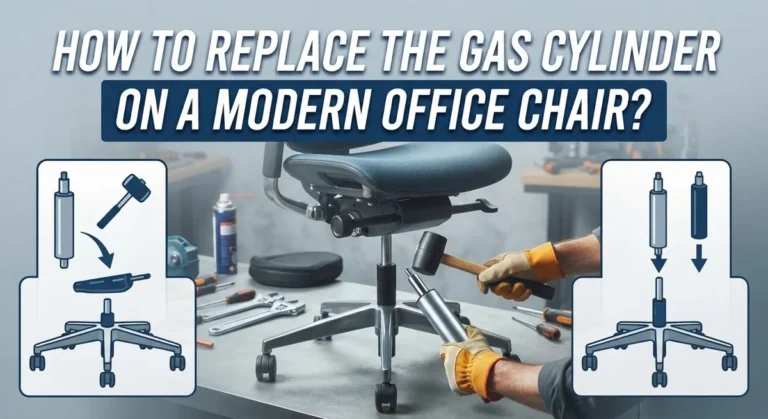
The gas lift cylinder is the most common replacement part. If your chair slowly sinks after you adjust the height, the internal seals have failed. No amount of external lubricant will fix this. Replacement cylinders are widely available and fit most standard office chairs. The swap requires removing the old cylinder with a pipe wrench or rubber mallet and pressing the new one into place.
Cracked or bent base legs are a safety concern. A five star base that shows cracks, especially near the center hub, should be replaced immediately. A broken base can collapse under your weight and cause injury.
Worn out casters with flat spots or broken swivels create noise and damage your floors. Replacement caster sets are inexpensive and simply pop into the existing sockets.
Stripped bolt holes in the seat pan or mechanism housing cannot hold fasteners properly. You can sometimes fix these with a larger bolt and washer. But if multiple holes are stripped, the mechanism itself may need replacement.
The rule of thumb is simple. If a part is cracked, bent, stripped, or internally failing, replace it. If it is simply loose, dirty, or dry, clean and lubricate it.
Preventive Maintenance Schedule to Keep Your Chair Silent
A few minutes of care every six months prevents most squeaks from starting. Regular maintenance extends your chair’s lifespan by years and keeps it functioning at its best. Here is a simple routine you can follow.
Every six months, flip your chair over and inspect all visible bolts and screws. Tighten any that have loosened. Pay special attention to the seat mounting bolts and armrest hardware, as these loosen fastest.
Pull out each caster and remove hair, thread, and debris from the wheels and stems. Wipe down the axles and apply a light coat of silicone spray before pressing them back in.
Test all adjustment functions. Raise and lower the seat, engage the tilt, swivel in both directions, and adjust each armrest. Any stiffness or noise during these tests signals a joint that needs cleaning and lubrication.
Wipe down the tilt mechanism with a dry cloth to remove accumulated dust. Blow compressed air through the mechanism to clear hidden debris. Apply a thin layer of white lithium grease to the main pivot points.
Finally, sit in the chair for ten minutes after maintenance. Your body weight can reveal subtle noises or looseness that you missed during the inspection. Do a final bolt check before calling the job done. This simple routine takes less than 20 minutes and saves you from dealing with surprise squeaks during important work calls.
Common Mistakes to Avoid When Fixing a Squeaky Chair
Many people make the repair harder than it needs to be. Avoiding these common mistakes saves time, money, and frustration. The biggest error is skipping the diagnosis and spraying lubricant randomly across every joint. This creates a greasy mess and often misses the actual problem area.
Overtightening bolts is another frequent mistake. People assume tighter is better, but cranking down too hard strips plastic threads, cracks mounting brackets, or binds moving joints. Tighten just enough to remove play.
Using the wrong lubricant causes problems too. Silicone spray on a heavy metal pivot point wears off quickly. White lithium grease on a plastic track can cause stiffness. Match the lubricant to the material and the type of stress the joint handles.
Ignoring safety around the gas lift cylinder is dangerous. Never drill into, heat, or pry open a gas cylinder. It is a pressurized component that must be replaced as a whole unit if it fails.
Skipping the cleaning step before lubrication is also a mistake. Applying grease on top of dust and grime creates an abrasive paste that wears parts down faster. Always clean with compressed air and a cloth before lubricating.
Finally, many people fix the squeak once and forget about maintenance. Without regular checks, the same squeak returns within months. Set a reminder on your phone or calendar for a six month checkup to stay ahead of the problem.
Frequently Asked Questions
Can I use WD 40 to fix a squeaky office chair?
WD 40 can provide a quick, temporary fix for a squeaky office chair. It loosens stuck parts and reduces friction for a short time. However, it is not a true lubricant and evaporates within days. The squeak usually returns, and the residue attracts dust that worsens the problem. For a lasting solution, use silicone spray on plastic parts and white lithium grease on metal joints after cleaning the area.
Why does my office chair squeak when I lean back?
The squeak you hear while leaning back almost always comes from the tilt mechanism under your seat. This metal assembly contains springs, pivot pins, and plates that handle stress every time you recline. Over time, these parts lose lubrication and fasteners loosen. Flip your chair over, clean the mechanism with compressed air, tighten all bolts, and apply white lithium grease to the pivot points to stop the noise.
How often should I maintain my office chair to prevent squeaks?
A quick maintenance check every six months keeps most office chairs squeak free. During each session, tighten all bolts, clean the caster wheels, blow dust from the tilt mechanism, and apply fresh lubricant to the main joints. This routine takes about 15 to 20 minutes and dramatically extends your chair’s life while preventing noise problems.
Is it safe to fix the gas lift cylinder on my office chair?
You can safely lubricate the outside of the gas lift cylinder where it connects to the base and the tilt mechanism. However, never attempt to open, puncture, or disassemble the cylinder itself. It is a pressurized component that can release gas and metal parts violently if tampered with. If the cylinder is failing (the chair sinks slowly, clicks internally, or leaks oil), replace the entire cylinder assembly.
Can I use olive oil or cooking oil on a squeaky office chair?
Olive oil and vegetable oil can reduce squeaking as a temporary emergency fix. Apply a small amount to the noisy joint with a cloth or paper towel. However, cooking oils attract dust, can turn rancid, and do not last long under pressure. They work for immediate relief but should be replaced with silicone spray or white lithium grease as soon as these products are available.
When should I replace my office chair instead of fixing it?
Consider replacing your chair if the base is cracked, the frame is bent, multiple bolt holes are stripped, or the gas cylinder has failed and a replacement cylinder does not fit your model. A chair with structural damage is a safety hazard. If the repair cost approaches half the price of a quality replacement, investing in a new chair makes more sense. For simple squeaks caused by loose bolts or dry joints, repair is almost always the better and cheaper option.

Hi, I’m Clara! I started SitSmartGuide to help people find chairs that truly support their comfort and health — without the guesswork. After years of dealing with back pain from bad seating, I became obsessed with testing, researching, and reviewing chairs so you don’t have to learn the hard way.