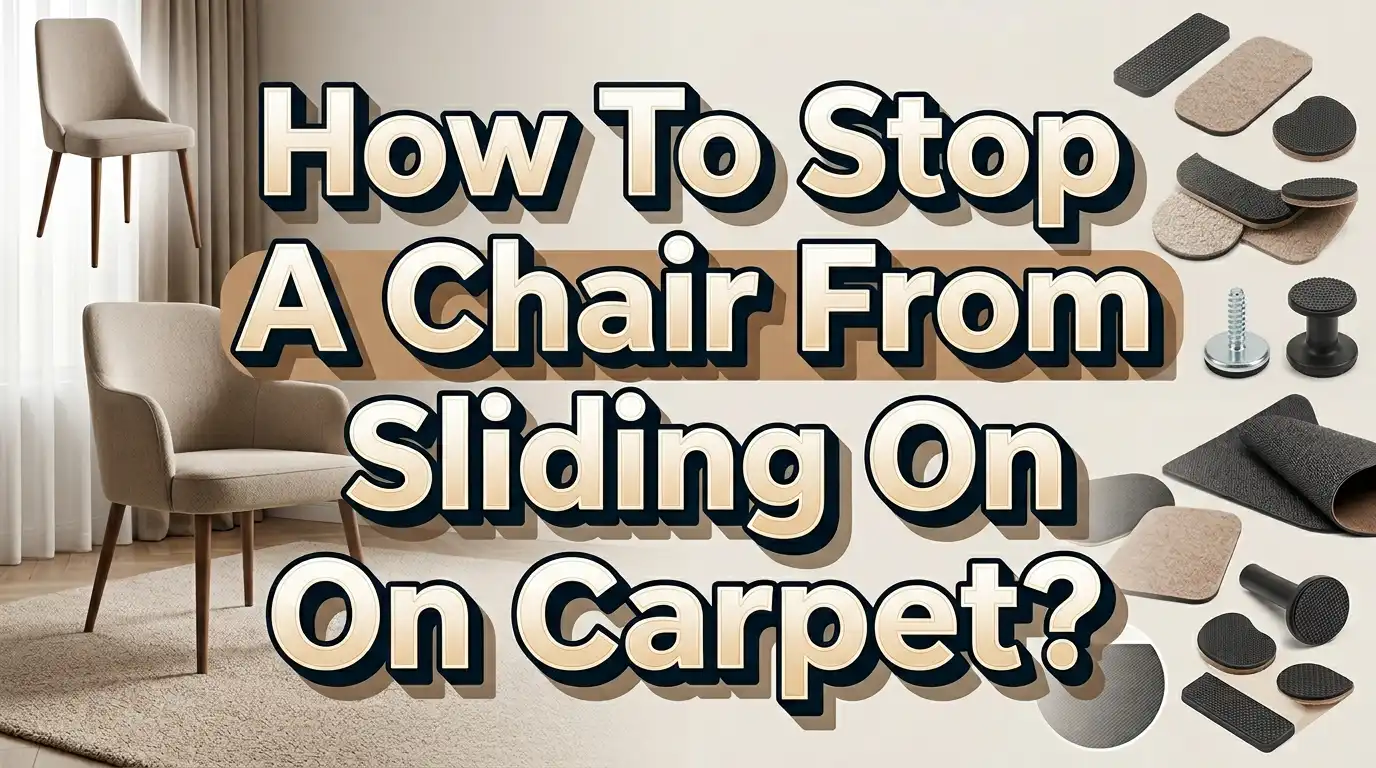
How to Stop a Chair From Sliding on Carpet?
A chair that slides on carpet can make a calm room feel annoying fast. You sit down, shift your weight, and the chair moves when you do not want it to move. That can hurt comfort, slow your work, and even create a safety risk.
The good news is simple. You do not need a big budget or a full room makeover to fix this problem. In most cases, one smart change can stop the sliding and make the chair feel stable again.
This guide gives you clear solutions that you can use right away. The steps are easy to follow, and each method includes real pros and cons so you can choose with confidence.
In a Nutshell
- Start with the cause, not the guess. A chair slides on carpet for a reason. The wheels may be too hard, the carpet may be too soft, or the chair may be missing grip. If you find the cause first, you save time and money.
- A chair mat is often the fastest fix. It creates a firm surface under the chair and reduces unwanted movement. This works well for office chairs and desk chairs. It also helps protect carpet fibers from dents and wear over time.
- The wheel type matters more than many people think. Some wheels roll too freely. Others sink into soft carpet and create wobble. The right caster style can improve both control and comfort without changing the whole chair.
- If you want the chair to stay put, use locking wheels, glides, or caster cups. These methods reduce movement on purpose. They work best when you do not need to roll around often and want a more planted sitting position.
- Simple grip fixes can work for non rolling chairs. Rubber pads, grippers, and stop blocks help chairs with legs stay in place. These are useful for dining chairs, accent chairs, and chairs used near a desk for short periods.
- The best solution depends on the carpet. Low pile carpet, thick plush carpet, and loose rugs behave in different ways. A good fix matches both the chair and the floor. That is why this guide covers each method in a practical way.
Why Chairs Slide on Carpet in the First Place
A chair slides on carpet when the base and the carpet do not create enough control. That may sound simple, but there are several causes behind it. A rolling office chair can move because the wheels are made to move freely. A chair with legs can slide because the carpet surface is smooth or compressed.
Weight also changes the problem. When you sit down, your body pushes force into a few small contact points. On soft carpet, that can make wheels sink and shift. On firm carpet, the same chair may roll more easily than you expect.
Carpet thickness matters too. A low pile carpet gives a flatter surface. A thick carpet with padding can act like a soft sponge. That soft base makes the chair less steady and can lead to sliding, wobbling, and uneven pressure under the wheels or legs.
Another common cause is wear. Old carpet fibers flatten with time. Dirt and dust can also reduce grip. If the chair has worn wheels, loose hardware, or a bent base, the movement gets worse. Small damage often creates a big effect because the chair no longer sits evenly.
Pros of understanding the cause are clear. You choose the right fix, spend less, and get faster results. The only con is that you need a few minutes to inspect the chair and the carpet before you buy anything.
Start With a Fast Safety Check
Before you try any fix, do a quick safety check. This step helps you avoid wasting money on a solution that will not work. It also helps you spot damage that can make the chair unsafe.
First, look at the chair base. Check whether all five points touch the carpet evenly. If one wheel or leg sits higher than the others, the chair may lean and slide. Tighten any loose screws and look for cracks in the base.
Next, inspect the wheels or feet. Hair, thread, and dust can get wrapped around wheels and change the way they move. Clean them well. If the chair has legs, see if the bottom caps are worn smooth. A smooth foot often slides more than a textured foot.
Now check the carpet itself. Press your hand into the area where the chair sits most often. If the carpet feels crushed or deeply dented, the chair may be shifting because the base is no longer level. A loose rug over carpet can also cause extra movement.
Then do a small test. Sit in the chair and move your body side to side. Notice whether the chair rolls, tilts, or slides backward. That tells you if the main problem is rolling freedom, weak grip, or uneven support.
The pros of this step are strong. It is free, fast, and often reveals the problem right away. The con is simple. It does not fix the issue by itself, but it makes every next step smarter.
Use a Chair Mat for the Simplest Fix
A chair mat is one of the easiest ways to stop a chair from sliding on carpet. It creates a flatter and firmer surface under the chair. That reduces sinking, helps the chair stay level, and gives you more control over movement.
This method works best for office chairs that you use every day. If you roll in and out of a desk often, a mat can make the chair feel smoother and more stable. It also protects the carpet from dents, crushed fibers, and long term wear.
To use this fix well, choose a mat that is large enough for your normal range of motion. If the mat is too small, the chair rolls off the edge and creates a bump. That can feel awkward and unsafe. A wider mat gives a calmer sitting zone.
Place the mat flat on the carpet and let it settle. If it curls at the edges, give it time or press it down gently. Make sure the chair stays on the mat during normal use. If the desk legs pin the mat at odd angles, shift the layout a little.
Pros are easy to see. A mat is quick, simple, and useful for both chair control and carpet protection. The cons are also real. Some mats move, crack, or curl with time. Some people also dislike the look. Still, for many homes, a chair mat is the fastest working fix.
Switch to the Right Casters
The wrong wheels can make a chair feel slippery on carpet. If the wheels roll too freely, the chair moves when you sit down or shift your body. If the wheels are too small or poorly shaped, they can sink and wobble.
A better caster can change that. Harder wheels are often a better fit for carpet because they roll with more control on soft surfaces. Larger dual wheels can also spread weight better and reduce the feeling of sinking into the pile.
If your chair uses standard push in wheels, you may be able to swap them in minutes. Remove one old wheel, compare the stem size, and install a replacement that fits the chair base. Test the chair slowly before normal use.
This method is helpful when you still want mobility. You can keep the rolling function but improve the feel. It is a practical middle option for people who work at a desk and still need to move around during the day.
The pros are strong. Better casters can improve movement, reduce wobble, and protect the carpet from harsh pressure. The cons are simple. Wheel changes do not fully stop movement. They only improve control. If you want the chair to stay in one spot, another fix may work better.
Still, if your current wheels feel wrong, switching casters can solve the problem at its source. That makes it a smart early step for rolling chairs.
Try Locking Wheels for Better Control
If you want some movement but not too much, locking wheels are worth a close look. These wheels let you roll the chair when needed, but they can also hold the chair in place once you sit down or once you lock them.
This option works well for people who use a desk chair for focused work. You may want to move the chair while cleaning or adjusting the room, but keep it steady while typing, reading, or joining calls. That mix of freedom and control is the main strength of this method.
There are two common styles. Manual locking wheels use a small brake that you switch by hand. Pressure based wheels add resistance or lock when weight is on the chair. The feel can vary, so test gently after installation.
Install them the same way as regular casters if the stem size matches. Once fitted, sit down and check whether the chair stays in place during normal movement. If the carpet is very thick, you may still notice some shift, but it should be much less.
Pros include better stability, safer sitting, and less unwanted roll when you stand up or sit down. The cons are that locking wheels can feel less smooth, and some styles require more effort to move. They may also cost more than basic wheels.
Even so, locking wheels are a smart fix for people who want a stable chair without giving up wheels entirely.
Replace Wheels With Glides
If rolling is the main problem, remove the rolling part. That is the idea behind glides. A glide replaces each wheel with a fixed foot, so the chair rests on the carpet instead of rolling over it.
This method works very well for people who do not need to move around much. If your desk setup stays in one position and you mostly face forward, glides can make the chair feel much more planted. They also reduce sudden movement when you sit down.
Many glides are made from firm plastic or nylon. These materials often work well on carpet because they do not snag easily. Once installed, the chair will still move a little if you push it hard, but it will not roll the way caster wheels do.
Glides are simple and quiet. They also reduce the chance of wheel marks and deep pressure tracks on carpet. That makes them useful for home offices, sewing rooms, study areas, and places where stability matters more than motion.
The pros are clear. Glides improve grip, lower unwanted movement, and protect the carpet from rolling wear. The cons are also important. You lose easy mobility, and you may need to stand up to reposition the chair. Some users miss the freedom of wheels.
Still, for a chair that slides too much, glides are one of the most effective ways to stop the problem instead of managing it.
Use Caster Cups or Wheel Stoppers
Caster cups and wheel stoppers are small supports that sit under each wheel. Their job is simple. They create a shallow resting point for the wheels so the chair stays in place instead of rolling across the carpet.
This fix is best for chairs that need to stay in one area for long periods. It is also helpful if you do not want to replace the wheels yet. You keep the current chair setup, but add a stop point under each wheel.
To use them, place one cup under each caster and lower the chair into position. Test the chair by sitting down and shifting gently. If the cups move on the carpet, the carpet may be too plush for this method alone. In that case, combine them with a firm mat or board.
Caster cups are easy to try and easy to remove. That makes them a good short term fix for renters or for people testing different solutions. They can also help spread pressure and reduce dents in soft carpet.
Pros include low effort, no chair modification, and decent control for light use. The cons are that cups can shift out of place, and they do not suit people who move the chair often. Standing up to reset the wheels can get annoying.
Even with that limit, caster cups are a practical answer if the chair only needs to stay still most of the time.
Add Grip Under a Stationary Chair
Not every chair on carpet has wheels. Dining chairs, accent chairs, and guest chairs can also slide, especially if the feet are smooth. In those cases, grip based fixes work better than wheel based fixes.
Rubber pads, silicone caps, and furniture grippers can all help. These add friction under each chair foot and reduce small sliding motions. They are easy to apply and often work well for chairs used at a desk for short periods.
First, turn the chair over and clean the bottom of each leg. Dirt can stop the pad from sticking well. Then attach the grip piece and press firmly. Set the chair down and test it on the carpet area where it normally sits.
This method works best on chairs with fixed legs. It can also help on chairs that only move a little, such as vanity chairs or reading chairs. If the chair is heavy and moved often, you may need a stronger option like stop blocks or a base board.
Pros include low cost, easy setup, and no special tools. The cons are that some pads compress over time, and adhesive parts may peel if the chair is dragged often. Results also vary by carpet thickness.
Build a Simple DIY Chair Base
If ready made options do not solve the problem, a DIY chair base can work very well. The idea is easy. You place a firm board under the chair so the chair sits on a stable surface instead of sinking into carpet.
You can use thin plywood, hardboard, or another smooth rigid panel. Cut it wide enough for your normal chair movement. If you want a softer look, place a matching fabric or carpet piece on top. That helps the board blend into the room.
This approach is useful on soft carpet with thick padding. In that setting, wheels can dig in and create a lot of movement. A firm base spreads the load across a wider area and makes the chair feel much more stable. It also protects the carpet below from deep wear.
Make sure the board edges are smooth and safe. A sharp edge can catch your feet or damage nearby carpet. If the board slides, add grip under the base or place furniture weight on the back edge to help hold it.
Pros include strong support, good carpet protection, and custom size. The cons are the look, the setup time, and the fact that a board can feel bulky in a small room. But if nothing else works, a simple base often solves the root problem better than small add ons.
Fix the Carpet Under the Chair
Sometimes the chair is only half the problem. The carpet under it may already be worn, loose, or too soft. If you only change the chair and ignore the floor, the sliding may continue.
Start by checking for deep dents, flattened pile, or a loose rug over carpet. If the surface is uneven, the chair may lean and shift even with better wheels or a mat. In that case, restore the area as much as you can before testing new hardware.
Vacuum the carpet well and lift crushed fibers with a soft brush. In some cases, a little moisture and gentle brushing can help matted spots recover. If there is a rug on top of carpet, add a rug pad under it so the top layer stops shifting.
A stronger base under the chair creates better control. That is why thick carpet padding can make chairs feel unstable. If the room is a long term workspace, you may want to reduce softness in that one area with a firm layer above the carpet.
Pros of fixing the carpet are better stability and better results from every other method. The con is that damaged carpet does not always bounce back fully. If the area is badly stretched or worn, protection may help more than repair.
Even so, a chair can only be as steady as the surface under it. That makes carpet care a real part of the solution.
Match the Solution to Your Carpet Type
The best fix depends a lot on carpet type. A method that works on low pile carpet may fail on thick plush carpet. That is why choosing by surface matters more than copying someone else’s setup.
On low pile carpet, a chair mat or better casters often works well. The surface is firmer, so the chair has a better chance of staying level. You may only need a small change to get a big improvement in control.
On medium pile carpet, locking wheels or larger dual casters can help. This carpet has some softness, but it is usually manageable with the right wheel shape and a stable base. A mat can still help if you move often during the day.
On thick or plush carpet, rolling chairs often struggle. Wheels sink, wobble, and shift. Here, glides, caster cups, or a DIY board may work better than standard wheels. If the carpet has deep padding, the chair needs strong support more than smooth rolling.
If you are using a rug over carpet, focus on the rug first. Add a rug pad so the top layer stops moving. Then decide whether the chair needs grippers, a mat, or a fixed base.
The pros of matching the fix to the carpet are better comfort and fewer failed purchases. The only con is that you need to assess your floor honestly. Still, the right match saves effort and gives better long term results.
Common Mistakes to Avoid
Many people try to solve chair sliding by buying the first product they see. That can work, but it often leads to wasted money. The better path is to avoid a few common mistakes from the start.
One mistake is choosing a fix that is too small. A tiny mat, a narrow board, or weak pads may help for a day, then fail in normal use. If the chair moves beyond the protected area, the problem returns fast.
Another mistake is mixing the wrong method with the wrong chair. Grip pads do little for a rolling office chair. Wheel upgrades do little for a chair with fixed legs. Match the tool to the chair type first.
Some people also ignore worn carpet, bent chair bases, or dirty wheels. In that case, even a good fix can feel disappointing. Clean and inspect the setup before judging the method. A simple repair can make a product work much better.
A final mistake is expecting one solution to do everything. You may need two changes. For example, a mat plus better wheels, or glides plus carpet repair. Layered fixes often work best because they deal with both movement and surface wear.
The pros of avoiding these mistakes are simple. You spend less, get faster results, and create a safer setup. The con is only that you need a little patience at the start. That patience usually pays off.
Frequently Asked Questions
Can I stop a rolling office chair from moving without buying a new chair
Yes. You can add a chair mat, use locking wheels, place caster cups under the wheels, or swap the wheels for glides. These fixes work with many existing chairs. Start with the option that matches how much movement you want to keep.
Do furniture grippers work on carpet
They can work well on chairs with fixed legs. They do less for rolling office chairs because wheels are made to move. If your chair has legs, grippers are a simple first fix. If your chair has wheels, try wheel or base changes instead.
What is the best fix for thick carpet
Thick carpet often needs a firmer surface. A strong chair mat, a DIY board, glides, or caster cups usually works better than standard wheels alone. If the carpet padding is very soft, support matters more than smooth rolling.
Will changing wheels damage the carpet less
In many cases, yes. Better wheels can spread weight more evenly and improve control. They may reduce wobble and harsh pressure on the carpet. But if your goal is to stop movement almost completely, glides or locking solutions may do a better job.
Should I use a mat or glides
Use a mat if you still want to roll around at your desk. Use glides if you want the chair to stay in place. A mat supports movement with control. Glides reduce movement on purpose. Your daily routine should decide the choice.

Hi, I’m Clara! I started SitSmartGuide to help people find chairs that truly support their comfort and health — without the guesswork. After years of dealing with back pain from bad seating, I became obsessed with testing, researching, and reviewing chairs so you don’t have to learn the hard way.