How To Stop A Chair From Making Popping Noises?
You sit down at your desk, ready to focus. You lean back in your chair, and POP. That loud, jarring sound breaks your concentration. You shift your weight, and there it goes again.
A popping chair is one of those small problems that becomes incredibly frustrating over time. It disrupts video calls, annoys coworkers, and makes you wonder if your chair is about to fall apart.
The good news is that a popping chair is almost always fixable. The sound usually comes from a specific mechanical issue, such as worn washers, loose bolts, dry joints, or a misaligned gas cylinder.
This guide walks you through every possible cause and solution. You will learn how to identify the exact source of the popping noise and fix it for good. Whether you own an office chair, a gaming chair, or a wooden dining chair, the answers are here.
In a Nutshell
- Worn or misaligned washers sit at the base of your chair’s gas cylinder and are the single most common cause of popping sounds. Flipping or replacing these washers often eliminates the noise instantly.
- Loose bolts and screws allow metal parts to shift under your body weight, which creates sudden popping or clicking sounds. A quick tightening session with an Allen wrench or screwdriver can solve this in minutes.
- Dry or unlubricated joints cause friction between metal parts. This friction builds tension that releases as a pop. White lithium grease or silicone spray applied to pivot points, springs, and bearings provides a lasting fix.
- A mismatched gas cylinder taper can cause the cylinder to shift inside the base by a tiny fraction of a degree. This small movement creates a loud metallic pop each time you change your sitting position.
- Regular maintenance prevents the problem from returning. A simple inspection every three to six months keeps your chair quiet and extends its life by years. Clean all joints, tighten all fasteners, and apply fresh lubricant on a schedule.
- Wooden chairs pop for different reasons than office chairs. Loose wood joints, dried glue, and humidity changes cause wood to shift and crack. Wood glue and clamps fix these issues.
Why Does Your Chair Make A Popping Noise
Understanding the root cause saves you time and effort. A popping noise is different from a squeak or a creak. A pop is a sudden, sharp sound that happens when a part shifts or releases built up tension.
In office and gaming chairs, the most common cause is a worn thrust washer located between the swivel mechanism and the gas lift cylinder. This washer sits on top of ball bearings and allows the seat to rotate smoothly. Over time, the washer develops a groove or flat spot. Your body weight presses down on this imperfection, and when the pressure becomes too great, the washer slips. That slip produces the pop.
Another frequent cause is metal on metal friction in the tilt mechanism. The springs and pivot joints that control your chair’s recline function rub against each other. Without proper lubrication, this contact creates tension. The tension releases suddenly as a pop when you lean back or shift forward.
Loose bolts also play a role. A bolt that has even a quarter turn of slack allows the connected parts to move slightly. Each time you sit, stand, or shift, those parts snap into a new position. That snap is your popping sound.
How To Identify The Exact Source Of The Noise
You cannot fix what you cannot find. The most effective method is a systematic test that isolates each part of your chair. Grab a friend if possible, because having a second set of ears makes this process much easier.
Start from the ground and work your way up. Roll the chair across the floor without sitting in it. If you hear popping during this test, the casters or the connection between the casters and the base are the source. Next, sit in the chair and plant your feet firmly on the ground. Swivel left and right without leaning. A pop during swiveling points to the gas cylinder or the connection between the cylinder and the base.
Now test the recline. Lean back slowly and return to the upright position several times. A pop during this motion usually means the tilt mechanism, its springs, or its pivot points need attention. Finally, press down on each armrest individually and push firmly against the backrest. Pops here indicate loose mounting bolts.
Write down exactly which motion triggers the sound. This information tells you precisely where to focus your repair efforts.
The Washer Fix: The Most Common Solution
This single fix has solved the popping problem for thousands of chair owners. Reddit users, forum members, and repair technicians consistently report that replacing or flipping the thrust washer eliminates popping noises on office chairs, gaming chairs, and even high end ergonomic models.
Start by turning your chair upside down. Remove the wheelbase by pulling it straight off the gas cylinder. You may need to use firm force or gently tap it with a rubber mallet. Once the base is off, you will see the gas cylinder protruding downward with a washer sitting on top of a set of ball bearings.
Examine this washer carefully. Look for grooves, flat spots, or uneven wear. If the washer has a visible ring worn into its surface, flip it over so the smooth side faces the ball bearings. Apply a thin layer of white lithium grease to both sides before reinstalling.
If the washer is badly damaged, replace it entirely. Hardware stores carry thrust washers in standard sizes. Bring the old washer with you to match the diameter and thickness. Reassemble the chair and test it. Many people report that this 10 minute fix completely solves years of annoying popping sounds.
How To Tighten Loose Bolts And Screws
Loose fasteners rank as the second most common cause of chair popping noises. Every bolt on your chair experiences constant vibration and stress from daily use. Over months, this causes bolts to gradually back out of their threads.
Gather an Allen wrench set and a Phillips head screwdriver. Tip your chair on its side or flip it upside down. Start with the bolts that connect the seat plate to the tilt mechanism underneath. These bolts bear the most weight and loosen the fastest.
Check every bolt you can see and access. Pay special attention to the backrest mounting bolts, armrest bolts, and the bolts securing the tilt mechanism to the seat pan. Tighten each one until it feels snug. Avoid overtightening, because stripped threads create bigger problems than loose bolts.
For bolts that keep loosening repeatedly, apply a small drop of medium strength thread locking compound (the blue variety) to the threads before tightening. This compound prevents vibration from backing the bolt out while still allowing you to remove it later with a standard wrench.
Test the chair after tightening everything. Sit down, lean back, swivel, and shift your weight. If the popping has stopped, you found your problem.
How To Lubricate Your Chair The Right Way
Lubrication silences friction, but the wrong lubricant makes things worse. WD 40 is not a long term lubricant. It works as a water displacer and solvent, which means it evaporates quickly and attracts dust. Using WD 40 on your chair may stop the noise for a day or two, but the pop will return.
Use white lithium grease for metal on metal contact points. This includes the tilt mechanism pivot joints, springs, and bearings. White lithium grease stays in place, resists heat, and provides lasting protection. Apply a small dab directly to the contact point and work the mechanism back and forth to spread it evenly.
Use silicone spray for plastic on plastic joints and the gas cylinder column. Silicone spray is lighter and won’t damage plastic parts. It works well on caster wheels, armrest tracks, and the telescoping height adjustment column.
The correct sequence matters. Always clean the joint first with compressed air and a cloth dampened with isopropyl alcohol. Remove old, gummy lubricant and grime. Let the surface dry completely. Then apply your fresh lubricant. Skipping the cleaning step means you are trapping dirt inside the joint, which creates an abrasive paste that accelerates wear.
Fixing The Gas Cylinder Connection
The gas cylinder is the tall metal tube that controls your chair’s height. It sits inside the five star base at the bottom and connects to the tilt mechanism at the top. Both connection points can produce loud popping sounds.
The bottom connection is a tapered fit. The cylinder’s tapered end pushes into a tapered hole in the base. These tapers should match perfectly, but manufacturing inconsistencies sometimes leave a tiny gap. Your body weight holds the cylinder in place through friction. When you shift your weight, the cylinder can slip by a fraction of a degree inside the base. That slip produces a sharp metallic pop.
This problem is harder to fix than a washer issue. You can try applying a thin layer of lithium grease to the tapered surface before reinserting the cylinder. Some people have found success wrapping the taper with a single layer of electrical tape to fill the microscopic gap. Press the cylinder firmly back into the base and test.
The top connection, where the cylinder meets the tilt mechanism, also benefits from lubrication. Apply white lithium grease around the circumference of the cylinder where it contacts the metal housing of the mechanism. This reduces the chance of the cylinder shifting under load.
Addressing Worn Ball Bearings
Ball bearings allow your chair to swivel smoothly. They sit inside the base hub and support the rotating load of the seat above them. When ball bearings wear down, they develop flat spots that catch during rotation.
To inspect the bearings, remove the wheelbase and the gas cylinder from your chair. Look inside the base hub. You should see a ring of small metal balls sitting in a track. Check for missing bearings, rust, or visible damage.
Clean the bearing track with compressed air and a cloth. Remove any debris or old grease. Apply a generous amount of white lithium grease to the bearing track and the bearings themselves. Spread the grease evenly around the entire circumference.
If any bearings are missing or badly damaged, you can find replacement bearing kits online. Measure the diameter of your existing bearings and order the correct size. Installing new bearings is straightforward. Drop them into the track, apply grease, and reassemble.
Worn bearings often accompany a worn thrust washer. Replacing or servicing both at the same time gives you the best chance of eliminating the popping noise completely.
Fixing A Popping Tilt Mechanism
The tilt mechanism is the large metal assembly underneath your seat that controls the recline function. It contains springs, pivot pins, and interlocking metal plates that move against each other every time you lean back.
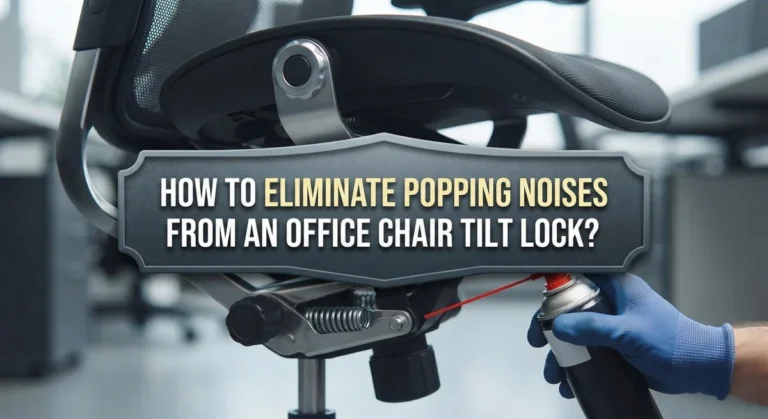
With the chair on its side, locate the tilt mechanism. You will see a metal housing with visible joints and a large tension spring. Blow out all dust and debris with compressed air. Old dust trapped in these joints acts like sandpaper and causes friction that leads to popping.
Check the pivot pins for lateral play. Grab each pin and try to wiggle it. If it moves, the bushings around it have worn down. Apply white lithium grease directly to each pivot point. Work the mechanism back and forth several times to distribute the grease into the joint.
The tension spring is another common source. The ends of the spring press against metal housings, and this contact point can pop when the spring shifts. Apply grease to both ends of the spring where they touch the mechanism body.
After lubricating, test the recline function repeatedly. Lean back and return to the upright position at least 10 times. The popping should decrease with each cycle as the grease works its way into the joint surfaces.
Fixing Popping Noises In Wooden Chairs
Wooden chairs pop for entirely different reasons than office chairs. Wood expands and contracts with changes in humidity and temperature. This movement loosens joints over time. A tenon that once fit snugly in its mortise now has a tiny gap that shifts under weight.
The fix for wooden chairs involves wood glue and clamps. Disassemble the loose joint if possible. Clean off any old, dried glue with a chisel or sandpaper. Apply fresh wood glue to both surfaces of the joint. Reassemble the joint and clamp it firmly. Let the glue cure for 24 hours before using the chair.
If you cannot disassemble the joint, use a thin wood glue mixture. Mix standard yellow wood glue with water at a 50/50 ratio. Use a syringe or a thin piece of paper to work the glue into the gap. Clamp the joint and let it cure.
For chairs with dowel joints, you can also use swelling compounds designed for wood furniture. These products swell the wood fibers and tighten the fit. Apply the compound to the loose dowel, reinsert it, and let it set. The swollen wood creates a tighter joint that eliminates the pop.
Fixing Caster Related Popping Sounds
Caster wheels can produce popping sounds that mimic a problem deeper in the chair. The stem that connects the caster to the base has a small amount of designed play. On uneven floors, this play allows the caster to shift under load and pop.
Remove each caster by pulling it straight out of the base leg. Clean the metal stem and the socket it fits into. Look for burrs, rust, or debris that might cause the caster to sit unevenly.
One effective fix is adding a small spring washer around the caster stem between the wheel housing and the base leg. This washer absorbs the movement and prevents the metal on metal contact that creates the pop. The added height is minimal and won’t affect your chair’s stability.
If your casters are old and worn, consider replacing them entirely. New casters often eliminate multiple noise issues at once. Measure the stem diameter of your existing casters and order replacements in the same size. Installation takes seconds. Push the new caster into the socket until it clicks into place.
Test the chair on your actual floor surface after replacing or servicing the casters. Roll it in all directions and shift your weight while seated. The popping should be gone.
How To Fix A Chair That Pops When You Lean Back
This is the most reported version of the popping chair problem. The pop happens specifically during the recline motion and is caused by one or more of the issues discussed above working together.
Follow this specific order for the best results. First, tighten all bolts on the tilt mechanism and the seat plate. Second, flip the chair over and inspect the thrust washer. If it shows wear, flip it or replace it. Third, lubricate the tilt mechanism pivot points and springs with white lithium grease.
If the pop persists after these three steps, the issue likely involves the gas cylinder connection. Remove the base and inspect the taper fit. Apply grease or a thin tape wrap as described earlier.
As a final step, check the tension adjustment knob underneath the seat. This knob controls how much force is needed to recline. If it is set too tight, the mechanism stores excessive tension that releases suddenly as a pop. Turn the knob counterclockwise to reduce the tension slightly. Test the recline again.
This layered approach addresses all possible causes in order of likelihood. Most people find their fix within the first two steps.
Preventive Maintenance To Keep Your Chair Quiet
Prevention costs nothing but a few minutes of your time every few months. A simple maintenance routine prevents popping noises from developing in the first place.
Every three to six months, flip your chair over and check all visible bolts. Tighten any that feel loose. Pull out each caster and remove accumulated hair, dust, and carpet fibers from the wheels and stems. Apply a light coat of silicone spray to the caster axles.
Once a year, service the tilt mechanism. Clean it with compressed air and apply fresh white lithium grease to all pivot points and springs. Check the thrust washer for wear and flip it if a groove has formed.
Keep your chair clean overall. Dust and debris work their way into joints and accelerate wear. Wipe down the metal components under the seat with a dry cloth. Vacuum around the base and casters regularly.
Avoid exceeding the weight limit of your chair. Overloading stresses every component and causes faster wear on washers, bearings, and joints. Check your chair’s specifications and respect the stated capacity.
When To Replace Parts Instead Of Repairing
Some problems go beyond what lubrication and tightening can solve. Knowing when to replace a part saves you from an endless cycle of temporary fixes.
Replace the thrust washer if it has deep grooves, cracks, or visible deformation. A damaged washer will continue to pop regardless of how much grease you apply. Replacement washers cost very little and install in minutes.
Replace the gas cylinder if it no longer holds your weight at the set height or makes internal clicking sounds. A failing cylinder cannot be repaired because it is a sealed, pressurized unit. Replacement cylinders are widely available. Installation requires removing the old cylinder with a pipe wrench or rubber mallet and pressing the new one into place.
Replace the entire tilt mechanism if its pivot pins have excessive play that lubrication cannot compensate for. Worn bushings and elongated pin holes allow metal parts to shift and pop under load. New mechanisms bolt directly onto the seat plate using the existing mounting holes.
Replace casters if the stems are bent or the wheel housings are cracked. Damaged casters create noise and also pose a safety risk. New casters push right into the existing sockets.
Tools And Supplies You Will Need
Having the right tools on hand makes the repair process smooth and fast. You do not need specialized equipment for any of the fixes described in this guide.
Gather an Allen wrench set (also called hex keys) in both metric and standard sizes. Most office chair bolts use Allen heads. A Phillips head screwdriver handles the remaining fasteners. A rubber mallet helps with removing and reinstalling the gas cylinder and wheelbase without damaging surfaces.
For lubrication, get a tube or spray can of white lithium grease and a can of silicone spray lubricant. A can of compressed air blows dust out of tight joints. Isopropyl alcohol and a few microfiber cloths handle the cleaning.
Optional but helpful items include a pipe wrench for stubborn gas cylinders, a flashlight for inspecting dark areas under the seat, and medium strength thread locking compound for bolts that keep loosening.
Keep these supplies together in a small box or bag. Having them ready means you can perform a maintenance check in under 15 minutes without hunting for tools.
Frequently Asked Questions
Why does my brand new chair make a popping noise?
Even new chairs can pop due to manufacturing inconsistencies. The thrust washer may have been installed unevenly, or the gas cylinder taper may not match the base perfectly. Check your warranty first. If the chair is still covered, contact the manufacturer for a replacement part or a full exchange. If you prefer to fix it yourself, inspect and lubricate the washer and cylinder connection as described above.
Is it safe to sit in a chair that makes popping sounds?
In most cases, yes. The popping sound usually indicates a minor mechanical issue, not a structural failure. The chair is still safe to use while you plan your repair. However, if the popping is accompanied by visible cracks in the base, a sinking seat, or wobbling, stop using the chair immediately. These symptoms indicate a more serious problem that needs prompt attention.
Can I use WD 40 to fix a popping chair?
WD 40 can provide temporary relief, but it is not a long term solution. It evaporates quickly and attracts dust, which worsens the problem over time. Use white lithium grease for metal on metal joints and silicone spray for plastic components. These products stay in place and provide lasting lubrication that actually prevents the noise from returning.
How often should I lubricate my chair to prevent popping?
Every six to twelve months is a good schedule for most users. If you use your chair heavily (eight or more hours per day), consider lubricating every three to six months. Regular maintenance also includes tightening bolts and cleaning debris from joints and casters.
Why does my chair only pop when I lean back?
This specific symptom points to the tilt mechanism, its springs, or the thrust washer. The recline motion places different forces on these parts than sitting upright does. The tension spring may be catching, the pivot joints may be dry, or the washer may be slipping. Start by tightening the tilt mechanism bolts, then lubricate the pivot points and springs, and finally inspect the thrust washer.
My chair pops when I swivel. What should I fix first?
A pop during swiveling almost always comes from the gas cylinder connection or the thrust washer and ball bearings. Remove the wheelbase and inspect the washer for wear. Clean and lubricate the bearings. Check the taper fit between the cylinder and the base. These three checks will solve the vast majority of swivel related popping sounds.

Hi, I’m Clara! I started SitSmartGuide to help people find chairs that truly support their comfort and health — without the guesswork. After years of dealing with back pain from bad seating, I became obsessed with testing, researching, and reviewing chairs so you don’t have to learn the hard way.