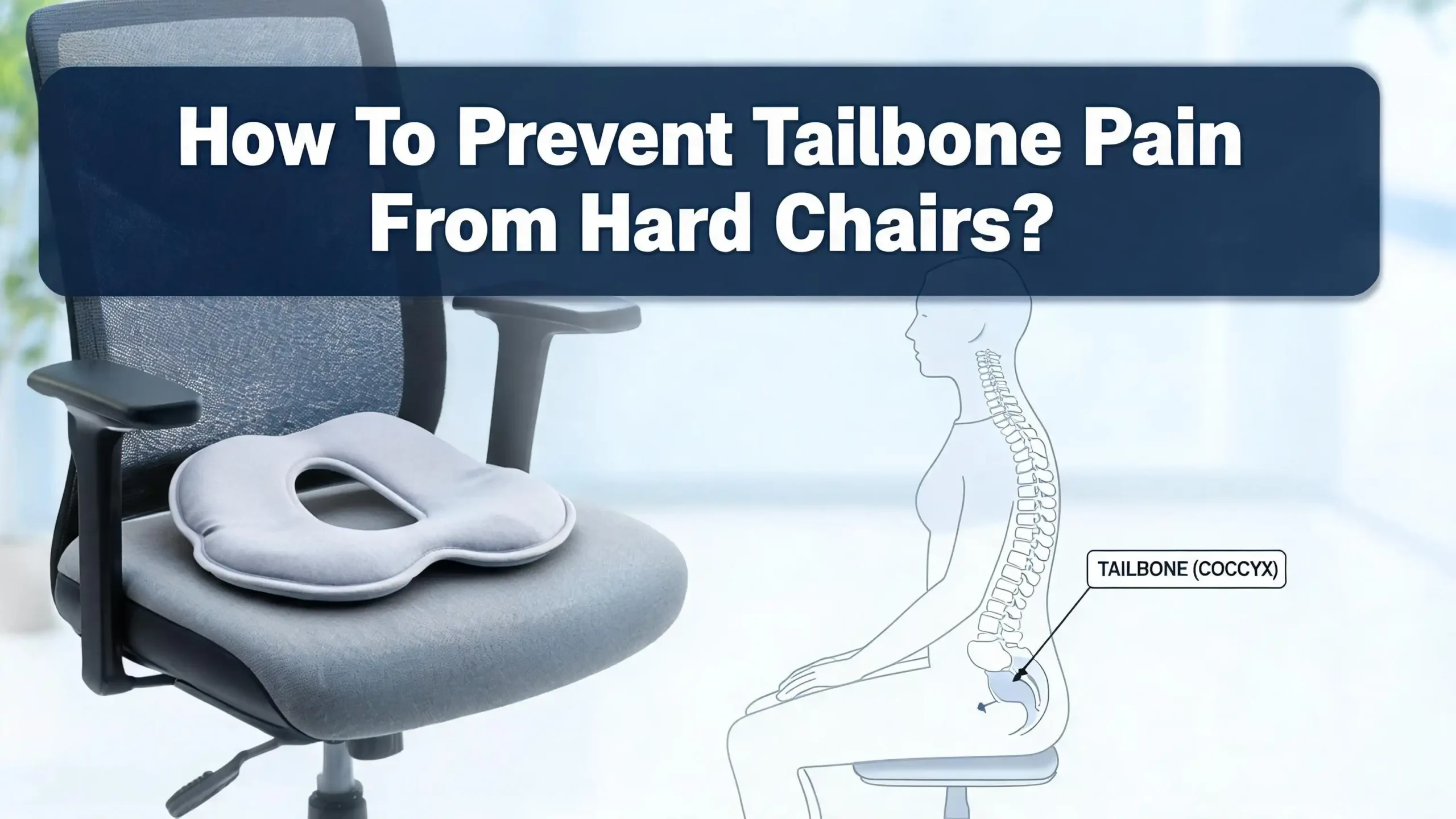
How to Prevent Tailbone Pain from Hard Chairs?
Sitting should feel natural, not like a punishment. Yet millions of people wince every time they lower themselves into a chair. That sharp ache at the base of your spine is something you know too well if you have ever spent hours on a hard wooden bench, a plastic cafeteria seat, or even a stylish minimalist office chair.
The good news? You do not have to live with this pain. In about 90% of cases, people find lasting relief with simple strategies they can try at home. You can protect your tailbone, sit without dread, and get through your workday or long drive without that familiar throbbing ache.
This guide walks you through every practical step. No gimmicks. No expensive promises. Just clear, actionable solutions you can start using today.
Key Takeaways
- Your sitting habits cause most tailbone pain. Hard chairs do not create the problem alone. The way you sit, how long you remain still, and your posture all combine to put direct pressure on the coccyx. Change your habits and you change your pain levels.
- Cushions with a coccyx cutout work better than donut cushions. Doughnut shaped pillows force you into awkward positions that stress your lower back. A wedge cushion with a U shaped opening at the back offloads pressure exactly where you need it.
- Movement is your best medicine. Your body was not designed for hours of stillness. Standing up, walking, and shifting your weight every 20 to 30 minutes stops pressure from building up on any single spot. Set a timer if you tend to forget.
- Targeted stretches relieve tension in the muscles that pull on your tailbone. Tight piriformis, iliopsoas, and glute muscles all attach near the coccyx. Daily stretching loosens these muscles and reduces the pull on a sore tailbone.
- You should see a doctor if pain lasts beyond a few weeks. Persistent tailbone pain can signal a fracture, infection, or pelvic floor dysfunction. Numbness, tingling in your legs, or loss of bladder control demands urgent medical attention.
Understanding Your Tailbone: What It Does and Why It Hurts
Your tailbone, medically called the coccyx, sits at the very bottom of your spine. It is made of three to five small bony segments fused together. Think of it as a small curved beak that points downward inside your pelvis.
Despite its tiny size, the coccyx plays a big role. It serves as an attachment point for several pelvic floor muscles, gluteal muscles, and important ligaments. These structures help you stay balanced when you sit. They also support bowel control and pelvic organ function.
Pain arises when something compresses or irritates this area. A hard chair presses the coccyx against a rigid surface with your full body weight on top of it. Over time, the surrounding tissues become inflamed. Muscles tighten up in response.
This creates a cycle where sitting hurts more, which makes you shift awkwardly, which strains other muscles, which then pull on the tailbone even harder.
Some people have a naturally more angled or curved coccyx shape. Others have less fat padding under the skin in that area. Both factors make hard chairs more punishing. Age also plays a role. As you grow older, the small disc of cartilage that cushions the coccyx can wear down.
The bony segments may fuse more tightly, making the area less flexible and more sensitive to pressure. Understanding these basics helps you see why prevention is a whole body effort, not just about buying a cushion.
The Real Causes of Tailbone Pain on Hard Chairs
Hard chairs do not act alone. They team up with certain habits and conditions to create that familiar ache. The most common culprit is prolonged sitting. Staying seated for hours without a break lets pressure accumulate on one small bony point.
Your body weight concentrates right where the coccyx meets the chair surface. On a soft chair, the cushioning spreads this load. On a hard chair, there is nowhere for the force to go except directly into your tailbone.
Slumped posture makes everything worse. When you slouch, your pelvis tilts backward. This rolls the tailbone down and forward, pressing it even harder into the seat. Sitting with crossed legs twists the pelvic muscles unevenly.
One side tightens while the other stretches, creating imbalances that pull on the coccyx attachment points. Sitting crooked, with weight shifted to one hip, provides temporary relief but causes muscle spasms that spread pain across the lower back.
Previous injuries also set the stage for sensitivity. A fall onto your backside months or even years ago can leave the coccyx permanently tender. Childbirth stretches and sometimes injures the tailbone area. Cycling and rowing put repetitive forward leaning pressure on the base of the spine.
Even being very thin can increase your risk because less natural fat padding means less shock absorption between bone and chair. On the flip side, carrying extra body weight increases the downward load on the coccyx with every sit.
How to Choose the Right Cushion for Tailbone Support
A proper cushion is your first and most effective defense against hard chairs. But not all cushions help equally. The key feature to look for is a cutout or groove at the back of the cushion, right where your tailbone would rest.
This design suspends the coccyx in open space so that no surface presses against it. Your weight shifts to your sit bones, the two rounded bony points at the bottom of your pelvis, which can handle the load much better.
Wedge shaped coccyx cushions offer an added benefit. The slight forward tilt they create encourages your pelvis into a better position. This natural forward lean lifts the tailbone away from the seat. Firmer cushions often work better than soft ones.
A cushion that is too plush lets you sink in, and the foam molds back up around the tailbone, defeating the whole purpose. Look for medium to high density memory foam or a firm gel construction that holds its shape under weight.
Pros: A well designed cushion provides instant relief. It is portable, easy to carry between home, office, and car. It requires no medical expertise to use. It addresses the root mechanical problem of direct pressure.
Cons: Quality cushions cost more than cheap generic options. They take up space on your chair and may shift around during use. Some people feel self conscious using a visible cushion in shared spaces. A cushion alone will not fix posture problems or tight muscles.
Why Doughnut Cushions Can Make Things Worse
Doughnut or ring cushions look like a logical solution. They have a hole in the middle, so the tailbone should float pain free above it. In practice, these cushions create a different set of problems. The hole sits in the center of the cushion.
To position your tailbone over that hole, you must slide forward and balance on the front rim. This forces your lower back to arch unnaturally. The result is often low back pain layered right on top of your existing tailbone discomfort.
Doughnut cushions were originally designed to relieve pressure on the genital and perineal area, not the coccyx. They became popular as general sitting cushions without much thought about whether the hole placement actually matched human anatomy.
Almost all tailbone pain specialists now recommend cushions with a U shaped cutout at the rear instead. These let you sit naturally with your spine in alignment while still protecting the coccyx.
Pros: Ring cushions are widely available and often inexpensive. They can provide temporary relief for perineal discomfort after childbirth or surgery.
Cons: They do not properly offload the tailbone. They encourage poor sitting posture. They strain the lower back. They are unstable and slide easily. Most users abandon them quickly after trying a true coccyx cutout cushion.
Perfecting Your Sitting Posture for a Pain Free Day
Posture correction costs nothing and delivers results quickly once you build awareness. Start by sitting straight and tall with your shoulders gently pulled back. Imagine a string attached to the crown of your head lifting you upward.
This lengthens your spine and naturally tilts your pelvis into a position where the tailbone lifts slightly off the seat surface. A small lumbar roll placed at the curve of your lower back helps maintain this position if you struggle to hold it on your own.
Keep both feet planted flat on the floor. Hanging feet or crossed legs twist the pelvis and tighten muscles unevenly around the coccyx. Your knees should bend at roughly a right angle, with thighs parallel to the ground.
Adjust the chair height or use a footrest to achieve this. Your hips should sit slightly higher than your knees. This slight downward thigh angle encourages the natural forward pelvic tilt that protects the tailbone.
Avoid the common trap of leaning to one side or tucking one leg under you. These compensations feel better for a few minutes because they shift pressure off the sore spot. But they create muscle imbalances that trigger spasms and spread pain. Think of your sitting posture as active, not passive.
You are holding a position with engaged core muscles, not collapsing into the chair. Check in with yourself every few minutes. Are you slouching? Are your legs crossed? Correct and reset. Over time, good posture becomes automatic.
The 20 Minute Rule: Why Movement Beats Static Sitting
Your body was built to move. Joints need motion to stay lubricated. Muscles need varied positions to avoid fatigue. Blood flow depends on regular muscle contractions to circulate properly.
Sitting still for long stretches violates every one of these biological needs. The 20 minute rule offers a simple fix. Never sit for more than 20 minutes without some form of movement.
This does not mean you need a full workout every half hour. Stand up and stretch your arms overhead. Walk to the kitchen for a glass of water. Shift your weight from one foot to the other a few times. Roll your shoulders backward and forward.
The goal is to break the static pressure pattern. Every time you move, you reset the load on your coccyx and give the compressed tissues a chance to recover.
Pros: Movement breaks are free and require zero equipment. They improve circulation, focus, and energy levels beyond just tailbone relief. They prevent the muscle stiffness that creeps up during long sitting sessions.
Cons: Busy work schedules make it easy to forget. You may feel awkward standing up frequently in meetings or shared offices. Setting a timer helps, but some people find constant interruptions frustrating during deep focus work.
Standing Desks and Sit Stand Routines for Tailbone Relief
A standing desk changes the entire pressure equation. When you stand, the coccyx bears no direct weight at all. The load shifts to your legs and feet, structures designed to carry you through a full day.
Research and user reports consistently show that alternating between sitting and standing reduces lower back and tailbone discomfort. The key word is alternating. Standing all day creates its own problems with leg fatigue, foot pain, and lower back strain.
Aim for a sit stand rotation, such as 30 minutes sitting followed by 30 minutes standing. Use an anti fatigue mat under your feet during standing periods. Keep your screen at eye level so you do not crane your neck down.
Wear supportive footwear rather than standing barefoot or in flat unsupportive shoes. The transition itself provides the benefit. Every time you switch from sit to stand, you give your coccyx and surrounding muscles a complete pressure reset.
Pros: Standing desks offload the tailbone entirely during standing periods. They encourage more movement throughout the day. They improve circulation and can boost energy levels. Many employers now provide them as standard ergonomic equipment.
Cons: Quality standing desks cost money. Standing too long causes its own discomfort. You need discipline to maintain the sit stand rhythm rather than defaulting to sitting all day anyway. Not all workspaces accommodate standing desk setups.
Simple Stretches That Release Tailbone Tension
Tight muscles around the hips and pelvis pull directly on the tailbone, worsening pain from hard chairs. A daily stretching routine of just 10 to 15 minutes can release this tension. The single leg knee hug targets the piriformis muscle, which originates from the tailbone area. Lie on your back, bend one knee toward your chest, and gently pull it closer.
Hold for 20 to 30 seconds and switch sides. The figure 4 stretch adds a deeper piriformis and glute release. Cross one ankle over the opposite knee while lying down, then pull the supporting thigh toward you.
The kneeling hip flexor stretch loosens the iliopsoas muscles that shorten during prolonged sitting. Kneel with one foot forward, tuck your pelvis under, and lean forward slightly without arching your back.
Child’s pose, a classic yoga position, lengthens the entire spine and relaxes the pelvic floor muscles that attach to the coccyx. Kneel with knees spread, sit back on your heels, and slide your arms forward along the floor. Rest your forehead down and breathe deeply for 30 to 60 seconds.
Pros: Stretching requires no equipment and costs nothing. It addresses the muscular tension that cushions alone cannot fix. It provides relief that builds over time as muscles loosen. It improves overall flexibility and mobility.
Cons: Stretching takes daily commitment to see results. Doing stretches incorrectly can strain other muscles. Some positions may initially feel uncomfortable on a sensitive tailbone. Progress requires patience.
Heat Therapy vs. Cold Therapy: When to Use Each
Heat and cold both relieve tailbone pain, but they work differently and suit different situations. Use cold therapy during the first 48 hours after a new injury or when you feel sharp, inflamed pain.
A cold pack wrapped in a thin towel applied for 15 to 20 minutes numbs the area and reduces swelling. Cold constricts blood vessels and slows the inflammatory response that causes throbbing pain.
Switch to heat therapy for chronic, dull, or stiff tailbone pain that has lasted beyond the initial injury phase. A warm bath, heating pad, or hot water bottle applied for 20 to 30 minutes relaxes tight muscles and increases blood flow to the area.
Heat soothes the muscle spasms that often accompany coccyx pain. Many people find a warm bath particularly effective because the water supports body weight and removes all pressure from the tailbone while heat penetrates the muscles.
Pros: Both methods are inexpensive and accessible at home. They provide drug free pain relief. You can combine them, such as ice after activity and heat before stretching.
Cons: Neither method fixes the underlying cause of pressure from hard chairs. Ice can feel uncomfortable or cause skin irritation if applied directly. Heat can worsen inflammation if used too soon after an injury.
Strengthening Your Core and Glutes for Natural Cushioning
Strong muscles act as a built in cushion for your tailbone. When your glutes and core are weak, more weight transfers directly onto the bony structures of your pelvis and spine. Glute bridges build the buttock muscles that form your natural seat padding.
Lie on your back with knees bent and feet flat. Squeeze your glutes and lift your hips until your body forms a straight line from shoulders to knees. Lower slowly and repeat for 10 to 15 repetitions.
The bird dog exercise strengthens the deep core and back muscles that stabilize your pelvis. Start on hands and knees. Extend your right arm forward and left leg backward simultaneously, keeping your torso steady. Hold briefly, return to center, and switch sides.
The dead bug builds deep abdominal control without straining the lower back. Lie on your back with arms extended toward the ceiling and knees bent at 90 degrees. Slowly lower your right arm and left leg toward the floor while keeping your lower back pressed flat. Return and switch sides.
Pros: Strengthening creates lasting protection that no external cushion can match. It improves posture naturally. Stronger muscles reduce the likelihood of future flare ups.
Cons: Results take weeks to months of consistent effort. Exercises done with poor form can aggravate pain. Starting a new routine while already in pain requires caution and gradual progression.
The Pelvic Floor Connection Many People Miss
Your pelvic floor is a hammock of muscles that stretches from your pubic bone to your tailbone. When these muscles become tight, weak, or uncoordinated, they pull unevenly on the coccyx.
This connection explains why some people develop tailbone pain without any obvious injury. Pelvic floor tension can build from stress, poor posture, or chronic holding patterns.
Avoid Kegel exercises unless a physical therapist specifically recommends them for your situation. The pelvic floor muscles attach directly to the tailbone. Repeatedly tightening already tense muscles can pull harder on the coccyx and increase pain. Instead, focus on learning to relax the pelvic floor.
Diaphragmatic breathing, or deep belly breathing, is the simplest way to start. Place one hand on your belly. Breathe in slowly through your nose and feel your belly rise. Exhale through your mouth and feel the pelvic floor gently release and soften.
Pros: Addressing pelvic floor tension relieves tailbone pain at its muscular source. Diaphragmatic breathing is free and can be done anywhere. The relaxation benefits extend to reduced stress and better sleep.
Cons: Pelvic floor issues can be complex and hard to self diagnose. Working with a pelvic floor physical therapist may be necessary. Progress can feel slow and subtle.
Lifestyle Changes That Protect Your Tailbone Every Day
Small daily choices add up to big protection for your tailbone. When you sleep, lying on your belly removes all pressure from the coccyx for hours at a stretch.
Side sleeping with a pillow between your knees also works well. Avoid sleeping flat on your back if your tailbone is actively sore, as this position can maintain some pressure.
Stay hydrated and eat enough fiber to prevent constipation. Straining during bowel movements places direct internal pressure on the coccyx from the pelvic floor side. Softer stools reduce this strain. Manage your body weight within a healthy range. Too little body fat removes natural cushioning. Too much body weight increases the compressive load with every sit.
When driving, adjust your car seat so your hips are level with or slightly higher than your knees. Place your coccyx cushion on the driver seat for longer trips. On airplanes, bring a small portable cushion or an inflatable travel pillow that you can position as a U shaped support.
Avoid sitting on hard benches, concrete steps, or bleachers without a jacket or bag underneath you for padding. These small habits protect you from the cumulative damage that leads to chronic pain.
DIY Cushion Solutions You Can Make at Home
You do not need to spend money to protect your tailbone. Several creative home solutions work surprisingly well. Pool noodles from the dollar store can be cut and shaped into a U form. Use a serrated bread knife to cut two equal lengths.
Arrange them side by side with a gap at the back for your tailbone. Duct tape the front ends together to hold the shape. This lightweight solution works well in cars and on office chairs.
A stuffed sock or stocking filled with uncooked rice creates a moldable U shaped support. Fill a long tube sock with rice, shape it into a U, and position the open end at the back. This option doubles as a heating pad.
Microwave it for 30 to 60 seconds before use for soothing warmth. Two inexpensive garden kneeling pads placed side by side with a finger width gap between them also offload the coccyx effectively.
Pros: DIY solutions cost almost nothing. They can be customized to your exact comfort needs. You can make them discreet or in colors that blend with your furniture.
Cons: Homemade cushions may look unprofessional in office settings. They may not last as long as commercial products. Finding the right firmness and shape takes some trial and error.
When to Seek Medical Help for Persistent Tailbone Pain
Most tailbone pain resolves with home care within a few weeks. A bruised coccyx typically heals in about four weeks. A fractured coccyx may take 8 to 12 weeks. But some cases need professional attention.
See a doctor if your pain remains stubborn after two months of consistent self care, or if the pain gets worse despite your efforts. Also seek help if tailbone pain seriously interferes with your daily activities, sleep, or ability to work.
Call your doctor immediately if you experience any of these red flag symptoms: tingling, numbness, or weakness spreading down one or both legs; sudden increase in pain or swelling; skin changes or fluid draining from the crease of your buttocks; prolonged constipation; or trouble controlling your bladder or bowels. These symptoms can signal nerve compression, infection, or a cyst that needs urgent treatment.
Medical treatments for stubborn coccydynia include physical therapy, especially with a pelvic floor specialist. Steroid injections can reduce inflammation directly at the source. Nerve blocks provide longer lasting relief for some patients.
In extremely rare cases, a partial or total coccygectomy, or surgical removal of the tailbone, is considered when nothing else works. Surgery is always the last option and comes with a recovery period of several months.
Recovery Timeline: What to Expect and How to Stay Positive
Healing from tailbone pain takes patience, but the outlook is genuinely good. In the first week, focus on reducing acute pain. Use cold packs, limit sitting time, and sit only on soft or cushioned surfaces.
Avoid activities that directly stress the area, such as cycling or rowing. By week two to four, you should notice that sitting for moderate periods feels easier. Continue using your cushion and maintain good posture.
Weeks four through eight mark the strengthening and habit building phase. The pain may no longer be constant, but extended sitting without support can still trigger discomfort. This is when core and glute strengthening exercises become most valuable. Pelvic floor relaxation techniques also show results during this period.
For chronic or recurring pain, improvement often comes in cycles. You may have good weeks and bad weeks. This is normal. Track your triggers. Notice whether certain chairs, activities, or stress levels correlate with flare ups.
Many people find that their tailbone pain becomes manageable through prevention rather than requiring a permanent cure. They learn to use cushions, take movement breaks, and maintain strength as ongoing habits. With consistent effort, most people return to sitting comfortably for work, driving, and leisure.
Frequently Asked Questions
Can sitting on a hard chair permanently damage my tailbone?
No, sitting on a hard chair alone rarely causes permanent damage. It creates inflammation, muscle tension, and pain, but these are reversible conditions. Permanent structural changes to the coccyx usually come from trauma like a fall, fracture, or childbirth complications. Consistent use of cushions and good posture prevents the repeated stress that leads to chronic pain.
How long should I sit on a hard chair before getting up?
Limit sitting on any hard surface to 20 minutes at a time. Set a timer if you tend to lose track of time while working. Stand, stretch, or walk for at least one to two minutes before sitting again. This prevents the pressure buildup that triggers tailbone pain flare ups.
Are memory foam cushions better than gel cushions for tailbone pain?
Both materials work well, but they suit different preferences. Memory foam molds to your body shape and provides even weight distribution. Gel cushions stay cooler and offer firmer support that does not sink over time. The cutout shape matters more than the material. Choose whichever material feels more comfortable to you.
Can tailbone pain radiate to other parts of my body?
Yes, tailbone pain often radiates to the lower back, hips, and even down the legs. This happens because the muscles attached to the coccyx connect into larger muscle groups across the pelvis and lower spine. Tightness in one area pulls on others. This is why whole body approaches that include stretching and strengthening work better than treating only the tailbone.
Is it safe to exercise with tailbone pain?
Gentle exercise is safe and helpful for most tailbone pain. Avoid activities that put direct pressure on the area, such as sit ups on hard floors, cycling on narrow seats, or deep squats that compress the coccyx at the bottom. Walking, swimming, and the stretching and strengthening exercises described in this guide are all safe choices.
Do I need an X-ray or MRI for tailbone pain?
Most people with tailbone pain do not need imaging. Doctors typically order an X-ray if they suspect a fracture after a fall or accident, or if pain persists beyond several months. MRI scans are rarely needed unless there are neurological symptoms or suspicion of an infection, cyst, or tumor. Your doctor will decide based on your specific history and symptoms.
Can a bad chair cause sciatica along with tailbone pain?
Hard chairs do not directly cause sciatica, but the two conditions often overlap. Tight piriformis muscles, which attach to the tailbone, can compress the sciatic nerve and create shooting leg pain. Poor sitting posture that strains the lower back can also irritate the nerve roots that form the sciatic nerve. Improving your sitting setup helps both conditions simultaneously.
Are there any sleeping positions that help tailbone pain?
Sleeping on your belly is the best position because it removes all pressure from the coccyx. Side sleeping with a pillow between your knees keeps the pelvis aligned and reduces strain. Avoid sleeping flat on your back if your tailbone is actively sore, especially on a very firm mattress.

Hi, I’m Clara! I started SitSmartGuide to help people find chairs that truly support their comfort and health — without the guesswork. After years of dealing with back pain from bad seating, I became obsessed with testing, researching, and reviewing chairs so you don’t have to learn the hard way.