
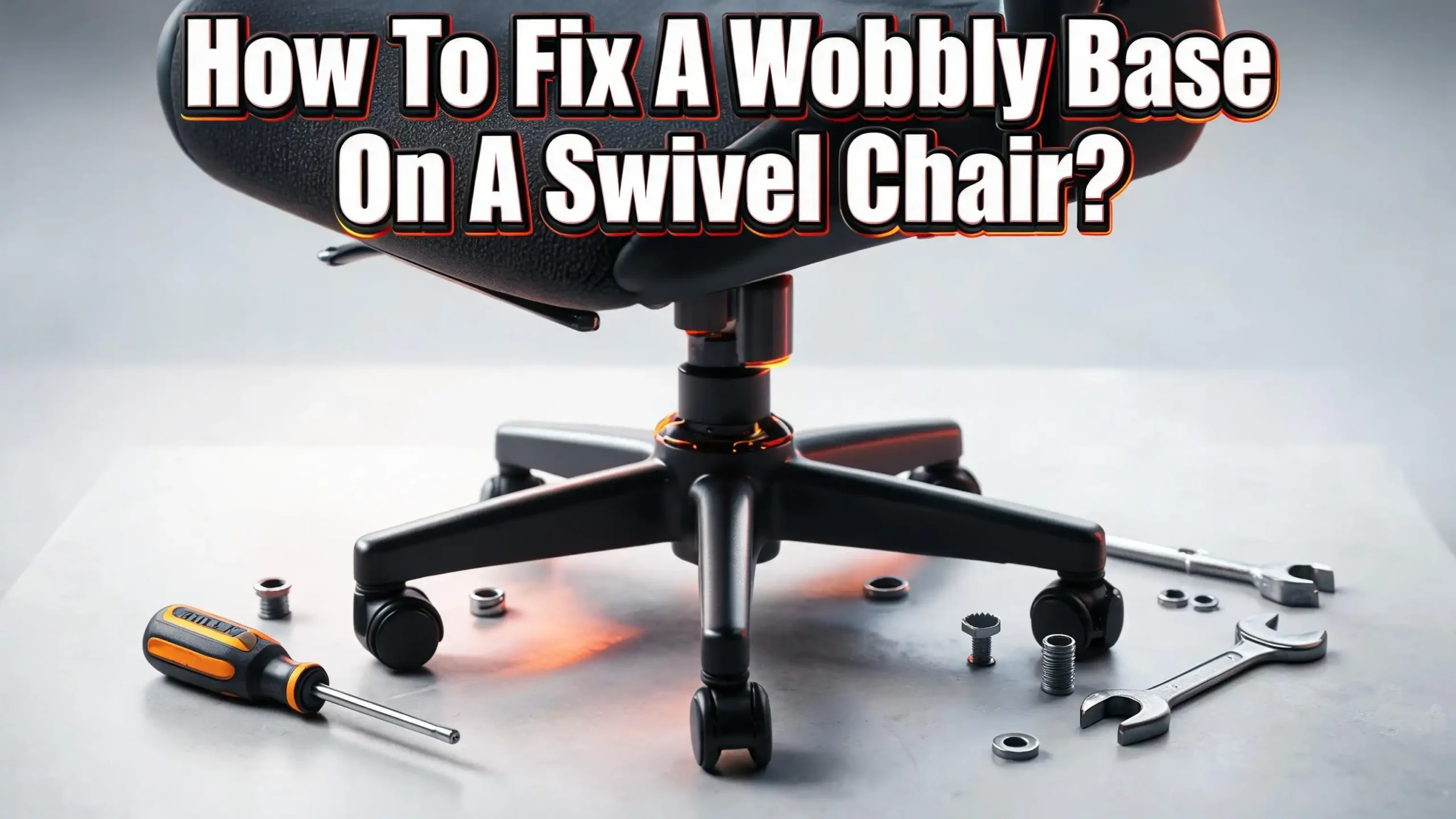
How To Fix A Wobbly Base On A Swivel Chair?
A wobbly swivel chair is one of those problems you try to ignore until you simply cannot. You shift your weight, and the chair tilts. You lean forward to type, and the whole seat rocks. That constant, low level instability does more than annoy you. It pulls your focus, strains your back, and slowly ruins your posture over the course of every workday.
The good news? Most swivel chair wobbles are fixable at home. You do not need professional tools or an engineering degree to get your chair stable again. The problem usually traces back to a handful of common causes: loose bolts, worn out caster wheels, a damaged base, or a failing gas lift cylinder. Each of these has a clear, practical fix.
This guide walks you through every possible cause of a wobbly swivel chair base and gives you direct, actionable solutions for each one. We cover everything from a 30 second bolt tightening fix to a full gas cylinder replacement. By the end of this post, your chair will feel solid and stable again.
Key Takeaways
- Loose bolts and screws are the most common cause of a wobbly swivel chair base. Tightening them with a hex key or screwdriver often solves the problem in minutes.
- Worn out or damaged caster wheels create uneven contact with the floor. Replacing them as a full set restores balance and smooth rolling.
- A cracked or warped base is a safety concern. If you spot cracks on a plastic or metal base, replace the entire base rather than attempting a glue repair.
- A loose gas lift cylinder can make the whole chair feel unstable. Check the retaining clip and the connection points at both ends of the cylinder.
- Your floor may be the real problem. Always test the chair on a different, flat surface before taking it apart. An uneven floor can mimic a chair defect.
- Regular maintenance prevents future wobbles. A quick inspection of bolts, wheels, and moving parts every two to three months keeps small issues from becoming big ones.
Why Does A Swivel Chair Base Become Wobbly
A swivel chair base becomes wobbly because of wear and tear on its moving parts. Every time you sit down, stand up, roll, lean, or swivel, you put stress on the joints, fasteners, and components that hold the chair together. Over weeks and months, this repeated stress loosens connections and degrades materials.
The most frequent culprits are bolts that work themselves loose through daily micro vibrations. This is the same reason you retorque bolts on a bicycle or car. Motion creates tiny shifts, and those tiny shifts add up until you can feel the wobble.
Beyond loose hardware, the materials themselves break down. Plastic bases develop stress fractures. Metal welds fatigue over time. Caster wheel bearings collect hair and dust, which grinds away at smooth function. Gas lift cylinders lose their seal and develop play between the piston and housing.
Environmental factors also play a role. Uneven flooring, thick carpet, or temperature changes that cause materials to expand and contract all contribute. Understanding why your chair wobbles is the first step to fixing it fast.
Tools You Will Need For The Repair
Before you flip your chair over, gather your tools. Having everything ready saves time and prevents frustration. The good news is that most swivel chair repairs need only basic household tools.
You will want a set of hex keys (also called Allen wrenches), a Phillips head screwdriver, and a flathead screwdriver. These cover the majority of fastener types found in swivel chairs. A rubber mallet is essential if you need to separate press fit components like a gas cylinder from the base.
For stubborn parts, keep a can of penetrating oil and a pipe wrench nearby. A clean rag or old towel protects surfaces from scratches while you work. If you plan to apply threadlocker to prevent bolts from loosening again, grab a tube of medium strength, removable threadlocker fluid.
Optional but helpful items include a flashlight for inspecting hard to see joints and a pair of pliers for pulling out damaged caster stems. Lay all your tools out on the floor next to your chair before you start. This small step makes the whole process smoother and faster.
Start By Checking The Floor Surface
This step sounds too simple, but it catches a surprising number of people off guard. The wobble might not be your chair at all. It might be the floor underneath it. Many homes and offices have slight dips, slopes, or uneven patches in the flooring that create instability.
Pick up your chair and move it to a completely different spot, ideally on a hard, flat surface like tile or hardwood. Sit in it and test for the wobble. If the chair feels perfectly stable in the new location, your floor is the problem.
You can fix an uneven floor issue by using a rigid chair mat on carpet or padded surfaces. Rigid mats create a flat, stable platform that eliminates surface variations. On hard floors, check for loose tiles or warped boards and address those directly.
Do not skip this step. Taking apart a perfectly good chair because your floor is uneven wastes your time and risks damaging components during unnecessary disassembly. Always rule out the simplest explanation first.
Tighten All Loose Bolts And Screws
Loose bolts and screws cause the majority of swivel chair wobbles. This is the single most effective fix you can try, and it takes less than five minutes. Over time, daily movement loosens every fastener on your chair through constant micro vibrations.
Flip your chair upside down on a clean, soft surface. Look at the underside of the seat. You will see a metal plate (the control mechanism) attached to the seat pan with several bolts. These are usually hex bolts or Phillips head screws. Check every single one.
Use the correct tool and tighten each bolt. Here is the important part: tighten them in a star or X pattern, not in a circle. This technique distributes pressure evenly across the seat pan, just like you would tighten lug nuts on a car wheel. Give each bolt a half turn, then move to the opposite bolt, and repeat until all are snug.
Do not overtighten. Cranking a bolt too hard can strip the threads or crack the seat pan. The goal is hand tight plus about a quarter turn. For bolts that keep coming loose, apply a small drop of removable threadlocker to the threads. This adhesive holds the bolt in place but still lets you unscrew it later with a wrench.
After tightening, flip the chair back over and sit in it. In many cases, this single step completely eliminates the wobble.
Inspect And Replace Worn Out Caster Wheels
Caster wheels are the first point of contact between your chair and the floor. A single damaged caster can make the entire chair feel unstable. Worn bearings, cracked housings, bent stems, and clogged wheels all contribute to wobble.
Lift the chair off the ground so the wheels hang free. Spin each caster individually and watch for grinding, sticking, or uneven rotation. Wiggle each wheel side to side. Any excessive play means the caster has worn out internally.
Check the stems where each caster inserts into the base. Most office chair casters use a grip ring stem that presses into a socket on the base leg. If the socket is worn or the stem is bent, the caster will not sit securely, and the chair will rock.
To remove a caster, lay the chair on its side. Grip the caster firmly and pull straight out. If it is stuck, use a flathead screwdriver wrapped in cloth to gently pry it from the socket. Replace all five casters at once, even if only one is visibly damaged. They have all experienced the same wear, and mixing old with new creates height and resistance differences that cause new wobble problems.
Most standard office chairs use an 11mm grip ring stem. Measure your existing stem before ordering replacements to ensure a proper fit.
Check The Chair Base For Cracks Or Damage
The base is the five star (or four star) frame that spreads the chair’s weight across the floor. A cracked base is a serious safety hazard. If it fails completely, the chair collapses, and you risk injury.
With the chair flipped over, examine each leg of the base carefully. On plastic bases, look for visible cracks, especially near the central hub where all legs meet. This hub area bears the most stress and is the most common failure point. On metal bases, look for hairline cracks near welds and joints.
Run your fingers along each leg. Sometimes cracks are hard to see but easy to feel. Press on each leg to check for flex. A solid base should feel completely rigid with no give.
If you find any crack, no matter how small, replace the entire base. Do not attempt to glue, tape, or weld a cracked base. Adhesive repairs on load bearing chair components are unreliable and dangerous. A plastic base that cracks once will crack again under stress.
Replacement bases are widely available and match standard gas cylinder dimensions. Most use a universal fit with a 50mm (2 inch) diameter opening at the center hub. Remove the old base by striking near the center hub with a rubber mallet while holding the gas cylinder, then press the new base onto the cylinder.
Fix A Loose Or Worn Gas Lift Cylinder
The gas lift cylinder is the metal column at the center of your chair that controls height adjustment. A loose cylinder creates a rocking or tilting wobble that feels different from a bolt related wobble. It often produces a clicking sensation when you shift your weight.
To test the cylinder, sit in the chair and plant your feet flat on the ground. Gently twist the seat left and right without moving the base. If you feel a shift or click at the center column, the cylinder or its connections have play in them.
Check the retaining clip at the bottom of the cylinder where it meets the base. This small metal clip holds the cylinder in place. If it is worn, bent, or missing, the cylinder will shift. Replacing the clip is a quick and inexpensive fix.
If the cylinder itself wobbles within the base opening, the tapered column may have worn down. You can temporarily fix this by wrapping a layer of electrical tape around the cylinder column to fill the gap and create a snugger fit. For a permanent solution, replace the cylinder entirely.
Safety warning: Never puncture, heat, or disassemble a gas cylinder. These are pressurized components. Always replace them as a complete unit. If a cylinder is stuck and will not separate from the base with a rubber mallet, apply penetrating oil and wait 15 minutes before trying again.
Repair Or Replace The Tilt Mechanism
The tilt mechanism is the housing under your seat that contains the levers for reclining and locking. A damaged tilt mechanism causes the seat to shift or rock when you lean back, even if all bolts are tight.
Start by checking whether the tilt tension knob works correctly. This knob, usually located under the front of the seat, controls how easily the chair reclines. Turn it clockwise to increase resistance. If the chair still shifts loosely, the internal mechanism may be worn.
Inspect the tilt lock lever. Push it in to lock the chair in an upright position. If the chair still moves or does not lock firmly, the locking pawl inside the mechanism may be stripped or broken.
Lubrication can fix minor tilt issues. Apply silicone spray or white lithium grease to the moving parts of the tilt mechanism. Avoid using WD 40 as a long term lubricant, because it evaporates quickly and leaves parts dry. Silicone spray provides lasting, smooth operation.
If the mechanism is seriously damaged or the internal parts are stripped, you will need to replace it. Remove the four bolts that attach the mechanism to the seat pan, pull the old mechanism off the gas cylinder, and install the new one. Make sure the replacement matches your chair model’s bolt pattern and cylinder diameter.
Address A Wobbly Swivel Plate
Some swivel chairs, especially recliners and lounge chairs, use a swivel plate instead of a gas cylinder. This flat, round plate sits between the seat and the base and allows 360 degree rotation. Wobble in swivel plate chairs usually comes from the plate itself.
Flip the chair over and locate the swivel plate. It will have two rings, one bolted to the seat and one bolted to the base, connected by ball bearings. Check all the bolts on both rings. Loose bolts on either ring will cause the chair to rock.
Tighten every bolt on the swivel plate. If any bolt holes are stripped and will not hold a bolt, you have two options. You can use a slightly larger bolt with a washer, or you can fill the hole with a wooden dowel, glue it in place, and re drill a fresh pilot hole for the original bolt.
Inspect the ball bearing track for debris or damage. Hair, dust, and grit build up in the track over time and cause uneven rotation. Clean the track with a rag and apply fresh grease. If the bearings themselves are pitted or worn, the entire swivel plate needs replacement.
A properly maintained swivel plate should rotate smoothly with no side to side play. If you feel any wobble after tightening and cleaning, replacement is the best path forward.
Use Shims To Fix Minor Gaps
Sometimes the wobble comes from a tiny gap between components. A shim is a thin piece of material inserted into a gap to fill space and eliminate movement. This fix works well for minor wobbles that persist after you have tightened everything.
Common shimming locations include the gap between the gas cylinder and the base, the gap between the gas cylinder and the tilt mechanism, and the space between caster stems and their sockets. Thin metal shims, plastic shims, or even layers of electrical tape can work.
To shim a gas cylinder connection, wrap a thin strip of aluminum from a soda can or a layer of tape around the cylinder column. Push the base back on. The added material fills the gap and stops the wobble. This is a quick, effective fix for cylinders that have worn down slightly over years of use.
For caster sockets that have become too loose, you can wrap the caster stem in a single layer of tape before pushing it back into the socket. This creates a tighter fit without permanent modification.
Shimming is a practical short term solution. It buys you time before a full component replacement becomes necessary. Check your shims every few months and replace them if they compress or shift.
When To Replace The Entire Base Assembly
Sometimes individual fixes are not enough. If your chair has multiple failing components, replacing the entire base assembly makes more sense than fixing parts one at a time. A new base assembly typically includes the five star base, gas cylinder, and caster wheels as a complete unit.
Consider a full replacement if the base has visible cracks, the gas cylinder no longer holds height, multiple casters are damaged, and the central hub has excessive wear. At this point, the cost and effort of buying separate parts and doing multiple repairs exceeds the value of a single, clean replacement.
Measure your existing components before ordering. Check the gas cylinder diameter (most are 50mm at the base and 28mm at the mechanism end), the stroke length (how far the cylinder extends), and the caster stem size. These measurements ensure your replacement assembly fits your specific chair seat and mechanism.
Installing a new base assembly is straightforward. Remove the old mechanism to cylinder connection with a rubber mallet. Separate the old base from the cylinder. Press the new cylinder into the new base, attach the mechanism, and insert the casters. The entire swap takes about 20 to 30 minutes.
Preventive Maintenance To Avoid Future Wobbles
Fixing a wobbly chair is satisfying, but preventing the wobble from returning is even better. A few minutes of regular maintenance every two to three months keeps your swivel chair stable for years.
Start each maintenance check by tightening all visible bolts and screws. This is the single most impactful habit you can build. Bolts loosen gradually through normal use, and catching them early means you never experience the wobble at all.
Clean your caster wheels regularly. Flip the chair over, pull out any hair or thread wrapped around the axles, and wipe the wheels with a damp cloth. Debris in the casters is a top cause of uneven rolling and chair instability. Clean casters also protect your flooring.
Lubricate all moving parts twice a year. Apply silicone spray to the tilt mechanism, the gas cylinder column, and the swivel plate or bearing surfaces. This reduces friction, prevents squeaking, and extends the life of these components.
Inspect the base for cracks during each check. Early detection of a stress fracture lets you order a replacement before the base fails completely. Finally, avoid sitting on the armrests or leaning heavily to one side, as these habits accelerate uneven wear on the base and cylinder.
Common Mistakes To Avoid During Repair
Even simple chair repairs can go wrong if you make certain errors. Knowing what not to do is as important as knowing what to do. Here are the most common mistakes people make when fixing a wobbly swivel chair.
The first mistake is overtightening bolts. People assume that tighter means more stable, but cranking bolts too hard strips threads and cracks mounting plates. A stripped bolt hole is much harder to fix than a loose bolt. Tighten to snug plus a quarter turn, and stop.
The second mistake is replacing only one caster. A single new caster sits at a different height and has different rolling resistance than the four old ones. This creates a new wobble problem where there was not one before. Always replace casters as a full set of five.
The third mistake is gluing a cracked base. Super glue, epoxy, and duct tape cannot safely repair a structural component that supports your body weight. A glued base will fail again, often suddenly and dangerously.
The fourth mistake is ignoring the floor. Jumping straight into disassembly without first testing the chair on a known flat surface wastes time. Always check the floor first.
The fifth mistake is attempting to modify a gas cylinder. These are sealed, pressurized units. Never drill into them, apply heat to them, or try to open them. Replace them as whole units only.
How Much Does It Cost To Fix A Wobbly Swivel Chair
Fixing a wobbly swivel chair at home is significantly cheaper than buying a new chair. Most repairs cost little to nothing if the issue is just loose bolts. Even component replacements stay well under the price of a new quality office chair.
Tightening bolts costs nothing beyond the tools you likely already own. A set of hex keys runs a few dollars if you need to buy one. This fix alone solves the majority of wobble problems.
A full set of replacement caster wheels typically costs between $15 and $40, depending on quality and material. Replacement gas cylinders range from $20 to $50 for standard sizes. A new five star base runs between $25 and $60 for most office chair models.
A complete base assembly with cylinder, base, and casters together costs roughly $40 to $80. Compare that to $200 to $800 for a decent new office chair. Even in the worst case scenario, replacing every component under the seat costs less than a quarter of what a new chair would run you.
The real savings go beyond money. Repairing your existing chair keeps it out of the landfill, preserves the seat and backrest that have molded to your body over time, and gives you the satisfaction of a job well done.
Step By Step Summary For A Quick Fix
If you want the fastest possible path to a stable chair, follow this condensed sequence. It covers the most common fixes in order of likelihood and difficulty.
Step one: Move the chair to a hard, flat surface. If the wobble stops, your floor is the issue. Use a rigid chair mat or fix the uneven spot.
Step two: Flip the chair over and tighten every bolt on the underside of the seat using the star pattern method. This fixes most wobbles instantly.
Step three: Spin and wiggle each caster wheel. Replace the full set if any wheel grinds, sticks, or has excessive play in its socket.
Step four: Inspect the base for cracks. Replace the entire base if you find any fracture, no matter how small.
Step five: Test the gas cylinder by twisting the seat while keeping the base still. Replace the retaining clip if there is play, or replace the cylinder if it is worn.
Step six: Check and lubricate the tilt mechanism. Tighten the tension knob and apply silicone spray to all moving parts.
This six step process covers over 95% of wobbly swivel chair problems. Work through it in order, and you will find and fix the issue quickly.
Frequently Asked Questions
Why does my swivel chair wobble even though it is new?
A new swivel chair can wobble if it was not assembled correctly. The most common cause is bolts that were not fully tightened during setup. Flip the chair over and check every fastener on the underside. Tighten them using the star pattern method. Also verify that all caster wheels are fully seated in their sockets. A caster that is only partially inserted will make the chair rock. Finally, check if your floor surface is even, because a new chair on an uneven floor will wobble just as much as an old one.
Can I fix a cracked plastic base with glue or epoxy?
No. A cracked base is a structural failure that glue cannot safely repair. The base supports your full body weight plus the dynamic forces of sitting, leaning, and rolling. Adhesive bonds are not strong enough to handle these loads reliably. A glued base can fail suddenly, causing the chair to collapse and potentially injuring you. Replace the cracked base with a new one. Replacement bases are affordable and easy to install with a rubber mallet.
How often should I check my swivel chair for loose bolts?
Check and tighten your chair’s bolts every two to three months. Daily use creates constant micro vibrations that gradually loosen fasteners. A quick check four to six times per year catches loosening bolts before they cause noticeable wobble. If you use your chair heavily for eight or more hours per day, check monthly. Applying removable threadlocker to the bolt threads reduces loosening and extends the time between checks.
Is it safe to replace a gas lift cylinder myself?
Yes, replacing a gas cylinder is safe as long as you treat the old cylinder as a sealed unit. Never puncture, drill, heat, or disassemble a gas cylinder. Remove it from the base and mechanism using a rubber mallet and penetrating oil. Install the new cylinder by pressing it into the base and mechanism by hand. The friction fit holds it securely. If a cylinder is extremely stuck and will not come free with moderate force, consider asking a professional for help rather than using excessive force.
What is the best type of replacement base for a swivel chair?
A steel or aluminum base is more durable and stable than a plastic base. Metal bases resist cracking and can support higher weight loads. They also flex less under stress, which reduces wobble over time. If your chair originally came with a plastic base and you are replacing it, consider upgrading to metal. Make sure the replacement base has the correct center hub diameter (usually 50mm) and the right number of legs to match your chair’s design. Five star bases are the most common and provide the best stability.
My chair wobbles only when I lean back. What is the cause?
This type of wobble usually points to a problem with the tilt mechanism. The tilt lock may not be engaging properly, or the tension spring inside the mechanism may be worn. Start by tightening the tilt tension knob under the seat. If the wobble continues, check whether the tilt lock lever holds the chair firmly in the upright position. Lubricate the mechanism with silicone spray. If the internal parts are stripped or broken, replacing the tilt mechanism is the best solution.

Hi, I’m Clara! I started SitSmartGuide to help people find chairs that truly support their comfort and health — without the guesswork. After years of dealing with back pain from bad seating, I became obsessed with testing, researching, and reviewing chairs so you don’t have to learn the hard way.