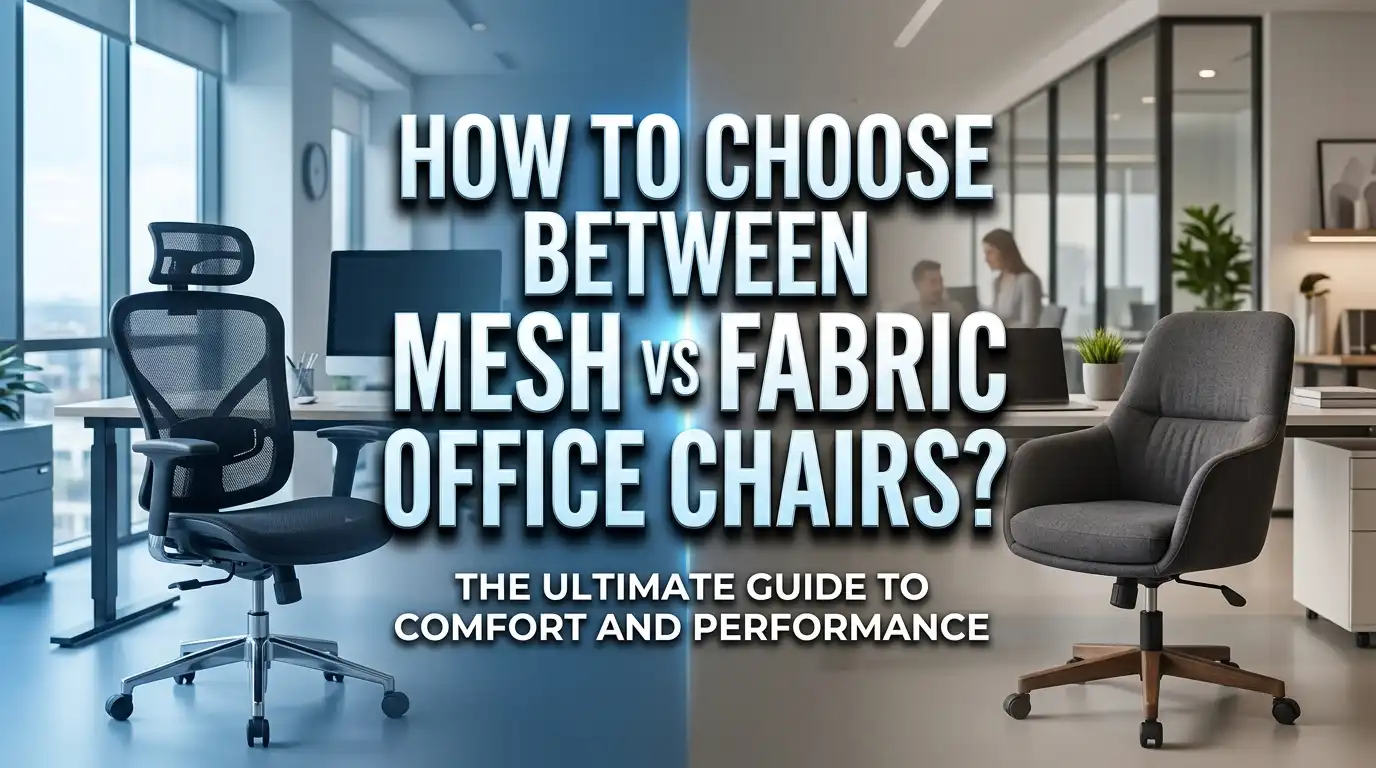
How To Choose Between Mesh vs Fabric Office Chairs?
You spend roughly 8 hours a day sitting in your office chair. That is over 2,000 hours per year. The material your chair is made from directly affects your comfort, your posture, and your productivity. Yet most people pick an office chair based on looks alone and regret the decision within a few months.
The mesh vs fabric debate is one of the most common questions buyers face. Mesh chairs promise cool airflow and modern design. Fabric chairs offer plush padding and a classic appearance. Both have clear strengths and real weaknesses. The right choice depends on your body, your workspace, and the way you work.
This guide breaks down every factor you need to consider. You will learn how each material affects breathability, durability, comfort, and maintenance. You will also find clear recommendations based on your specific situation so you can make a confident decision. Let’s get started.
Key Takeaways
- Mesh chairs offer superior breathability and allow constant air circulation through their open weave design. Studies show high performance mesh provides roughly 6.5 times more space for air movement than solid upholstery materials, keeping you cool during long sessions.
- Fabric chairs deliver immediate plush comfort thanks to their foam padding. They feel soft and cushioned the moment you sit down, and they work best in cool or air conditioned environments where heat buildup is not a concern.
- Maintenance needs differ significantly. Mesh chairs are easy to wipe down and resist stains. Fabric chairs absorb spills and require more frequent deep cleaning to avoid permanent stains and odor buildup.
- Durability depends on quality, not just material type. A well made mesh chair can last 5 to 8 years while a high quality fabric chair with dense foam may last 7 to 10 years. However, damaged mesh is harder to repair, while fabric chairs can often be reupholstered.
- Your work environment matters most. If your office is warm or humid, mesh is the better pick. If you work in a cold room and want a cozy feel, fabric is the smarter choice. Consider your climate, your body temperature tendencies, and your daily routine before deciding.
- A hybrid approach works for many people. Chairs that combine a mesh backrest with a fabric padded seat offer the best of both worlds: breathability where you sweat most and cushioning where you need pressure relief.
What Is a Mesh Office Chair
A mesh office chair uses an open weave material stretched across a frame to form the seat, backrest, or both. The mesh is typically made from synthetic fibers like nylon, polyester, or elastomeric polymers. These fibers are interlocked in a net like pattern that creates small gaps for air to pass through.
The tension of the mesh is what provides support. Instead of relying on foam or padding, mesh chairs use the natural stretch of the woven material to cradle your body. This creates a suspended, almost hammock like feel that distributes your weight across the entire surface area.
High quality mesh chairs use different tension levels for the seat and the backrest. The seat mesh is usually firmer to support your body weight without sagging. The backrest mesh is slightly more flexible to conform to the natural curve of your spine. Many modern mesh chairs also include an adjustable lumbar support built into or behind the mesh to give your lower back extra reinforcement.
Mesh chairs gained popularity in the late 1990s and have become standard in many corporate offices. Their lightweight design makes them easy to move, and their open structure gives them a clean, modern look that fits well in contemporary workspaces.
What Is a Fabric Office Chair
A fabric office chair uses textile upholstery stretched over a foam filled cushion to form the seat and backrest. The most common fabrics include polyester, nylon, and blended materials. Some manufacturers also use premium textiles like wool or microfiber for added comfort and style.
The foam inside fabric chairs varies in density and thickness. Higher density foam (around 1.8 to 2.2 lb per cubic foot) provides firmer, longer lasting support. Lower density foam feels softer at first but compresses more quickly over time. The thickness of the foam also matters. Most quality fabric chairs use 3 to 4 inches of padding in the seat.
Fabric chairs have been the standard in offices for decades. They offer a traditional, professional appearance that works well in formal settings. The wide range of available colors, patterns, and textures gives buyers more freedom to match their office décor. You can find fabric chairs in everything from neutral grays and blacks to bold colors and intricate patterns.
The cushioned surface of a fabric chair provides immediate comfort. You sink into the chair rather than sitting on top of it. This plush feeling is one of the main reasons many people still prefer fabric over mesh, especially during shorter sitting sessions.
Breathability and Temperature Control
This is where mesh chairs have a clear advantage. The open weave structure of mesh allows air to flow freely around your body. This prevents heat from building up against your skin and keeps you cool even during long work sessions. High quality mesh can keep the contact temperature 2 to 3 degrees Celsius lower than a solid fabric surface.
Fabric chairs, by contrast, trap body heat. The foam padding absorbs warmth from your body and holds it against you. During warm months or in offices without strong air conditioning, this can lead to uncomfortable sweating and that sticky feeling many people associate with long hours at a desk.
If you live in a hot or humid climate, mesh is almost always the better choice. People who naturally “run hot” also benefit from mesh. However, if your office is cold or heavily air conditioned, a fabric chair can actually feel more comfortable. The insulating properties of foam and fabric provide warmth that mesh cannot replicate.
Your personal temperature sensitivity should guide this decision. Pay attention to how you feel after sitting for 2 to 3 hours in your current chair. If heat and sweat bother you, switch to mesh. If you find yourself reaching for a blanket or jacket at your desk, fabric may suit you better.
Comfort Over Short and Long Periods
Fabric chairs win the first impression. The soft, padded surface feels welcoming the moment you sit down. There is an immediate sense of cushioning and warmth that many people find comforting. For short work sessions of 1 to 2 hours, fabric chairs often feel more comfortable than mesh.
Mesh chairs take a different approach. They may feel less plush at first, but the support improves over time. The stretched material conforms to your body shape and distributes weight evenly across the seating surface. This reduces pressure points that fabric chairs can create as their foam compresses during extended use.
Over sessions of 4 hours or longer, mesh chairs often outperform fabric. The consistent tension of the mesh prevents the “bottoming out” feeling that happens when foam padding compresses under your weight. Mesh also keeps you cooler, which adds to long term comfort since heat discomfort compounds over time.
The best test is to sit in both types of chairs for at least 30 minutes each before buying. Your body will tell you which surface it prefers. Remember that the chair you choose must feel good at hour 6, not just at minute 1. That shift in perspective often tips the decision from fabric to mesh for people who sit for long stretches.
Ergonomic Support and Posture
Both mesh and fabric chairs can provide excellent ergonomic support, but they achieve it through different methods. Mesh uses tension and flexibility to conform to your body’s natural curves. Fabric uses shaped foam and contoured padding to provide structured support.
Mesh chairs often encourage what experts call “active sitting.” The slight flex of the mesh allows small movements throughout the day. When you lean to the side, shift your weight, or adjust your position, the mesh moves with you and continues to support your body. This dynamic response helps reduce the static muscle tension that comes from sitting perfectly still for hours.
Fabric chairs provide more rigid, defined support. High quality models use ergonomically shaped foam that guides your body into the correct sitting position. Many fabric chairs include built in lumbar curves, contoured seat pans, and bolstered sides to keep you properly aligned.
Regardless of material, look for these adjustable features in any chair you consider: seat height adjustment, seat depth or slide adjustment, adjustable lumbar support, tilt tension control, and adjustable armrests. These features matter more than the material itself. A well adjusted mesh chair and a well adjusted fabric chair will both support good posture. A poorly adjusted chair of either type will cause problems no matter what it is made from.
Durability and Lifespan
The durability question is more nuanced than most people expect. High quality mesh chairs typically last 5 to 8 years before the mesh starts to lose tension and sag. High quality fabric chairs with dense foam can last 7 to 10 years before the padding compresses and the textile shows visible wear.
However, there is an important catch. When mesh fails, the damage is usually irreparable. A torn or sagging mesh seat or backrest generally requires a full panel replacement, which can be expensive or impossible depending on the manufacturer. Fabric chairs have a significant advantage here because they can often be reupholstered for a fraction of the cost of buying a new chair.
The quality of the material matters enormously. Budget mesh chairs use thin, loosely woven fibers that sag within a year. Premium mesh chairs use tightly woven elastomeric fibers with high tensile strength that maintain their shape for years. Similarly, a cheap fabric chair might use low density foam that flattens in 6 months, while a premium fabric chair uses high resiliency foam that bounces back for a decade.
If you want the longest possible lifespan from a single purchase, invest in quality regardless of which material you choose. Look for warranty coverage of at least 5 years on the frame and 2 to 3 years on the upholstery. A solid warranty signals that the manufacturer trusts their own materials.
Cleaning and Maintenance
Mesh chairs are generally easier to maintain on a day to day basis. Dust and crumbs can be removed with a quick pass of a vacuum or a brush. Spills bead up on the surface and can be wiped away with a damp cloth. The open weave structure also means mesh chairs dry very quickly after cleaning.
Fabric chairs require more attention. Spills soak into the textile and the foam underneath, making stains harder to remove. Regular vacuuming is necessary to pull out dust, hair, and allergens that become trapped in the fibers. Deep cleaning with a fabric safe cleanser should happen every few months in high use settings.
There is one downside to mesh. Dust and lint accumulate in the weave over time and can be stubborn to remove completely. Some mesh chair owners report that fine particles build up visibly within a few weeks, especially if you wear dark clothing. A soft bristle brush or compressed air works well for this, but it does require consistent effort.
Fabric chairs also tend to absorb and retain odors over time. Coffee spills, body oils, and everyday exposure create a buildup that can make older fabric chairs smell stale. Mesh chairs resist this problem because airflow prevents moisture from lingering on the surface. For shared or communal workspaces, mesh is the more hygienic option.
Aesthetics and Office Décor
Fabric chairs offer more variety in terms of visual design. They come in dozens of colors, patterns, and textures. You can find everything from sleek leather like finishes to cozy woven textiles. This makes fabric chairs easier to match with existing office décor, especially in traditional or formal settings.
Mesh chairs tend to look modern and minimalist. Their open frame design creates a sense of lightness and transparency in a room. Mesh chairs work best in contemporary or tech focused office environments where clean lines and functional design are priorities. However, the color options are usually more limited compared to fabric.
Consider how the chair will look in your specific space. A bulky fabric chair can make a small home office feel crowded, while a mesh chair’s slim profile can help the room feel more open. On the other hand, a mesh chair might look out of place in a wood paneled executive office where a rich fabric chair would blend in naturally.
The weight of the chair also plays a role. Mesh chairs are typically lighter and easier to move around. Fabric chairs with dense foam padding tend to be heavier. If you frequently rearrange your workspace or need to move your chair between rooms, the lighter weight of mesh is a practical advantage.
Cost and Value for Money
Fabric chairs generally offer more budget friendly options at the lower end of the market. You can find a decent fabric office chair for significantly less than a comparable mesh model. This makes fabric chairs popular for home offices and small businesses operating on tight budgets.
At the mid range and premium levels, pricing between mesh and fabric chairs becomes more comparable. High quality mesh chairs and high quality fabric chairs often fall within the same price range. The difference at this level comes down to the specific features, brand reputation, and build quality rather than the material itself.
Think about total cost of ownership, not just the sticker price. A cheap fabric chair that needs replacing every 2 years costs more over a decade than a mid range mesh chair that lasts 6 years. Factor in potential reupholstering costs for fabric chairs and potential panel replacement costs for mesh chairs when calculating your true long term expense.
The best value often comes from chairs in the mid range category. These chairs typically use quality materials, include essential ergonomic adjustments, and carry reasonable warranties. You do not need to buy the most expensive chair on the market to get good support. Focus on the features that matter most to you and avoid paying for extras you will never use.
Health Considerations and Allergies
Fabric chairs can trap allergens like dust mites, pet dander, and pollen deep within their fibers and foam. This is a genuine concern for people with respiratory allergies or asthma. Regular vacuuming helps, but it cannot remove all embedded particles. Over time, an older fabric chair can become a significant source of indoor allergens.
Mesh chairs are much better for allergy sufferers. The open weave structure does not trap particles the way dense fabric does. Dust and allergens pass through or rest on the surface where they can be easily removed with a damp cloth or vacuum. The improved airflow also discourages the growth of dust mites, which thrive in warm, moisture retaining environments.
If you have skin sensitivities, test both materials before buying. Some people find that low quality mesh can irritate bare skin, especially behind the knees and on the back. High quality mesh with smooth, tightly woven fibers eliminates this issue, but budget mesh can feel rough or scratchy against exposed skin.
Foam in fabric chairs can also release volatile organic compounds (VOCs) when new. This “new chair smell” fades over time but can cause headaches or irritation in sensitive individuals during the first few weeks. Look for chairs certified by GREENGUARD or similar programs if indoor air quality is a priority for you.
The Hybrid Option: Best of Both Worlds
You do not have to choose one material exclusively. Many modern office chairs use a hybrid design that combines mesh and fabric in a single chair. The most common configuration uses a mesh backrest paired with a fabric covered foam seat.
This hybrid approach solves the most common complaints about both materials. The mesh back provides airflow and breathability where you need it most, preventing the “swamp back” feeling that plagues fabric chair users during warm months. The padded fabric seat provides the cushioning and pressure relief that pure mesh seats sometimes lack.
Hybrid chairs also address the comfort preferences of users who find full mesh seats too firm. The sit bones bear most of your weight, and many people find foam padding more comfortable in this area. Meanwhile, the backrest carries less direct weight but generates more heat from constant contact, making mesh the ideal material for that zone.
If you are struggling to decide between mesh and fabric, a hybrid chair is often the smartest compromise. Look for models where the backrest mesh has adjustable lumbar support and the seat cushion uses high density foam with at least 3 inches of thickness. This combination delivers solid ergonomic support, good breathability, and lasting comfort across long work days.
How Your Work Environment Should Guide Your Decision
Your physical workspace should be one of the biggest factors in your decision. Start by evaluating the temperature and humidity of your office. If the room stays above 24 degrees Celsius (75 degrees Fahrenheit) for most of the year, or if humidity regularly exceeds 60 percent, mesh is the clear winner. If your office runs cold with aggressive air conditioning, fabric will keep you more comfortable.
Next, think about how many hours you sit each day. People who sit for 6 hours or more benefit from the consistent, non compressing support of mesh. People who sit for shorter periods or alternate between sitting and standing may prefer the immediate comfort of fabric since the foam does not have time to compress and heat up during shorter sessions.
Consider your work style. Do you stay relatively still, or do you shift positions frequently? Mesh chairs accommodate movement better because the material flexes with you. Fabric chairs hold their shape more rigidly, which can feel restrictive for people who fidget or change positions often.
Finally, think about shared use. If the chair will be used by multiple people in a hot desking or shift work arrangement, mesh is the more hygienic and practical choice. It dries faster, resists odors, and does not absorb body oils the way fabric does. For a personal chair in a private home office, either material works well as long as it suits your individual preferences.
A Step by Step Process to Make Your Final Choice
Follow these steps to narrow down your decision with confidence. Step one: assess your office temperature. Warm or humid environments point to mesh. Cold environments point to fabric.
Step two: determine your daily sitting duration. Sessions over 4 to 6 hours favor mesh for its consistent support and breathability. Shorter sessions can go either way based on personal preference.
Step three: check for allergies or sensitivities. If you have dust allergies or asthma, mesh is the healthier option. If you have skin sensitivity, test the mesh texture before committing.
Step four: set your budget. If you need to keep costs low, fabric offers more affordable options. If you can invest in a mid range or premium chair, both materials offer excellent value.
Step five: consider maintenance. If you want a low maintenance chair, mesh is easier to keep clean. If you do not mind regular vacuuming and occasional deep cleaning, fabric works fine.
Step six: try before you buy whenever possible. Visit a showroom or furniture store and sit in both mesh and fabric chairs for at least 15 to 20 minutes each. Pay attention to how each material feels after the initial impression wears off. Your body’s feedback during this test will give you the clearest answer.
If you still cannot decide after all six steps, choose a hybrid chair with a mesh back and fabric seat. It covers the most common needs and gives you the flexibility to enjoy both materials in a single chair.
Frequently Asked Questions
Are mesh chairs better for your back than fabric chairs?
Mesh chairs provide dynamic, flexible support that moves with your body. This can reduce pressure points and encourage better posture over long sitting sessions. However, a well designed fabric chair with proper lumbar support and high density foam can be equally effective for back health. The key factor is adjustability, not material alone. Look for chairs with adjustable lumbar support, seat depth, and tilt regardless of the material type.
Do mesh office chairs sag over time?
Yes, all mesh chairs will eventually lose some tension. The timeline depends on the quality of the mesh and the weight of the user. Budget mesh chairs may start sagging within 1 to 2 years. High quality elastomeric mesh chairs maintain their tension for 5 to 8 years under normal use. You can slow down sagging by staying within the chair’s recommended weight limit and avoiding putting excessive force on any one area of the mesh.
Can you reupholster a mesh office chair?
Replacing mesh is significantly harder than reupholstering fabric. Most mesh chairs require proprietary replacement panels that must come from the original manufacturer. Some popular brands sell replacement mesh panels, but the process often requires specialized tools. Fabric chairs are much easier and cheaper to reupholster, which gives them an advantage in terms of long term repairability.
Which type of chair is better for hot climates?
Mesh chairs are the clear winner in hot and humid environments. The open weave design allows constant airflow, which keeps your body temperature lower and prevents sweat buildup. Fabric chairs trap heat and moisture against your skin, making them less comfortable during warm seasons. If you live in a tropical or hot climate and your office lacks strong air conditioning, a full mesh chair will keep you significantly more comfortable.
How often should you clean a mesh or fabric office chair?
For mesh chairs, a weekly wipe down with a damp cloth and a monthly vacuuming of dust from the weave is usually sufficient. For fabric chairs, vacuum the seat and backrest weekly and spot clean spills immediately. Plan a deep cleaning with a fabric safe cleanser every 2 to 3 months. In shared workspaces, increase the cleaning frequency for both types to maintain hygiene standards.
Is a hybrid mesh and fabric chair worth the extra cost?
For many people, yes. A hybrid chair with a mesh backrest and fabric padded seat combines the breathability of mesh where heat is most likely to build up with the cushioned comfort of foam where pressure is greatest. This design addresses the primary complaints of both pure mesh and pure fabric users. If you sit for long hours and cannot decide between the two materials, a hybrid chair is a practical and effective compromise.

Hi, I’m Clara! I started SitSmartGuide to help people find chairs that truly support their comfort and health — without the guesswork. After years of dealing with back pain from bad seating, I became obsessed with testing, researching, and reviewing chairs so you don’t have to learn the hard way.