How to Improve Circulation in Legs While Desk Bound?
If you sit at a desk for hours every day, your legs are quietly suffering. Blood pools in the lower limbs. Your calves stop acting as the natural pumps they were built to be. Over time, you notice swelling, tingling, numbness, or that heavy, tired feeling in your legs that just won’t go away.
Here is the truth. The human body was built to move. Your leg veins rely on muscle contractions to push blood back up to your heart. When you sit still for extended periods, that pumping action stops. Blood flow slows down. Fluid collects in your ankles and feet.
The risks go far beyond discomfort. Studies show that prolonged sitting for eight hours can cause measurable swelling and a decline in arterial blood flow to the lower limbs.
This guide walks you through every practical step you can take right now, at your desk, to get your circulation moving again.
Key Takeaways
- Sitting for long hours shuts down your leg’s natural blood pump. Your calf muscles squeeze veins and push blood upward. When these muscles stay idle, blood pools in the lower legs and causes swelling, fatigue, and tingling.
- Small movements every 30 to 60 minutes make a big difference. Ankle pumps, seated marching, and calf raises activate the muscles that drive circulation. You can do these exercises without leaving your chair.
- Your desk setup directly affects blood flow. A chair that pinches behind your knees, a seat that is too high, or a habit of crossing your legs can compress veins and restrict circulation. Proper ergonomics support healthy blood flow.
- Hydration plays a direct role in circulation quality. Dehydrated blood becomes thicker and harder to circulate. Drinking water throughout the day keeps your blood flowing smoothly and supports vascular health.
- Compression socks offer real, science backed support. Graduated compression stockings apply gentle pressure to your legs, helping veins push blood upward and preventing fluid buildup during long sitting sessions.
- Persistent symptoms need professional attention. Ongoing pain, numbness, discolored skin, or swelling that does not improve with movement and elevation may signal conditions like deep vein thrombosis or peripheral artery disease. Do not ignore these warning signs.
Why Sitting at a Desk Hurts Your Leg Circulation
Your circulatory system depends on movement to function properly. The veins in your legs contain one way valves that push blood upward against gravity. Your calf muscles act as a “second heart” by contracting around these veins and squeezing blood back up to your chest.
When you sit at a desk for hours, those calf muscles stay completely inactive. The pumping action stops. Blood moves more slowly through the veins. Fluid begins to accumulate in the lower legs and feet. Over time, this sluggish flow can stretch vein walls and damage the delicate valves inside them.
Research published in medical journals confirms that prolonged sitting for eight hours causes measurable swelling and deterioration of arterial blood flow in the lower limbs. The Mayo Clinic also notes that long periods of sitting raise the risk of heart disease and other serious health conditions. Your legs take the hardest hit because they are the farthest point from your heart.
Recognizing the Warning Signs of Poor Leg Circulation
You need to know what poor circulation looks like before you can address it effectively. The symptoms often start small and build over time. Many people dismiss them as normal discomfort from a long workday.
Common signs include numbness or tingling in your feet and toes, a persistent cold feeling in your lower legs, visible swelling around the ankles, and a heavy or fatigued sensation in your legs by the end of the day. You might also notice that small cuts or bruises on your legs take longer than usual to heal.
More serious warning signs demand immediate attention. According to the Cleveland Clinic, pain that does not improve with rest, skin that changes color, frequent cramping, and one leg swelling significantly more than the other can indicate conditions like deep vein thrombosis or peripheral artery disease. These conditions require professional medical evaluation.
If you experience any of these persistent symptoms, schedule an appointment with your doctor or a vascular specialist. Early detection can prevent complications and protect your long term health.
Set a Movement Timer for Every 30 Minutes
The single most effective strategy for improving leg circulation at your desk is breaking up long sitting periods. Your goal is to move at least once every 30 to 60 minutes. Even a brief pause makes a measurable difference in blood flow.
Set a timer on your phone, computer, or smartwatch. When it goes off, stand up, walk around for two to three minutes, or perform a few quick leg exercises. This simple habit reactivates your calf muscles and gets blood moving again.
The movements do not need to be dramatic. Walk to refill your water bottle. Stand up during a phone call. Take the stairs instead of the elevator for one floor. These micro breaks add up throughout the day and prevent blood from pooling in your lower limbs.
Many people resist movement breaks because they feel disruptive. The opposite is true. Research consistently shows that brief movement breaks improve focus, energy, and productivity. You return to your work feeling sharper and more alert. Your legs feel lighter and more comfortable. Make this one habit non negotiable, and your circulation will thank you.
Try Ankle Pumps and Circles at Your Desk
Ankle pumps are one of the easiest and most effective exercises you can do without leaving your chair. They directly activate your calf muscles, which are the primary drivers of venous blood return from the lower legs.
Here is how to do ankle pumps. Sit upright in your chair with your feet flat on the floor. Extend one leg slightly in front of you. Point your toes away from you as far as you can, then flex your foot back up toward your shin. Repeat this motion 15 to 20 times on each leg. You should feel your calf muscles contracting and releasing with each repetition.
Ankle circles work the same muscles from a different angle. Extend one leg and slowly rotate your foot in a clockwise direction 10 times. Then reverse the rotation for another 10 circles. Switch to the other leg and repeat. This movement stimulates the calf muscles, loosens stiff ankle joints, and helps move blood through the veins more efficiently.
The best part about these exercises is that they are completely discreet. You can do them during a meeting, on a video call, or while reading emails. Nobody will notice, but your legs will feel the difference immediately.
Practice Seated Marching and Leg Extensions
Seated marching engages your hip flexors and thigh muscles while gently elevating your heart rate. This combination helps push blood through the larger veins in your legs and back up to your heart.
To perform seated marching, sit upright with your core engaged. Lift your right knee toward your chest as if marching in place. Lower it and immediately lift your left knee. Continue alternating for 60 seconds. Keep a steady pace and focus on lifting your knees high enough to feel your thigh and hip muscles working.
Seated leg extensions target the quadriceps, the large muscles on the front of your thighs. Sit upright and slowly extend one leg until it is parallel to the floor. Hold this position for 5 to 10 seconds. You will feel your thigh muscles tighten. Lower the leg slowly and repeat on the other side. Do 10 repetitions per leg.
Both exercises are effective because they activate the largest muscle groups in your body. When these muscles contract, they squeeze the surrounding veins and force blood upward. This is exactly the pumping mechanism that stops working when you sit still for too long. Add these exercises to your hourly movement routine and you will notice a significant improvement in how your legs feel.
Do Standing Calf Raises During Breaks
Calf raises are one of the most powerful exercises for boosting leg circulation. Your calf muscles are the key players in the venous pump system. When they contract, they squeeze the deep veins and push blood toward your heart.
Stand behind your chair or next to your desk for support. Place your feet flat on the floor, hip width apart. Slowly raise your heels off the ground, pressing through the balls of your feet. Rise as high as you comfortably can. Hold at the top for one to two seconds. Then lower your heels back down slowly. Repeat 15 to 20 times.
You can also do a seated version if standing is not possible. Sit with your feet flat on the floor. Press through the balls of your feet and lift your heels as high as you can. Hold for a moment, then lower. This seated version still activates the calf pump, though the standing version provides a stronger contraction.
Try to do calf raises at least three to four times throughout your workday. Pair them with your movement breaks for maximum effect. Many people notice that their legs feel lighter and less swollen within days of starting this simple habit. The exercise takes less than two minutes and requires zero equipment.
Adjust Your Chair and Desk for Better Blood Flow
Your workspace setup has a direct impact on leg circulation. A poorly adjusted chair can compress veins behind your knees, restrict blood flow through your thighs, and force your body into positions that slow circulation.
Start with your chair height. Your feet should rest flat on the floor with your knees bent at roughly 90 degrees. If your chair is too high and your feet dangle, use a footrest to support them. Dangling feet put pressure on the backs of your thighs and compress blood vessels.
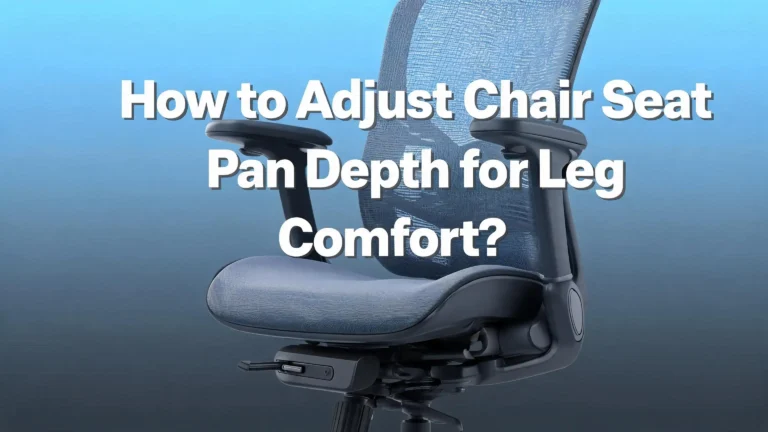
Check the edge of your seat. There should be a small gap between the front edge of your chair and the back of your knees. If the seat presses into this area, it compresses the popliteal vein, one of the major veins responsible for returning blood from the lower leg. This is a common but overlooked cause of poor circulation at a desk.
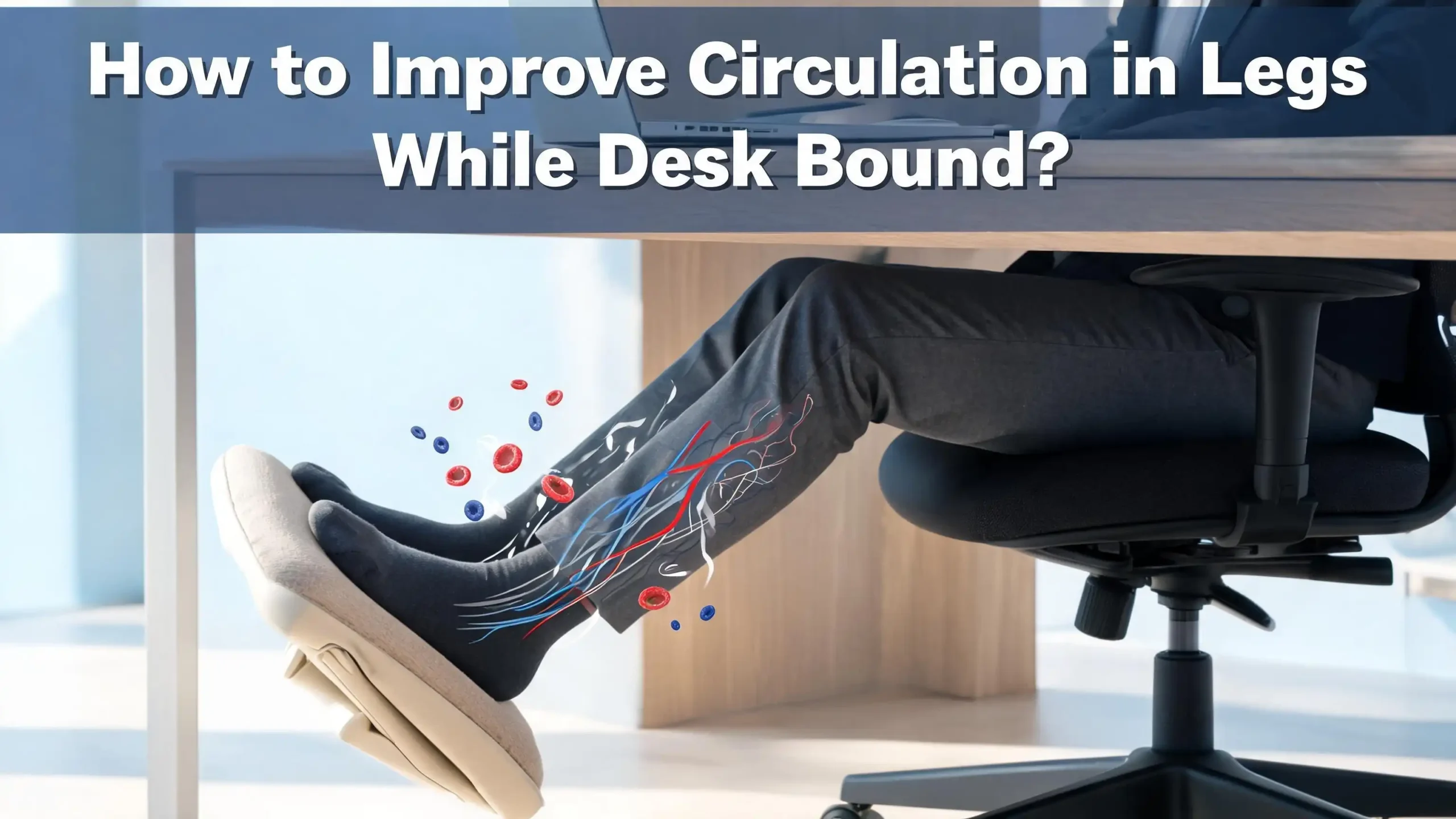
A footrest can be especially helpful. It keeps your feet supported, improves posture, and allows you to elevate your legs slightly. Even a gentle elevation reduces the effort your veins need to push blood upward. The Mayo Clinic recommends keeping your thighs parallel to the floor and your feet flat for the best ergonomic position.
Stop Crossing Your Legs While Sitting
Crossing your legs is one of the most common habits that restricts blood flow. It feels comfortable in the moment, but it compresses the veins in both legs and makes your circulatory system work harder to push blood upward.
When you cross one leg over the other, you create pressure on the veins behind the knee and along the thigh. This pressure narrows the blood vessels and slows the flow of blood. Over time, this habit can contribute to the development of varicose veins and increase ankle swelling.
Many people cross their legs without realizing it. Make a conscious effort to keep both feet flat on the floor. If you catch yourself crossing your legs, uncross them immediately and do a few ankle pumps to restore blood flow. Some people find it helpful to place a small reminder note on their desk or monitor.
If you cross your legs because your chair is uncomfortable, that is a signal to adjust your workstation. A properly set up chair with good lumbar support and the correct seat height will reduce the urge to shift into positions that restrict circulation. Breaking this one habit can produce noticeable improvements in leg comfort within a week.
Stay Hydrated Throughout the Workday
Water plays a critical role in circulation quality. When you are dehydrated, your blood becomes thicker and more viscous. Thicker blood moves more slowly through your veins and arteries. This puts extra strain on your heart and reduces the efficiency of blood flow to your extremities.
Aim to drink water consistently throughout the day rather than consuming large amounts at once. Keep a water bottle at your desk and take sips regularly. A good target for most adults is around eight glasses of water per day, though your needs may vary based on body size, activity level, and climate.
Drinking enough water also creates a built in movement reminder. The more water you drink, the more often you will need to get up and walk to the restroom. This forces regular breaks from sitting, which directly benefits your leg circulation.
Limit excessive caffeine and sugary beverages. Both can contribute to dehydration when consumed in large amounts. If you enjoy coffee or tea, balance it with an equal amount of water. Herbal teas and water infused with fruit are good alternatives that support hydration without the dehydrating effects.
Wear Compression Socks for Extra Support
Compression socks apply graduated pressure to your legs, with the tightest compression at the ankle that gradually decreases up the calf. This design helps your veins push blood upward and prevents it from pooling in the lower legs.
Medical research supports their effectiveness. Studies show that compression stockings in the 15 to 20 mmHg range can reduce leg swelling, improve venous blood return, and decrease the feeling of heaviness and fatigue during long periods of sitting. They are widely recommended by vascular specialists for people who work at desks.
You do not need a prescription for mild compression socks. Over the counter options in the 15 to 20 mmHg range work well for most office workers. If you have an existing vein condition, talk to your doctor about whether a higher compression level would be appropriate for you.
Put your compression socks on first thing in the morning, before any swelling has a chance to develop. They should feel snug but not painful. If you experience tingling, numbness, or increased discomfort while wearing them, the fit may be wrong or the compression level may be too high. Proper fit is essential for getting the full circulation benefits.
Elevate Your Legs After Long Sitting Sessions
Elevation is one of the simplest and most effective ways to reduce swelling and restore circulation after hours at a desk. When you raise your legs above the level of your heart, gravity helps drain excess fluid and eases the workload on your veins.
At home after work, lie down and prop your legs up on two or three pillows for 15 to 20 minutes. This position allows blood and fluid to flow back toward your heart naturally. You should feel relief from any heaviness or tightness in your legs within minutes.
During the workday, you can achieve a milder version of elevation by using a footrest under your desk. Even raising your feet a few inches off the floor reduces venous pressure in the legs. Some people keep a small stool or cushion under their desk for this purpose.
Make leg elevation a daily habit, not just an occasional remedy. Consistent elevation after work helps prevent cumulative fluid buildup and supports the long term health of your veins. It is especially important on days when you sit for longer than usual or when you notice more swelling than normal.
Eat Foods That Support Vascular Health
Your diet directly affects how well your blood vessels function. Certain foods promote healthy circulation, while others can contribute to inflammation, fluid retention, and vein damage.
Focus on foods rich in flavonoids and antioxidants. Berries, citrus fruits, dark leafy greens, and beets contain compounds that strengthen blood vessel walls and improve blood flow. Omega 3 fatty acids found in fish, walnuts, and flaxseeds help reduce inflammation and keep arteries flexible.
Reduce your sodium intake. Excess salt causes your body to retain water, which increases swelling in the legs and puts extra pressure on your veins. Read food labels carefully, as processed and packaged foods often contain high amounts of hidden sodium.
Whole grains, lean proteins, and healthy fats from sources like olive oil and avocados support overall cardiovascular health. A balanced diet combined with regular movement gives your circulatory system the best possible foundation. You do not need to follow a strict meal plan. Simply adding more whole foods and reducing processed options can make a meaningful difference in how your legs feel by the end of each workday.
Maintain a Healthy Weight to Reduce Vein Pressure
Excess body weight increases the pressure on the veins in your legs. This extra pressure makes it harder for blood to travel upward against gravity and can accelerate damage to the one way valves inside your veins.
Even a modest reduction in weight can improve circulation significantly. The combination of regular physical activity and balanced nutrition is the most effective approach. You do not need an extreme fitness routine. Walking for 30 minutes most days of the week is a strong starting point.
Carrying extra weight around the midsection is especially problematic. Abdominal fat compresses the veins in the pelvis and restricts blood flow returning from the legs. This is why people with a larger waist circumference often experience more leg swelling and discomfort during long periods of sitting.
Focus on sustainable changes rather than quick fixes. Gradual weight management protects your joints and gives your body time to adapt. As you lose weight, you will likely notice less swelling, fewer episodes of leg fatigue, and better overall energy levels. These improvements compound over time and make a real difference in how comfortable you feel during long workdays.
Consider a Sit Stand Desk for Position Changes
Alternating between sitting and standing throughout the day keeps your leg muscles engaged and prevents the blood pooling that occurs during prolonged sitting. A sit stand desk allows you to make these transitions smoothly without interrupting your workflow.
The goal is not to stand all day. Standing for too long creates its own circulation problems, including increased venous pressure and leg fatigue. The ideal approach is to alternate positions every 30 to 60 minutes. Spend part of your time sitting and part standing. This variation keeps your muscles active and your blood moving.
When standing at your desk, shift your weight from one foot to the other periodically. Do gentle calf raises or rock from your heels to your toes. These small movements maintain the muscle pump action that supports healthy blood return from your legs.
If a full sit stand desk is not available, you can still achieve position changes. Stand up during phone calls. Walk to a colleague’s workspace instead of sending an email. Use a high counter or shelf as a temporary standing work surface. The key principle is breaking up static postures and giving your legs regular opportunities to move.
Know When to See a Doctor About Leg Circulation
Most desk workers can improve their leg circulation with the strategies in this guide. However, some symptoms require professional medical evaluation. Knowing the difference between normal discomfort and warning signs of a serious condition is important for your safety.
See your doctor if you experience persistent leg pain that does not improve with movement or elevation, significant swelling in one leg but not the other, skin that turns a bluish or reddish color, sores or wounds on your legs that heal slowly, or frequent numbness and tingling that lasts for extended periods.
These symptoms may indicate conditions like deep vein thrombosis, peripheral artery disease, or chronic venous insufficiency. Deep vein thrombosis is especially concerning because blood clots in the deep veins can break loose and travel to the lungs, creating a life threatening situation.
People over 40, those with diabetes, individuals with a family history of vein disease, and anyone carrying significant excess weight face a higher risk for circulation problems. If you fall into any of these categories, be extra attentive to changes in your legs and do not hesitate to seek medical advice. A vascular specialist can use ultrasound and other imaging tools to assess your blood flow and recommend the right course of action.
Build a Daily Routine That Keeps Your Blood Flowing
Consistency is the key to lasting improvement in leg circulation. A one time effort will not produce results. You need a daily routine that combines movement, good ergonomics, hydration, and healthy habits.
Start your morning with a few minutes of stretching before you sit down at your desk. Calf stretches, ankle pumps, and a short walk prime your muscles for the day ahead. Set your movement timer as soon as you begin work.
Throughout the day, follow the pattern of moving every 30 to 60 minutes. Alternate between ankle exercises, seated marching, calf raises, and walking breaks. Drink water regularly. Keep your feet flat on the floor or on a footrest. Avoid crossing your legs.
After work, elevate your legs for 15 to 20 minutes. Eat a dinner rich in vegetables, lean protein, and healthy fats. If possible, take a short walk in the evening. These after work habits help your body recover from the day’s sitting and prepare your veins for the next day.
Over time, these small actions become automatic. You will not need to think about them. They will simply be part of how you work and live. And the payoff is significant: less swelling, less pain, more energy, and healthier veins for years to come.
Frequently Asked Questions
How long does it take to improve leg circulation with desk exercises?
Many people notice a difference within the first few days of consistent movement. Swelling often decreases and legs feel lighter after just one or two sessions of ankle pumps and calf raises. For lasting improvement, maintain your movement routine daily for at least two to four weeks. The cumulative effect of regular exercise, proper hydration, and good ergonomics produces the most significant and sustained results.
Can poor leg circulation from sitting cause blood clots?
Yes, prolonged sitting is a known risk factor for deep vein thrombosis, a condition where blood clots form in the deep veins of the legs. This risk increases during periods of extended inactivity, such as long flights or full workdays without movement breaks. Regular leg exercises, hydration, and compression socks all help reduce this risk. If you notice sudden swelling, pain, or warmth in one leg, seek medical attention immediately.
Are compression socks safe to wear every day at work?
Mild compression socks in the 15 to 20 mmHg range are generally safe for daily use by most people. They can reduce swelling, improve comfort, and support healthy blood flow during long sitting sessions. However, people with certain conditions like severe peripheral artery disease should consult their doctor before wearing compression stockings. Always ensure the fit is correct, as socks that are too tight can cause more harm than good.
What is the best sitting position for leg circulation?
Sit with your feet flat on the floor and your knees bent at approximately 90 degrees. Your thighs should be parallel to the floor. Make sure the edge of your chair does not press into the back of your knees, as this compresses major veins. Avoid crossing your legs. Use a footrest if your feet cannot reach the floor comfortably. This position minimizes vein compression and allows blood to flow freely.
Should I use a standing desk to improve circulation?
A standing desk can help, but standing all day creates its own problems, including increased venous pressure and leg fatigue. The best approach is to alternate between sitting and standing every 30 to 60 minutes. This variation keeps your leg muscles active and prevents the blood pooling that happens with either prolonged sitting or prolonged standing. Small movements like calf raises and weight shifts while standing add extra circulation benefits.
When should I be concerned about poor circulation in my legs?
See a doctor if you experience persistent pain, swelling that does not improve with rest and elevation, skin discoloration, slow healing wounds, or frequent numbness and tingling. One leg swelling significantly more than the other is a red flag that needs urgent evaluation. People over 40, those with diabetes, and anyone with a family history of vein disease should be especially watchful for these symptoms and seek professional advice early.

Hi, I’m Clara! I started SitSmartGuide to help people find chairs that truly support their comfort and health — without the guesswork. After years of dealing with back pain from bad seating, I became obsessed with testing, researching, and reviewing chairs so you don’t have to learn the hard way.